The buyer question
Can a Wörthersee hospitality mandate - lakeside hotel operations, season management or niche-resort leadership - be filled in this summer-lake market, and what does the public record actually prove?
What the public record shows
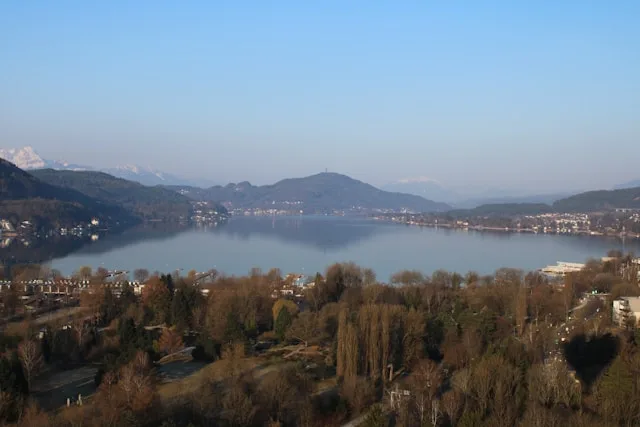
The verified public record for the Wörthersee is anchored by the lake's Wikipedia article. Wörthersee is Carinthia's largest lake - about 16.5 kilometres long, stretching from the outskirts of the capital Klagenfurt to the bay of Velden, with Pörtschach, Krumpendorf and Maria Wörth on its shores - and a main tourist destination in summer. The record is also candid about the market's recent history: though termed Austria's Monte Carlo, tourism around the lake has suffered tough competition from package holidays to cheaper overseas destinations, and local businesses have responded by repositioning toward niches - high-quality tourism, family tourism, golf and horse-riding vacations.
Read alongside the Austrian tourism records on this site - the Innsbruck winter-sports analysis - Wörthersee is the summer-lake counterpart: a seasonal resort region whose record documents both the demand challenge and the niche repositioning, recruiting hospitality professionals inside a lake-shore labour market anchored by Klagenfurt.
Neither the lake geography nor the competition record measures what a hiring leader needs to know: whether hotel managers, season staff or niche-resort leaders are available at a given season and seniority, or what any infrastructure project commits. That requires a search with contacted, assessed and validated candidates.
What changes in this market
Employers in the Wörthersee hospitality market prove themselves differently from Innsbruck's events-calendar winter city and from the Alpine ski villages: a summer lake region strung between Klagenfurt and Velden operates a compressed warm-season calendar, the record-documented niche repositioning - quality, family, golf, riding - changes which management skills the market now needs, and shoulder-season economics push properties toward either year-round concepts or seasonal closures that shed staff annually. Each function, phase and stage of a mandate here - lakeside hotel operations, season management, niche-resort leadership - proves itself against that summer-lake structure rather than against a national average.
KiTalent's mandate analysis
- Frame the mandate by season exposure before the search: warm-season operations, year-round management and niche-resort leadership recruit on different calendars inside the same lake-shore pool.
- Treat the recorded repositioning as the skills brief: the documented shift to quality, family and activity niches defines the management profiles the market needs - not the mass-tourism ones it moved away from.
- Verify infrastructure projects independently: where a mandate's premise is an airport or road expansion, that project must be sourced to its own primary record before hiring plans are built on it.
- Ask any search partner for contacted, assessed and validated candidates per function and season before accepting infrastructure statistics as evidence of workforce availability.
Where the public record stops
No located primary public record verifies airport-capacity percentages, motorway-widening projections, booking-baseline comparisons or dormant-capacity statistics. What the lake's public record can prove stands above, including its own account of demand competition.
Sources
Related KiTalent research
- The Market Map Is Not the Shortlist: helps a buyer choose between testing the Wörthersee hospitality market and commissioning a search with contacted, assessed and validated candidates
- How to Assess a Leader Beyond Competencies: shows how to gather decisional evidence for this mandate - the research method behind testing season exposure, niche-repositioning skills and independent infrastructure verification - with candidate evidence assessed conversation by conversation