
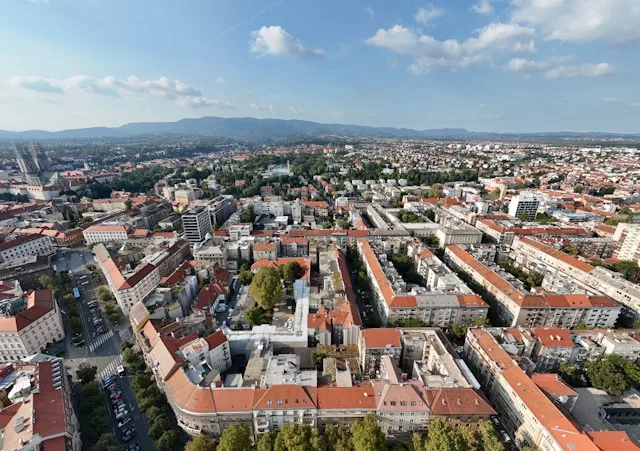
The buyer question
Can a Zagreb electrical-engineering mandate - power equipment, high-voltage testing or automation - be filled in this crossroads capital market, and what does the public record actually prove?
What the public record shows
The verified public record for Zagreb's electrical industry is anchored by two Wikipedia documents. The city record names the important branches of industry - production of electrical machines and devices first among them, with chemicals, pharmaceuticals, textiles and food processing - and describes Zagreb as an essential transport hub at the crossroads of Central Europe, the Mediterranean and Southeast Europe. The company record anchors the sector's century of continuity: Končar was founded by two engineers in 1919, registered in January 1921 as Elektra, became a Siemens subsidiary that same year, produced its first generator in 1948, and has since produced over four hundred thousand transformers.
Read alongside the regional records on this site - the Rijeka port analyses and the Kecskemét supplier frame - Zagreb's electrical industry is the capital-city pole of Croatian engineering: a 1919-founded anchor whose power-equipment production defines the local specialisation, in a city whose industry mix spreads from chemicals to food processing.
Neither the industry list nor the company history measures what a hiring leader needs to know: whether power-equipment engineers, high-voltage test specialists or automation professionals are available at a given seniority in a given quarter, or how EU-funded investment converts into staffed roles. That requires a search with contacted, assessed and validated candidates.
What changes in this market
Employers in Zagreb's electrical-engineering base prove themselves differently from Rijeka's coastal industry and from the surrounding region's smaller towns: a century-old anchor founded as Elektra in 1919 sets the technical culture and the senior-bench depth of the whole sector, capital-city industry spreads employment across electrical, chemical and pharmaceutical branches, and crossroads positioning pulls talent toward Central European and wider markets. Each function, phase and stage of a mandate here - power equipment, high-voltage testing, automation - proves itself against that structure rather than against a national average.
KiTalent's mandate analysis
- Frame the mandate by equipment class before the search: power-equipment design, high-voltage testing and plant automation certify differently and draw on different segments of the capital pool.
- Treat the anchor's century as the bench map: a company producing transformers since the 1940s holds much of the country's senior power-equipment experience - senior mandates bid for its alumni.
- Price the crossroads factor: a capital at the intersection of three European regions exports engineering talent in several directions - set compensation ceilings before launch.
- Ask any search partner for contacted, assessed and validated candidates per certification profile before accepting investment-cycle statistics as evidence of availability.
Where the public record stops
No located primary public record verifies investment totals, per-employer hiring counts, vacancy-growth percentages or abandoned-project stories. What the city and company records can prove stands above.
Sources
Related KiTalent research
- The Market Map Is Not the Shortlist: helps a buyer choose between testing the Zagreb electrical-engineering market and commissioning a search with contacted, assessed and validated candidates
- How to Assess a Leader Beyond Competencies: shows how to gather decisional evidence for this mandate - the research method behind testing equipment class, anchor-alumni bench and crossroads pricing - with candidate evidence assessed conversation by conversation