
The buyer question
Can a Zenica steel mandate - electric-arc-furnace operations, maintenance or process engineering - be filled in this Bosnian steel city, and what does the public record actually prove?
What the public record shows
The verified public record for Zenica is anchored by the city's Wikipedia article. Zenica's industrial infrastructure arrived on dated schedule - a railway from Bosanski Brod in 1879, a coal mine in 1880, a paper factory in 1885, and ironworks in 1892. After 1945 the city developed as an industrial centre, its new apartment blocks built for the growing number of coal miners and steelworkers, with the population rising from about 15,000 in 1948 to over 30,000 by 1961 on its way to a peak that made it a steel city.
Read alongside the steel-heritage records on this site - the Liège Cockerill analysis from 1817 - Zenica is the southeastern-European counterpart at Yugoslav scale: an ironworks-and-coal complex that built its city's housing and identity, now transitioning its process route with a workforce the record does not size.
Neither the 1892 founding record nor the growth history measures what a hiring leader needs to know: whether EAF operations specialists, maintenance engineers or process metallurgists are available at a given seniority in a given quarter, what the current workforce actually numbers, or what any conversion investment commits. That requires a search with contacted, assessed and validated candidates.
What changes in this market
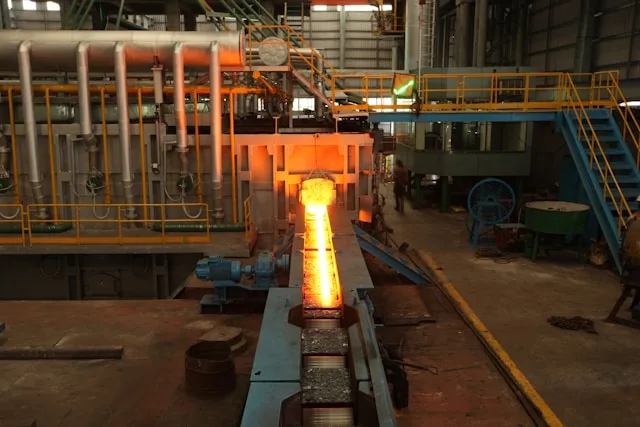
Employers in Zenica's steel sector prove themselves differently from Liège's post-steel finishing economy and from the Sisak-style closed mills: a city literally built around its ironworks - housing for miners and steelworkers, a population that doubled in the socialist decades - still runs primary steel production, and any process-route transition re-staffs a labour pool whose identity and skills descend from the blast-furnace era. Each function, phase and stage of a mandate here - EAF operations, maintenance, process engineering - proves itself against that single-industry structure rather than against a national average.
KiTalent's mandate analysis
- Frame the mandate by process route before the search: EAF operations, maintenance and process engineering certify differently, and the skills are new to a blast-furnace-built pool.
- Treat the city's structure as the constraint: a labour market shaped by one complex since 1892 has deep steel culture but thin coverage of any discipline it was never staffed for - evidence, not assumption, defines who exists.
- Recruit regionally for new-route skills: EAF and modern process specialists will not be local by history - plan Sarajevo-corridor, regional and relocation recruiting from the start.
- Ask any search partner for contacted, assessed and validated candidates per specialism before accepting transition narratives as evidence of workforce availability.
Where the public record stops
No located primary public record verifies employment figures, workforce-reduction counts, conversion-investment totals or vacancy-duration stories. What the city's public record can prove stands above, with its dates attached.
Sources
Related KiTalent research
- The Market Map Is Not the Shortlist: helps a buyer choose between testing the Zenica steel market and commissioning a search with contacted, assessed and validated candidates
- How to Assess a Leader Beyond Competencies: shows how to gather decisional evidence for this mandate - the research method behind testing process route, single-industry pool structure and regional recruiting - with candidate evidence assessed conversation by conversation