Dudelange is not a marginal address in Luxembourg logistics. It is the country's fourth-largest commune, with around 22,000 residents in the canton of Esch-sur-Alzette, sitting directly on the French border - and the D in ARBED, the historic steel group Aciéries Réunies de Burbach-Eich-Dudelange, records exactly where the town's industrial base came from. Together with neighbouring Bettembourg it hosts the rail-road terminal that Luxembourg's railway group describes as its hub and as one of the keystones of logistics made in Luxembourg: a 33-hectare intermodal terminal opened in 2017, embedded in a 100-hectare logistics ensemble of warehouses, maintenance workshops, a secured truck centre and the marshalling yard, and flanked by the Eurohub Sud park with more than 230,000 square metres of warehouse space across 52 hectares.
What follows is an analysis of what that verified physical base means for hiring: who operates it, where the people who run it actually live, which constraints are documented in the public record and which are not, and what a senior hiring decision in this market depends on. The picture that emerges is of a hub whose infrastructure is fixed and whose workforce is not - a cluster that cannot be staffed from its own commune and must be hired from across a border that is congested, taxed and under reconstruction.
The Terminal and the Park: Dudelange's Verified Logistics Base
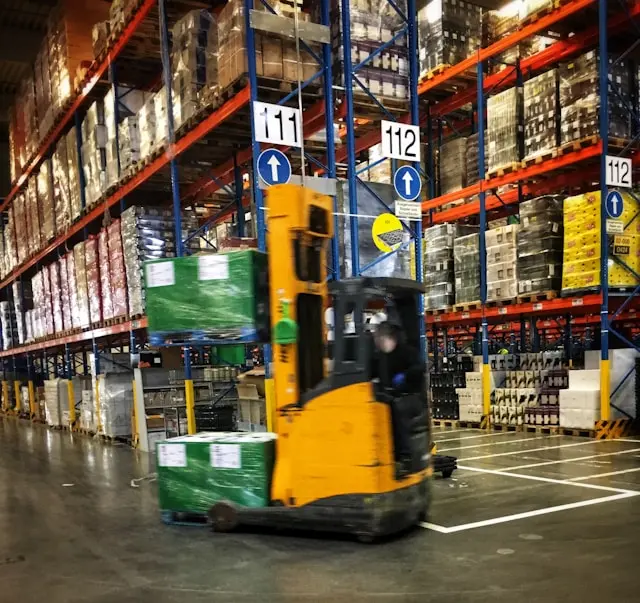
The anchor is the intermodal terminal Bettembourg-Dudelange, which sits at the crossroads of the two communes and carries a Dudelange postal address. Operated by CFL terminals, it has been in service since 2017 and is equipped with three remote-controlled gantry cranes, four combined-transport tracks of 700 metres each and two rail-motorway platforms of the same length. It can handle up to 12 combined trains and up to 16 rail-motorway trains a day, has a maximum capacity of 600,000 intermodal transport units a year, stores 3,425 containers and offers 840 semi-trailer parking spots. The operator's own key figures record 400 fewer semi-trailers on the roads each day. The site is run by a team of 106 people.
The connections explain why the location matters: the terminal is linked into regular rail services to Antwerp, Lübeck, Istanbul's Halkali via Saarbrücken, Lyon, Le Boulou, Mouguerre, the Perpignan-Poznań axis, Trieste and Esch-Valenton in the Paris region, with conventional daily rail freight to Antwerp, Basel, Hamburg and Duisburg and to Poland. That is a continental rail offer, not a local one, and it is the reason the surrounding park fills with distribution rather than storage users.
The group behind it is of national scale. The CFL group reported turnover of 1,311 million euros in 2025, up 7.9 percent from 1,215 million in 2024, with a group net result of 35.3 million euros and 5,345 employees; its freight activities alone employ more than 1,200 people. Within freight, the combined-transport arm CFL multimodal returned to a 3.0 million euro profit in 2025 after a 1.8 million euro loss, on turnover that fell to 110.7 million euros - the group's own annual report attributes that dip to lower activity at CFL intermodal, where connections, notably toward Eastern Europe, were suspended. The terminal operator CFL terminals handled a record number of operational movements in 2025, 3.9 percent more than the year before.
Around the terminal, the Eurohub Sud park at Bettembourg-Dudelange concentrates more than 230,000 square metres of warehouse space over 52 hectares. Named occupiers with Dudelange addresses include CFL Logistics at the Wolser business park, Ziegler Luxembourg and Transalliance Luxembourg, and Ampacet's Eurohub distribution centre of roughly 25,000 square metres, built close to that company's Dudelange plant and European headquarters. Ampacet Europe is itself instructive: its European plant and EMEA headquarters have stood in Dudelange since 2013, it employed 211 people at the site out of 526 in Europe at the end of 2021, and it has invested more than 40 million euros in the town. Manufacturing and distribution sit side by side here, which is precisely why the hiring market mixes industrial and logistics profiles.
Space: What the Public Record Shows, and What It Does Not
Two structural facts about land in Dudelange are verifiable, and they matter more than any single vacancy statistic.
The first is that the modern logistics stock that exists is concentrated, occupied and rail-linked. Eurohub Sud is the southern pole of a two-hub system - the other is Eurohub Centre at Contern, 18 hectares and more than 100,000 square metres serving time-sensitive flows - and the southern park has continued to absorb large-format builds, most prominently Vodafone's pan-European parts and equipment hub in Bettembourg, developed with CFL and MG Real Estate and targeting a BREEAM Outstanding certification. Developers are still delivering big sheds into this corridor, which tells a buyer where the investable stock is.
The second is that the town's legacy industrial land is not becoming warehouse land. The former ARBED steelworks site is being redeveloped as Nei Schmelz, a mixed urban district of housing, small businesses, schools, childcare and green space; by late 2025 the 600-metre steel structure of the former rolling mill had been cleaned and prepared for integration into the new district. That is the opposite of a speculative logistics play: the municipality is converting its heavy-industrial inheritance into residential and community use, which means the logistics footprint that exists today is, in planning terms, largely the footprint there will be.
Beyond those two facts, the granular claims that circulate about this market - zone-level utilisation percentages, Class A availability, rents per square metre, a precise vacancy rate for the south - are not published in any retrievable public series. Luxembourg's brokerage research exists but is not public-indexed at municipal granularity, and no official statistics body measures warehouse utilisation by zone. The European-level series that can be cited tells a looser story than the tight-market narrative: CBRE's European outlook records the average logistics vacancy rate rising by 77 basis points over the first three quarters of 2024, to 4.4 percent, with stabilisation expected through 2025 as new deliveries stay low. For an operator, the practical consequence is simple: whether 10,000 square metres of clear-height, rail-adjacent space can be secured in this corridor is a live market question that has to be answered with current searches and developer conversations, not with a published number - and a hiring plan should assume that space will be found by intensifying throughput in existing footprints far more often than by building outward.
One legal change is verifiable and belongs in this picture. Luxembourg reformed its commercial lease regime with the law of 3 February 2018, adopted by the Chamber of Deputies on 17 January 2018 and in force since 1 March 2018, which rewrote the Civil Code's commercial-lease articles and changed mechanics such as rent guarantees, now capped at six months' rent. What that reform has done to speculative development in the south is not measured in any public source, and this analysis does not claim to know.
The Workforce That Actually Staffs the Southern Hub
Dudelange cannot staff itself. The commune has around 22,000 residents; the terminal team alone is 106 specialists, the CFL group's freight activities employ more than 1,200, and the wider park runs shifts around the clock. The labour comes across the border.
The national arithmetic is unambiguous. In 2024 Luxembourg had 489,000 employees, and 47 percent of them were cross-border workers - 126,000 from France alone, the largest single group, while only one in four employees in the country is a Luxembourg national. The French-resident frontier workforce has grown from just under 87,000 at the end of 2015 to more than 129,000 by the end of 2025, a 48 percent increase in a decade, and projections cited in the border reporting put the figure above 135,000 by 2030. French coverage of this dependence is blunt: the Lorraine region alone supplies close to 126,600 of them, described by France's financial press as the fuel of Luxembourg's economy.
No public dataset breaks that workforce down by commune or by sector, so any precise claim about the French share of operational roles in Dudelange specifically - a percentage, a headcount, a number of daily car crossings attributable to this one zone - is a figure someone invented. What the record does establish is the corridor: the French A31 becomes Luxembourg's A3 at the former Zoufftgen crossing beside Dudelange, and more than 64,000 vehicles now pass through that crossing every day, roughly a tenth of them heavy goods vehicles, up from 58,000 a day ten years ago.
The Border Corridor and Its Costs
That corridor is the operational reality of every shift in Dudelange's warehouses. Congestion at the A31/A3 crossing is chronic, with queues reported from around five in the morning and tailbacks at the Zoufftgen point that have reached 16 kilometres. A study cited in the border reporting puts the average cross-border commute at more than nine and a half hours a week - one hour and 54 minutes a day. The French response, the A31bis project, would widen the motorway to three lanes each way between Thionville and the border, with a Thionville bypass also under study; its public consultation opened in May 2026. Relief is therefore planned, years out, on a corridor whose volumes are still growing.
Luxembourg has made the fare side of the alternative free: since 1 March 2020 it is the first country to run all public transport nationwide at zero fare, at a cost of roughly 41 million euros a year in forgone revenue. Free travel has not dissolved the modal reality of a cross-border, shift-based logistics workforce that lives in France and works rail-adjacent sites in Dudelange. The structural tension - a sector whose staffing depends on cross-border car commuting inside a country deliberately pricing car use upward and transit at zero - is real, and it is documented at national level; what is not documented is any municipal resolution of it.
The Tax Rules That Actually Apply
The tax risk to this model is also real, but it is not the one usually described. There is no pending French Senate measure that would cut a Dudelange worker's net pay by a fixed monthly amount. What exists is a change that has already happened: an amendment to the France-Luxembourg tax convention moved frontier workers from the exemption method to the tax-credit method, and French senators representing the border departments put the number of households facing higher French tax at more than 20,000, with cited increases ranging from a few hundred euros to over 2,000. In 2026 the framework was clarified in the other direction: a Luxembourg circular of 24 June 2026 confirmed that a French-resident worker may work remotely from France up to 34 days a year without changing the taxation point.
For employers, the hiring consequences are practical rather than dramatic. Compensation expectations in this corridor are set by net pay in two jurisdictions, and the payroll mechanics are unusual by European standards: Luxembourg wages are indexed automatically, with no indexation tranche at all in 2024, a mandatory 2.5 percent tranche from 1 May 2025, and a further 2.5 percent tranche from 1 June 2026, which took the sliding scale to 992.24 points. Any offer built for this market has to be modelled gross-to-net on both sides of the border, and any retention argument built on gross figures alone will misfire.
Skills, Pay and the Limits of the Public Data
The verified skills picture for Luxembourg logistics is qualitative but consistent. The Cluster for Logistics, the sector's national body, identifies shortages across truck drivers, warehouse operators, supply chain planners, customs specialists, data analysts, sustainability experts and IT professionals - a list that maps exactly onto the automation, compliance and data layers a rail-linked distribution hub needs. The industry federation FEDIL surveys its members on artificial intelligence and generative AI in industry, with transport and logistics among the responding sectors, and has worked with the Cluster for Logistics and the University of Luxembourg on the qualifications industry will need tomorrow. The public training infrastructure exists: the employment agency runs dedicated logistics and transport training schemes for jobseekers, and House of Training maintains a professional profile for logistics managers.
The national labour-market numbers frame the demand side. At the end of August 2026 the employment agency counted 20,136 available resident jobseekers, 11.5 percent more than a year earlier, against an unemployment rate of 6.5 percent - and it reported sustained growth in declared vacancies at the same time. Employment growth nationally slowed to about 1 percent in 2024, with industry and construction shedding jobs while service activities grew. A market with rising resident jobseekers and rising declared vacancies is a market with a matching problem, not a volume problem, and logistics in the south sits squarely in it.
What no public source provides is the layer a compensation strategy actually needs: role-level salary bands for this corridor, time-to-fill, turnover, or the share of senior candidates who are passively employed. Those figures are sometimes quoted for this market; none of them is published. The honest calibration evidence for a Dudelange mandate is the mandate market itself - comparable searches actually run, at comparable rail-linked distribution and manufacturing employers - combined with the verified structural facts: automatic indexation, two-jurisdiction net-pay arithmetic, and a workforce that commutes from a labour shed whose own employers are competing for the same profiles.
That is why direct search, not advertising, is the effective channel at the senior and specialist tier here. The passive senior professional in this market is not a statistical claim; they are a person working at CFL Logistics, Ziegler, Transalliance, Ampacet or one of the park's smaller operators, whose skills are visible to their current employer and to nobody's job board.
Regulation: CBAM and the Compliance Layer
One regulatory deadline in this market is fixed and verifiable. The European Union's Carbon Border Adjustment Mechanism entered its definitive regime on 1 January 2026: importers above a 50-tonne annual threshold of covered goods must be authorised CBAM declarants and surrender certificates against the embedded emissions they bring in. The covered goods are cement, fertilisers, iron and steel, aluminium, and - outside the small-importer exemption - electricity and hydrogen.
That scope lands selectively on Dudelange's industrial base. The aluminium-foil plant at the Wolser business park, run by Eurofoil, works a covered good; the plastics masterbatch production at Ampacet's plant does not. The town's coated-steel site is no longer part of the live base at all: its production had been halted for almost two years when the Luxembourg Commercial Court declared the operator bankrupt in December 2024, with close to 150 employees affected. For the logistics employers around them, the consequence is a compliance-adjacent hiring demand that did not exist five years ago: people who can move embedded-emissions data from suppliers through customs declarations into certificate management. How many such specialists work in Luxembourg today is not published, in any form, by anyone.
The wider regulatory direction - fleet decarbonisation, sustainability reporting, the greening of road freight - is real and is already visible in the skills the Cluster for Logistics lists as shortage areas. But specific local impacts sometimes asserted, such as a quantified lack of electrical grid capacity for fleet charging in Dudelange's industrial zone, rest on municipal audits that could not be located in the public record. They may be true; they are not documented, and they are not repeated here as fact.
For executive search in industrial and logistics sectors, this regulatory layer is familiar terrain: a new compliance obligation creates urgent demand for a capability the education system has not yet produced at scale. The organisations that map who is actually building that capability - inside covered importers, freight forwarders and customs intermediaries - will reach the small pool first. Everyone else will be training it from scratch, later and at higher cost.
What This Means for Hiring Leaders
Dudelange's logistics market rewards organisations that read it structurally. The verified record gives you a rail-linked, 52-hectare distribution park anchored by a 600,000-unit intermodal terminal; an employer base that mixes a 5,345-person railway-logistics group with international 3PLs and advanced manufacturers; a workforce that is cross-border by construction, with more than 129,000 French-resident workers in the country and a corridor that moves 64,000 vehicles a day past the commune's edge; a pay system that revalues automatically by indexation; and a compliance layer, CBAM, that started binding on 1 January 2026.
The same record tells you what you cannot know from a desk: no published zone-level vacancy, no role-level salary series, no time-to-fill data, no passive-candidate percentage. In a market like that, the difference between organisations is not who has the better data subscription. It is who has mapped the actual pool - the operators, customs specialists, automation technicians and compliance profiles working in and around this corridor, on both sides of the border - before the vacancy opens.
KiTalent works with logistics and industrial organisations across Europe facing this profile: compressed candidate pools, passive senior talent, and regulatory complexity that narrows the field further.
For organisations competing for supply chain leadership, automation specialists, or compliance talent in Dudelange's logistics market, where the candidates are passive, the infrastructure is fixed, and the regulatory requirements are multiplying, speak with our executive search team about how we source and deliver in markets like this.
Frequently Asked Questions
What is the current state of logistics hiring in Dudelange, Luxembourg?
The verified base is a rail-road terminal with a 600,000-unit annual capacity and a 106-person operating team at Bettembourg-Dudelange, surrounded by more than 230,000 square metres of warehouse space at Eurohub Sud, with occupiers including CFL Logistics, Ziegler, Transalliance and Ampacet. Nationally, Luxembourg's employment agency counted 20,136 available resident jobseekers at the end of August 2026 against sustained growth in declared vacancies - a matching problem rather than a labour shortage. The sector body lists truck drivers, warehouse operators, supply chain planners, customs specialists, data analysts, sustainability experts and IT professionals among its shortage roles. No public series measures zone-level vacancies, salaries or time-to-fill for Dudelange itself.
How much do logistics executives earn in Dudelange?
No public role-level salary series exists for this corridor, and figures sometimes quoted for it are not published anywhere. What is verifiable: Luxembourg wages revalue automatically through indexation - no tranche in 2024, a mandatory 2.5 percent increase from 1 May 2025, and a further 2.5 percent from 1 June 2026 - and take-home pay for the cross-border majority of the workforce is determined by the France-Luxembourg tax framework, under which more than 20,000 French households saw higher tax after the convention moved to the credit method, and up to 34 remote-working days a year from France are now tolerated. Calibrating a senior offer here requires gross-to-net modelling in two jurisdictions plus live mandate benchmarks, not a published table. KiTalent provides that calibration from mandates actually run.
Why is cross-border recruitment important for Dudelange logistics employers?
Because the hub cannot be staffed from the commune. In 2024, 47 percent of Luxembourg's 489,000 employees were cross-border workers, 126,000 of them French residents, and the French-resident frontier workforce passed 129,000 by the end of 2025. Dudelange sits on that border: the A31 becomes the A3 at Zoufftgen beside the town, carrying more than 64,000 vehicles a day, about a tenth of them lorries, with chronic congestion and tailbacks that have reached 16 kilometres. Any hiring plan for this market is by definition a cross-border plan, and any retention plan competes with employers on both sides of the border.
What skills are in demand in Luxembourg's logistics sector?
The Cluster for Logistics identifies shortages among truck drivers, warehouse operators, supply chain planners, customs specialists, data analysts, sustainability experts and IT professionals. Around a rail-linked park like Dudelange's, that translates into intermodal and terminal operations skills, warehouse automation maintenance, customs and CBAM compliance, and the data layer that connects them. The training infrastructure exists - the employment agency runs logistics and transport schemes for jobseekers, and House of Training maintains a logistics-manager profile - but no public dataset sizes the senior or specialist pool.
How does Dudelange compare to other Greater Region logistics markets for talent?
The structural comparison is verifiable; the salary comparison is not. Dudelange offers a rail-linked, continental-scale hub with automatic wage indexation and a cross-border labour shed spanning Lorraine, the Saar and Belgian Luxembourg province. Neighbouring poles are real and distinct - the Contern hub on Luxembourg's airport side, the French logistics parks along the Moselle corridor whose own congestion relief, the A31bis widening, is only at consultation stage - but no published series compares role-level compensation across them. Multi-jurisdictional net-pay arithmetic, not a headline gross premium, is what moves candidates in this region.
What regulatory changes are affecting logistics hiring in Luxembourg in 2026?
The Carbon Border Adjustment Mechanism's definitive regime has applied since 1 January 2026: importers above 50 tonnes a year of covered goods - cement, fertilisers, iron and steel, aluminium, and electricity and hydrogen outside the small-importer exemption - must be authorised declarants and surrender certificates against embedded emissions. Aluminium-foil production in Dudelange sits inside that scope - the town's coated-steel site has been idle since its operator's December 2024 bankruptcy - which creates demand for carbon-accounting and customs-data skills that the local market has not yet produced at scale. Fleet decarbonisation and sustainability reporting widen the same skill set. Quantified local constraints sometimes cited, such as grid capacity for charging in Dudelange's industrial zone, are not documented in the public record.
What the Public Record Does Not Show
Claims beyond the verified record are not repeated on this page. No public series exists for Dudelange-level warehouse utilisation or vacancy, Class A space availability, zone-level rents, the French share of the local workforce, daily car crossings attributable to this zone, role-level salary bands, signing bonuses, time-to-fill, turnover, the share of senior candidates who are passive, a rail-disruption share of zone throughput, or grid capacity for fleet charging. The verified record - the terminal and its traffic, the park and its occupiers, the employers and their published results, the national labour-market counts, the border corridor and its congestion, the tax and indexation rules, and CBAM's start date - supports the structural argument; the hiring arithmetic must be argued from structure and from mandates actually run, not quoted.
Sources
- CFL Group Annual Report 2025 (terminal, group results, freight divisions)
- CFL multimodal - intermodal terminal Bettembourg-Dudelange
- Single Window for Logistics Luxembourg - rail-road terminal Bettembourg-Dudelange
- PropertyWeb - The growing logistics market in Luxembourg, 16 March 2026
- Vodafone - pan-European logistics hub in Luxembourg
- Ampacet - European plant and EMEA headquarters, Dudelange
- Ampacet - Eurohub distribution centre, Dudelange and Bettembourg
- Government of Luxembourg - Ampacet press release, 3 December 2021
- Eurofoil - Dudelange plant
- RTL Today - Dudelange steelworks site redevelopment (Nei Schmelz), October 2024
- RTL Today - Dudelange's Neischmelz district takes shape, October 2025
- SteelOrbis - Liberty Dudelange declared bankrupt by the Luxembourg court, 2 December 2024
- STATEC - Panorama of the Luxembourg labour market, Regards 01/2025
- STATEC - Payroll employment, Q4 2024
- STATEC - Wage indexation of 1 May 2025
- STATEC - Wage indexation of 1 June 2026
- ADEM - monthly labour market figures (August 2026)
- RTL Today - Congestion at the border: traffic towards Luxembourg surges on the A31, May 2026
- Public Sénat - Tax increase for France-Luxembourg cross-border workers, September 2021
- COREXPERTS - the 34-day remote-work rule for French frontier workers, July 2026
- CMS - New law on commercial leases in Luxembourg
- Legilux - loi du 3 février 2018 portant sur le bail commercial
- Cluster for Logistics Luxembourg - Labour Market Trends
- FEDIL - AI and GenAI in Luxembourg Industry survey
- European Commission - CBAM definitive regime
- CBRE - European Real Estate Market Outlook 2025, Logistics
- Innovation Hub Dudelange / Technoport, Schlassgoart
- Forbes - Luxembourg makes public transport free, March 2020
- Les Échos - the 126,600 Lorraine cross-border workers fuelling Luxembourg's economy
Related Links
- Dudelange
- Luxembourg
- Aerospace Defense Space
- Wiltz Renewable Energy Talent: What the Verified Record Shows
- Wiltz Tourism Hiring: Define the Mandate Before the Search
- Wiltz Light Manufacturing: Why 112-Day Vacancies Are Rewriting the Rules for Luxembourg's Northern SMEs
- Quebec City's Insurance Sector Cut Hundreds of Jobs and Still Cannot Hire the People It Needs
Related Market Reads
Articles tied to the same hiring geography or market context.
Wiltz Renewable Energy Talent: What the Verified Record Shows
The verified public record for Wiltz - a 764-documented Ardennes town of 6,145 on the river of the same name, battle-scarred and castle-crowned - and what a renewable-energy mandate in Luxembourg's north must actually cover.
Wiltz Tourism Hiring: Define the Mandate Before the Search
What the verified public record establishes about Wiltz - its 1727 castle, 6,145-strong town population and Battle of the Bulge heritage - and where a tourism mandate needs contacted, assessed and validated candidates.
Wiltz Light Manufacturing: Why 112-Day Vacancies Are Rewriting the Rules for Luxembourg's Northern SMEs
Wiltz is a commune of 7,600 people in Luxembourg's rural Éislek region. It maintains 35 hectares of zoned industrial land, two active industrial zones with occupancy above 94%,...
Nearby Market Signals
Lateral reads from adjacent cities, sectors, or themes.
Quebec City's Insurance Sector Cut Hundreds of Jobs and Still Cannot Hire the People It Needs
Quebec City's two largest insurers eliminated 450 administrative positions over a two year integration cycle. The headlines told a story of contraction. The recruitment data...
Milan Financial Services: Define the Regulated Business Mandate
Which regulated entity, product, control function and decision rights define a Milan financial-services mandate?
Los Angeles Entertainment Hiring: Define the Mandate Before the Search
Which studio-production, games-and-interactive or music-and-recording responsibility actually defines an LA entertainment mandate?
From the Archive
Evergreen background reading that still sharpens current hiring decisions.
Luxembourg Fund Servicing Talent: What the Verified Record Shows
The verified public record for Luxembourg's fund industry - the world's second-largest investment fund centre under CSSF supervision - and what a fund-servicing leadership mandate there must actually cover.
Luxembourg Legal and Fund Governance Hiring: Define the Mandate Before the Search
What the verified public record establishes about Luxembourg's fund-centre standing, its EU-institutional seat, and where a legal or governance mandate needs contacted, assessed and validated candidates.
Luxembourg Private Banking Hiring: Define the Mandate Before the Search
Which private-banking, fund-services or EU-institutional responsibility actually defines a Luxembourg mandate?