Start with what the record actually shows. Dudelange's steel industry ended not with the blast furnaces but with a bankruptcy. The electrical-steel finishing plant that ArcelorMittal sold to Liberty Steel in 2019 was declared insolvent at the end of 2024 with about 150 employees; the Turkish group Tosyali withdrew from the takeover in May 2025, and the Luxembourg state stepped in to buy the site, at a reported €14.5 million. Guardian's laminated-glass plant survived the sector's restructuring cycle: a 2012 job-retention plan safeguarded 263 jobs at the Dudelange site, and after the 2020 shutdown of the site's float furnace and the consolidation of the group's float production at Bascharage, the official industrial-safety register still lists Dudelange for laminated-glass fabrication. No published figure puts a current headcount on what remains. Around both sits the same fabric of precision machining, surface treatment and subcontracting firms that defines the industrial south.
What follows is an analysis of the forces that now shape talent supply in Dudelange's metalworking and precision manufacturing sector: how the industrial base restructured after steel, why pay differentials alone no longer move candidates between Luxembourg, Saarland and Lorraine, and what organisations competing for automation, quality and operations leadership in Luxembourg's industrial south must do differently in 2026.
The Post-Steel Pivot: What Dudelange's Manufacturing Sector Actually Looks Like Now
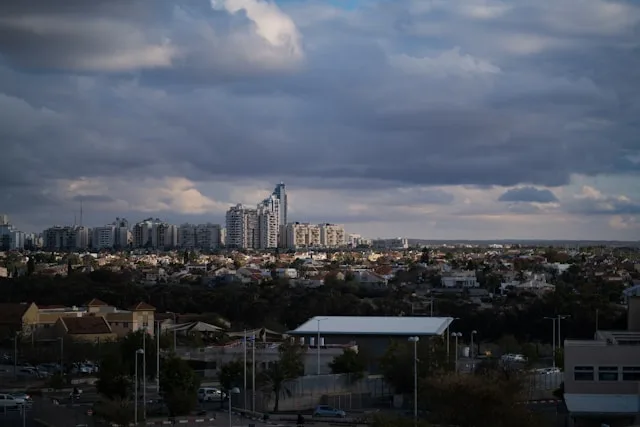
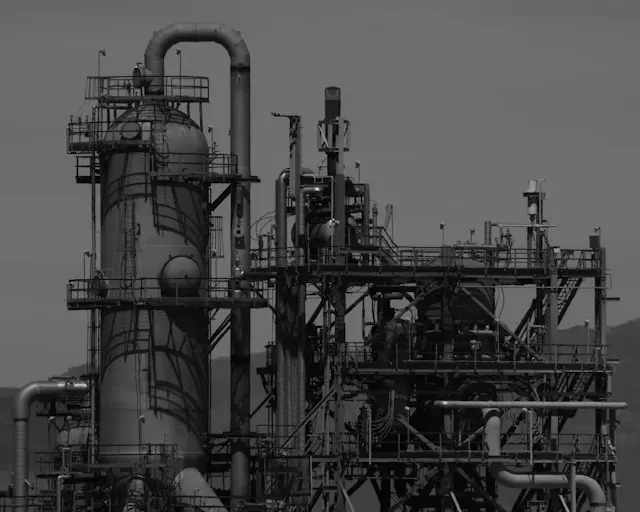
Any hiring strategy for Dudelange that begins with the assumption of a heavy steel economy begins in the wrong place, but the pivot happened in stages rather than in a single rupture. Luxembourg's last blast furnace closed in 1997, and the country's crude steel production has been entirely electric-arc since. Dudelange's own rolling mill shut for good in 2005, and the site is now being converted into the NeiSchmelz eco-district: almost 40 hectares of former industrial land destined for roughly a thousand homes rather than new production. The last integrated steel employer left the municipality through the 2024 bankruptcy.
What remains is a manufacturing base built on specialised materials and subcontracting rather than volume steel: Guardian's laminated-glass operation, precision machining and surface-treatment firms serving automotive and industrial customers, and the eco-technology startups hosted by the municipal Innovation Hub, opened in 2018 in a former ArcelorMittal building inside the NeiSchmelz district. The composition matters for hiring leaders because it defines both the opportunity and the constraint. Dudelange is not recruiting blast furnace operators. It is competing for mechatronics technicians, quality engineers with automotive certification, CNC programmers fluent in Heidenhain and Siemens controls, and plant managers capable of running multi-discipline operations inside the footprint of a small or medium-sized firm. The talent these firms need looks more like what a medtech operation in Contern requires than what ArcelorMittal's steel shop in neighbouring Esch-Belval demands.
The Cross-Border Dependency
The defining feature of this labour market is that much of it does not live in Luxembourg. STATEC's panorama of the national labour market counted 489,000 employees in 2024, and nearly half of them - 47 per cent - were cross-border commuters, mainly from France, at around 126,000 people; only one employee in four holds Luxembourg nationality, and the cross-border share has held at 47 per cent into 2025 and 2026. No published series breaks that share down to Dudelange's manufacturing base. For any employer in the municipality's industrial zones the practical meaning is still unambiguous: the candidate pool is regional rather than local, and it moves across three tax, social-security and training systems.
That dependency introduces friction that hiring leaders have to price. A cross-border employee's telework from France is capped at 34 days a year under the fiscal rule that keeps taxation in Luxembourg, and the bilateral framework agreement preserves Luxembourg social-security affiliation above that only up to a ceiling of roughly half of working time. The employer cannot convert a production role into a flexible one, and the candidate carries the commute. In practice the non-wage terms of a Luxembourg industrial role - shift patterns, telework allowance, commuting time - carry more weight in a cross-border candidate's decision than any headline salary comparison.
The Paradox at the Centre of This Market
Luxembourg is, by a wide margin, the most expensive labour market in the European Union: €56.80 per worked hour across the whole economy in 2025, against an EU average of €34.90. That headline number is what most hiring leaders carry into the market. It is also the wrong number for manufacturing. In industry - Eurostat's mining, manufacturing, energy and water aggregate - the same series puts Luxembourg at €49.70 per worked hour in 2025, level with Germany at €49.80 and about four per cent above France at €47.70. The premium visible in Luxembourg's aggregate statistics is concentrated in the financial and services economy, not on the production floor.
This changes the arithmetic of a Dudelange hiring campaign. For a German technician or engineer, a move to Dudelange is not, at sector-average level, the large gross premium the national statistics suggest - it is close to parity before housing and commuting are counted. For a French candidate the average differential is real but modest, and housing absorbs much of it: registered apartment prices in Dudelange average €6,512 per square metre, against a national average of €7,712, while German market data put Saarland apartments at a small fraction of that. When a market cannot fill roles and does not, at the level public statistics support, pay dramatically above its neighbours, the shortage has to be explained by something other than money.
The non-monetary barriers are structural. Small-firm hierarchies are flat, offering limited career progression against Germany's structured Meister and Techniker pathways or the advancement tracks of larger Luxembourg operations. Production-floor roles cannot offer the hybrid flexibility of office-based industrial functions. And the commuting burden falls on the candidate rather than the employer. Money is being asked to compensate for problems money does not solve.
Where the Talent Gaps Are Most Acute
Two role families dominate hiring difficulty in Dudelange's manufacturing base, and the public record now names them directly.
Automation and Mechatronics Technicians
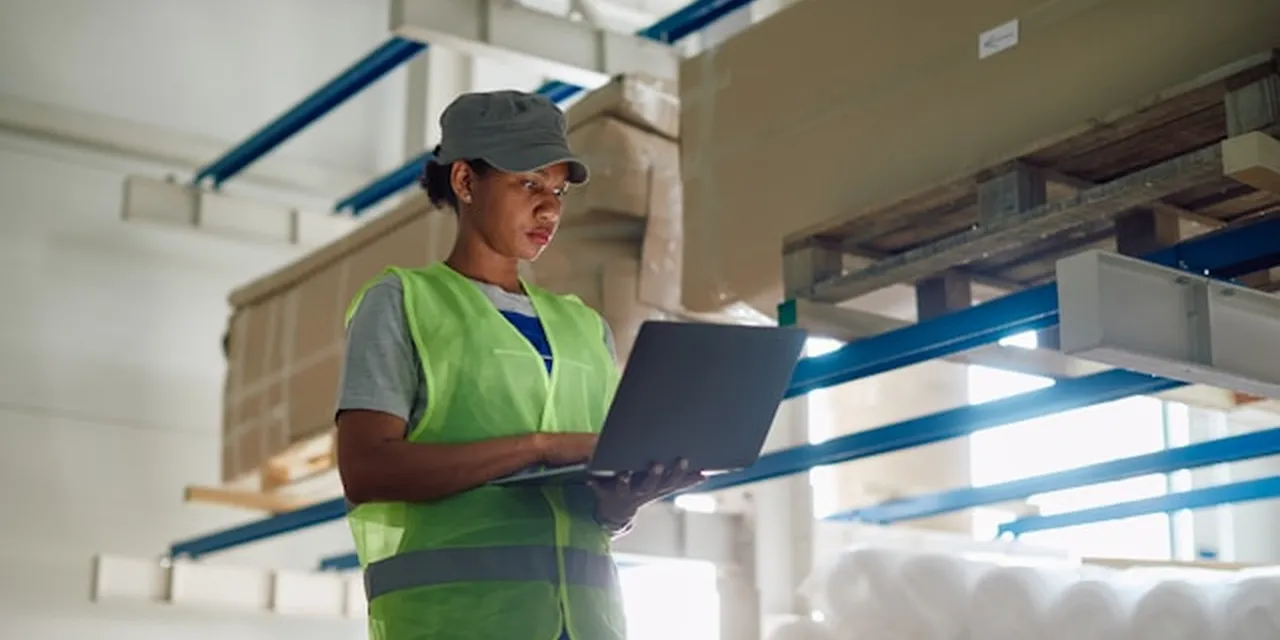
The employment agency's 2026 list of severely short occupations - twenty professions, revised each year from declared vacancies, registered jobseekers and declared posts for which no matching candidate could be found - includes the installation and maintenance of industrial and exploitation equipment as a new entry. For listed occupations, employers can hire third-country nationals through a simplified procedure with the work certificate issued within five working days. That administrative designation is the closest thing this market has to a public measure of where recruitment stalls, and it sits squarely on the automation, mechatronics and maintenance profiles Dudelange's remaining manufacturers run on.
The scale of the gap is not publicly measured. No published series tracks vacancy durations for automation technicians in the canton of Esch-sur-Alzette, and the shortage list itself publishes no durations or percentages - a constraint a serious search plan should acknowledge rather than paper over with invented benchmarks. The structural mechanism is clear enough: a small regional pool, an employer base of small firms without structured training ladders, and a technical training offer concentrated in Luxembourg City - the industrial BTS is organised by the Lycée des Arts et Métiers, while the only BTS hosted in Dudelange, at the Lycée Nic-Biever, covers digital content rather than industrial skills - and no published figure compares local technical output with industrial demand. Whether that pipeline can supply the municipality's remaining industrial base is an open question the public record does not answer.
Recruiting in such a market is a direct-identification exercise rather than a posting exercise. The candidates capable of running automation platforms inside a small firm are employed, mostly not applying, and reachable only through systematic mapping and approach.
Quality and Regulatory Engineers
The second gap is now explicit in the public record: management and industrial quality engineering entered the same 2026 shortage list as a new entry. For Dudelange's automotive and industrial subcontractors, quality profiles with IATF 16949 audit capability and bilingual French-German documentation skills are what gate customer approvals. When one firm hires such a person from another, the losing employer starts its own search in the same small pool - which is why quality searches in this market behave like retention events as much as hiring events.
No public survey quantifies how often that happens or at what premium. What can be said is structural: the pool of certified, bilingual quality professionals in the Greater Region is finite, the employers competing for them are close to each other, and the roughly 150 steel jobs lost at Dudelange in 2024 and 2025 added experienced industrial staff to a market that is otherwise short of them. A hiring leader can either absorb that displacement deliberately or compete against it blindly.
Tool and Die Makers
Precision machining for small-batch industrial components still runs on tool and die makers with CNC programming fluency, and nothing in the public record measures unemployment for this trade anywhere in the Greater Region. The relevant structural point is different: these are occupations learned over years, concentrated in the same small firms, and exposed to the same demographic renewal as the rest of the industrial workforce. Where the record is silent, a search plan should treat the passive-market assumption as a hypothesis to test through direct mapping, not as a statistic to quote.
The Competitive Geography: Who Dudelange Is Losing To, and Why
Dudelange does not compete for manufacturing talent against other Luxembourg municipalities alone. It competes against Saarland, against Greater Luxembourg City, and against the gravitational pull of staying put in Lorraine. Each competitor presents a distinct challenge.
Saarland: Lower Living Costs, Restructuring Employers
Average industrial labour costs are level between Luxembourg and Germany - €49.70 against €49.80 per worked hour in 2025 - but the cost of living is not. Registered apartment prices in Dudelange average €6,512 per square metre; German market data put Saarland apartments at a small fraction of that. For a candidate doing the arithmetic on net disposable income, the German side of the border wins more often than the gross comparison suggests. The employment proposition is more complicated than it used to be: Ford's Saarlouis car plant, long one of the region's largest industrial employers, built its last Focus in November 2025 and is winding down vehicle production, and the Saarland steel employers around it have been restructuring for years. Saarland is not a stable counterweight to Dudelange. It is a labour market in motion, releasing metallurgical and automotive skills even as it absorbs fewer of them.
The career-progression factor still compounds this. Germany's Mittelstand offers structured Meister and Techniker pathways that provide a visible trajectory; in a flat small-firm hierarchy in Dudelange, a senior technician often has nowhere to advance without leaving the organisation. For candidates in their thirties and forties making long-term calculations, that difference is material.
Luxembourg City: The Dual-Career Pull
The capital's industrial corridor - Contern, Bertrange, Windhof and the surrounding zones - competes for the same technical profiles with the added pull of a dual-career labour market. No public benchmark prices the differential between a Dudelange role and an equivalent position in that corridor, and the consultancies that publish Luxembourg salary guides do so behind gated downloads. The structural draw is not primarily compensation: a manufacturing engineer whose partner works in financial services, consulting or technology can hold both careers in Luxembourg City, while the partner's options in the industrial south are materially narrower. For plant-management and operations searches, that variable decides which candidates will consider the role at all, and it appears on no job specification.
Lorraine: The Supply That Is Recalculating
Lorraine remains the largest single source of Luxembourg's cross-border workforce - around 126,000 French residents were commuting into the Grand Duchy in 2024, roughly half the total and more than the German and Belgian contingents combined. At industrial-sector average level the gross differential runs a few per cent in Luxembourg's favour; the housing differential runs much further in France's. What is changing is the non-wage side: cross-border telework is capped by the 34-day fiscal rule and bounded by the bilateral social-security framework, and every constraint of that kind reduces the effective flexibility a Luxembourg production role can offer against a local one. If even a fraction of that workforce recalculates the commute, Dudelange's talent supply contracts without any change in demand.
Compensation in Full: What the Public Record Does and Does Not Show
The honest position on pay is that no public source prices senior industrial roles in Dudelange. The consultancy benchmarks hiring leaders cite - Hays, Robert Walters, Korn Ferry, Mercer - sit behind gated downloads, and no Luxembourg statistical series publishes compensation by role, commune or sector at that granularity. Any specific euro figure for a manufacturing engineer or plant director in Dudelange that cannot be traced to one of those guides should be treated as unverified.
What the public record does establish is the level comparison: €49.70 per worked hour in Luxembourg industry against €49.80 in Germany and €47.70 in France in 2025, on Eurostat's series of total employer costs including social contributions. Those are sector averages, not senior-role salaries, and they say nothing about individual premiums for bilingual candidates or certification holders. But they are enough to retire the idea that a Dudelange offer competes primarily on a large gross premium over the neighbouring regions: at the level the statistics support, industrial pay in Luxembourg is at German parity and slightly above French.
For organisations benchmarking offers, the two variables most frequently miscalculated are the ones with no public series at all: the premium for bilingual French-German technical candidates, and the effective value of the cross-border package once housing and commuting are counted. Both belong in a search brief as open questions with explicit assumptions, not as inherited numbers.
The Constraints That Will Not Move: Land, Energy and Demographics
Three forces constrain Dudelange's manufacturing sector in ways that hiring strategy alone cannot resolve. They shape the talent market profoundly, and any search strategy that ignores them will misread candidate motivations.
Industrial Land Is Going to Housing
The largest industrial land reserve in Dudelange is already allocated - to homes, not factories. The NeiSchmelz project is converting almost 40 hectares of the former rolling-mill site into a carbon-neutral district of roughly a thousand housing units, a conversion that began with the mill's closure in 2005 and that the state housing fund now drives. When the Luxembourg state bought the bankrupt electrical-steel site in 2025, at a reported €14.5 million, it was resolving a bankruptcy rather than releasing industrial land. The practical consequence for employers is that headcount growth in Dudelange happens inside an existing built footprint: extensions, densification and shift changes rather than new halls. That limits which roles can be added and how production can be reconfigured, and it is a fixed parameter in any hiring plan for the municipality.
Energy Is Not the Disadvantage It Is Assumed to Be
A repeated assumption in the region is that Luxembourg industrial employers pay more for energy than their German competitors. The Eurostat series says the opposite: non-household electricity prices including taxes averaged €0.186 per kilowatt-hour in Luxembourg in the second half of 2025 against €0.272 in Germany, a gap of roughly thirty per cent in Luxembourg's favour that has held since the crisis years. The cost pressure on a Dudelange SME is real, but on the published evidence energy is not the variable carrying it, and an employer's investment case should not be argued from a disadvantage the statistics do not show. For candidates weighing employer viability, that distinction matters.
The Demographic Question Nobody Has Measured Locally
No published series gives the age structure of Dudelange's industrial workforce, and no public figure compares local training output with industrial demand. The nearest verified events are sobering enough: the bankruptcy of the municipality's steel employer put about 150 experienced industrial staff into the market at once, with unions negotiating early-retirement measures for those eligible, and a job day at the Chamber of Commerce in June 2025 drawing around thirty employers to meet them. A market that loses a century-deep steel competence base while its replacement pipeline is measured nowhere is a market whose senior technical knowledge is leaving faster than it is being replaced - a hypothesis the record supports but does not quantify.
What This Means for Hiring Leaders in 2026
The Dudelange manufacturing market in 2026 is defined by a contraction that has already happened and a shortage that persists through it. The steel anchor is gone through bankruptcy; the land is going to housing; the labour supply is cross-border and recalculating; and the two role families the remaining manufacturers run on - industrial maintenance and quality engineering - are named on the national shortage list. Capital in this market has already been reallocated. The people with the competence to run what remains will not appear through conventional advertising.
The conventional search methods fail here for identifiable reasons. Job postings reach the minority of candidates actively looking, and in a market this small that minority is thin. For listed shortage occupations there is an administrative lever - simplified third-country-national hiring with a certificate issued within five working days - which is worth using in parallel rather than instead of direct search.
For organisations competing for senior manufacturing leadership and specialist technical talent in Luxembourg's southern industrial corridor, the requirement is clear. Reaching the candidates who can fill these roles requires a method built for passive markets: systematic talent mapping across the Greater Region, direct identification of candidates in Saarland, Lorraine and competing Luxembourg operations, and a search process fast enough to engage professionals before they accept competing approaches.
For hiring leaders facing months-long vacancy durations in a market where every month of delay compounds the skills gap, start a conversation with our industrial sector search team about how we source senior manufacturing talent in the Greater Region.
Frequently Asked Questions
What manufacturing roles are hardest to hire in Dudelange, Luxembourg?
Industrial equipment installation and maintenance technicians - the automation, mechatronics and maintenance profiles the remaining plants and subcontractors run on - and quality professionals: management and industrial quality engineering entered ADEM's 2026 shortage-occupations list as a new entry alongside industrial maintenance. The list is built from declared vacancies, registered jobseekers and unfilled declared posts, and it gives employers simplified third-country hiring for listed roles. No public series measures vacancy durations for these roles locally.
What do senior manufacturing professionals earn in Dudelange?
No public source prices senior industrial roles in Dudelange: the consultancy salary guides for Luxembourg are gated, and no statistical series publishes pay by role or commune. The verified level comparison is sector-wide - Luxembourg industry averaged €49.70 per worked hour in total employer costs in 2025, level with Germany at €49.80 and about four per cent above France at €47.70. For role-level figures, validate against a current benchmarked guide rather than inherited numbers.
Why is Dudelange struggling to attract talent despite high salaries?
Because the premium is smaller than Luxembourg's headline reputation suggests, and the non-wage arithmetic runs the other way. In industry, Luxembourg's employer costs are at German parity; housing in Dudelange averages €6,512 per square metre against a small fraction of that in Saarland and Lorraine; small-firm hierarchies offer thinner progression than Germany's Meister pathways; and cross-border telework is capped by the 34-day fiscal rule and the bilateral social-security framework. The offer that wins here is built on role scope, stability and flexibility, not on gross salary alone.
How does cross-border competition affect manufacturing recruitment in Luxembourg?
Nearly half of Luxembourg's employees are cross-border commuters - 47 per cent, with about 126,000 from France - so Dudelange's employers recruit into a regional pool by default. They compete against Saarland, where living costs are far lower even as Ford's Saarlouis plant winds down, and against the Luxembourg City corridor, where dual-career households are easier to sustain. On the French side, telework caps and social-security coordination reduce the effective flexibility of a Luxembourg role.
How can companies hire passive manufacturing candidates in Dudelange?
In a market this small, the senior industrial candidates worth hiring are employed and not applying. Job boards and inbound applications reach a fraction of the viable pool.
What is the demographic outlook for Dudelange's industrial workforce?
No published series measures the age structure of Dudelange's industrial workforce or compares local training output with demand. The verified events point one way: the 2024 bankruptcy of the municipality's steel employer displaced about 150 experienced industrial staff, early-retirement measures covered the oldest of them, and the industrial training pipeline is organised around Luxembourg City's Lycée des Arts et Métiers rather than the industrial south. Treating demographic renewal as an open, unmeasured risk is more accurate than quoting any figure.
Related Links
- Dudelange
- Luxembourg
- Industrial Manufacturing
- Wiltz Renewable Energy Talent: What the Verified Record Shows
- Dudelange Logistics Hiring: Why Zero Warehouse Space and a Shrinking Talent Pool Are Forcing a New Operating Model
- Wiltz Tourism Hiring: Define the Mandate Before the Search
- Quebec City's Insurance Sector Cut Hundreds of Jobs and Still Cannot Hire the People It Needs
Related Market Reads
Articles tied to the same hiring geography or market context.
Wiltz Renewable Energy Talent: What the Verified Record Shows
The verified public record for Wiltz - a 764-documented Ardennes town of 6,145 on the river of the same name, battle-scarred and castle-crowned - and what a renewable-energy mandate in Luxembourg's north must actually cover.
Dudelange Logistics Hiring: Why Zero Warehouse Space and a Shrinking Talent Pool Are Forcing a New Operating Model
Dudelange's Zone Industrielle is running at 98% warehouse utilisation with no Class A logistics space available. Average rents for modern logistics facilities climbed 12% year...
Wiltz Tourism Hiring: Define the Mandate Before the Search
What the verified public record establishes about Wiltz - its 1727 castle, 6,145-strong town population and Battle of the Bulge heritage - and where a tourism mandate needs contacted, assessed and validated candidates.
Nearby Market Signals
Lateral reads from adjacent cities, sectors, or themes.
Quebec City's Insurance Sector Cut Hundreds of Jobs and Still Cannot Hire the People It Needs
Quebec City's two largest insurers eliminated 450 administrative positions over a two year integration cycle. The headlines told a story of contraction. The recruitment data...
Milan Professional Services: Define the Practice and Delivery Mandate
How should a Milan professional-services firm define a mandate across regulated assurance, advisory, legal practice, data delivery and partnership economics?
Los Angeles Entertainment Hiring: Define the Mandate Before the Search
Which studio-production, games-and-interactive or music-and-recording responsibility actually defines an LA entertainment mandate?
From the Archive
Evergreen background reading that still sharpens current hiring decisions.
Wiltz Light Manufacturing: Why 112-Day Vacancies Are Rewriting the Rules for Luxembourg's Northern SMEs
Wiltz is a commune of 7,600 people in Luxembourg's rural Éislek region. It maintains 35 hectares of zoned industrial land, two active industrial zones with occupancy above 94%,...
Luxembourg Fund Servicing Talent: What the Verified Record Shows
The verified public record for Luxembourg's fund industry - the world's second-largest investment fund centre under CSSF supervision - and what a fund-servicing leadership mandate there must actually cover.
Luxembourg Legal and Fund Governance Hiring: Define the Mandate Before the Search
What the verified public record establishes about Luxembourg's fund-centre standing, its EU-institutional seat, and where a legal or governance mandate needs contacted, assessed and validated candidates.