A Region Where Unemployment Masks the Real Crisis
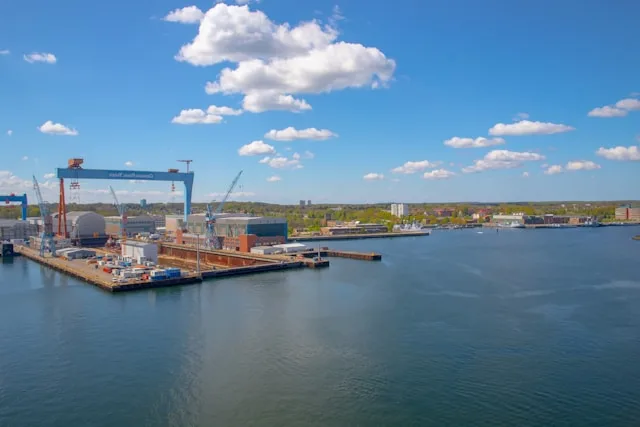
The Ioannina Industrial Area, on a site of more than 1,000 stremmata at Rodotopi north of the city, hosts on the order of 120 manufacturing and processing enterprises with more than a thousand employees, and light metal fabrication, aluminium systems, and furniture production are prominent among them. They supply structural steel for hydroelectric maintenance, mounting systems for Greece's fast-growing photovoltaic market, and aluminium components for the road-improvement works that continue across the Epirus network. Demand is not the problem. The problem is that the people who can do the work are either retired, emigrated, or working for someone who will not let them go.
What follows is an analysis of why Ioannina's manufacturing talent market is broken in ways that aggregate unemployment figures completely obscure, what it means for SME owners and hiring leaders trying to build production capacity, and what a realistic hiring strategy looks like when 85% of the candidates you need are not looking for a job.
The instinct when hearing that a Greek region's unemployment sits above the national average is to assume that hiring should be straightforward. Post a vacancy, wait for applications, select from a surplus of willing candidates. In Ioannina's metal fabrication sector, this assumption fails almost immediately.
Epirus makes the point cleanly. The region's unemployment rate has run above the Greek average every year since 2020 — 10.7% in 2024 and 9.9% in 2025, against 10.1% and 8.9% nationally, on Eurostat's regional labour-force statistics. Yet the friction is not confined to Epirus: in an OECD survey published in late 2025, roughly seven in ten Greek firms said they have difficulty finding staff. The regional unemployment pool is overwhelmingly composed of people without the vocational qualifications these roles require.
This is not a general labour shortage. It is a skills mismatch so severe that it renders the headline unemployment rate meaningless for anyone trying to hire a five-axis CNC operator or a certified TIG welder. The 9.9% figure describes a population that cannot do what the industrial zone needs done. The effective vacancy rate for specialised welding roles in Epirus reached 34% in 2024, meaning that more than a third of all positions firms tried to fill were eventually abandoned because no suitable candidate could be found.
For hiring leaders in Ioannina's industrial and manufacturing sector, this distinction between headline unemployment and functional talent availability is the single most important number to understand. It explains why searches stall, why subcontracting deadlines slip, and why firms with full order books still cannot scale.
Where the Talent Went
Understanding why the candidates do not exist requires tracing three outflows that have been operating simultaneously for over a decade.
The Ageing Workforce
The age profile of Epirus's metal workshops tells the story before any survey does. This is not a future problem. It is a present one. The cohort of workers who learned precision welding and CNC operation during the pre-crisis industrial expansion of the 2000s is now entering its final working decade. When these workers retire, the institutional knowledge they carry leaves with them. No training programme replaces thirty years of hands-on familiarity with specific machines and tolerances.
The Emigration Pipeline
The University of Ioannina's Department of Materials Science and Engineering — the only materials department inside a Greek engineering school — produces graduates every year, but the local economy retains few of them. The crisis decade emptied the vocational tier across the country: an estimated more than 400,000 Greeks, disproportionately young and educated, left between 2008 and the mid-2010s, most for Northern Europe, where net wages for certified metalworkers reach €3,500 to €4,200 monthly. That compares to €2,100 to €2,700 net for a production manager in Ioannina. The university, intended as a talent source for the local economy, functions in part as a sorting mechanism that identifies the most capable young engineers and sends them abroad.
This pattern extends beyond graduates. Skilled welders and CNC operators with five or more years of experience are actively recruited into Germany and the Netherlands, and as EU citizens they need no permit to take those jobs. The flow has begun to turn: in 2023, for the first time since the crisis, more Greeks returned home than left. But a return flow measured in the tens of thousands nationally does not refill a regional vocational pipeline on its own. The passive majority of senior talent that characterises most executive markets has a different composition here. In Ioannina, the passive candidates are not merely content in their current roles. Many of the best have physically left the country.
The Tourism Drain
The third outflow is local and less discussed, but it directly undermines the manufacturing talent pipeline at its base. Ioannina's hospitality sector, particularly in the city centre and the Zagori region, offers immediate cash employment at €900 to €1,100 net monthly for unskilled work. Entry-level manufacturing wages sit at €850 to €950 net. A young person weighing whether to complete a two-year CNC machining programme at the local IEK vocational centre faces a simple calculation: drop out now for comparable pay in a restaurant, or persist through training for a marginally higher starting wage in a factory.
The result of these three forces operating together is not merely a tight labour market. It is a shrinking one.
The Roles That Define the Bottleneck
Not every manufacturing role in Ioannina is equally hard to fill. Administrative positions fill in roughly two months. General labourers and entry-level machine operators still attract active applicants at reasonable rates. The crisis concentrates in three specific role categories where the combination of technical skill, certification, and experience creates an almost impenetrable hiring barrier.
CNC Machining Centre Operators
A five-axis CNC operator with Fanuc control experience is the single most difficult hire in Ioannina's industrial zone. Vacancy persistence runs six to nine months for a typical SME in the industrial area. Seventy-eight percent of such vacancies in Epirus remain unfilled after 90 days. The passive candidate ratio for CNC programmers and setters with five or more years of experience sits at approximately 85%. These individuals have an average tenure of 7.2 years with their current employer and respond to job postings at rates below 8%.
The firms that do fill these roles do so through informal networks, often tapping into communities of repatriated Greeks who worked in German manufacturing and returned to Epirus for family reasons. This is not a scalable recruitment method. It depends on personal connections and timing, not process.
Certified TIG Welders for Aluminium
Qualified welding candidates with five or more years of experience are typically recruited through informal channels before positions ever reach a public job board. When a vacancy does go public, the employer competes against multiple simultaneous offers to the same small pool. The effective vacancy rate of 34% for specialised welding roles means that one in three searches ends not in a hire but in surrender.
Production Managers with Digital Credentials
This is the role where the skills mismatch is most acute. Ioannina's SMEs need production managers who combine traditional metalworking knowledge with Industry 4.0 capabilities: MES systems, IoT integration, and lean manufacturing credentials. The local talent pool does not contain this combination. Firms have resorted to searching among retired military technical officers and targeting repatriated Greeks from German industrial groups. Active candidates who do apply typically lack the digital process optimisation experience that upgrading SMEs require.
The average time to fill for skilled technical positions in Ioannina now stands at 4.2 months. For administrative roles, it is 2.1 months. That gap, doubled, tells the story of which roles matter and which the market can handle.
What the Infrastructure Pipeline Demands and What the Market Cannot Deliver
Here is the core tension that makes 2026 different from the years before it. Demand is arriving exactly when supply is at its weakest.
EU structural funds through the Epirus 2021–2027 Operational Programme continue to co-finance SME modernisation and digitalisation across the region. Road-improvement and maintenance works continue across the Epirus network, and each round of contracts pulls structural steel and aluminium components through local suppliers. PPC's hydro fleet, which includes the Piges Aoou plant in the Ioannina regional unit, sustains a rolling cycle of maintenance and refurbishment that local metalworking firms subcontract. Greece's photovoltaic boom — roughly 2.5 GW of new capacity connected in 2024 alone, taking the national fleet towards 9.6 GW — feeds a steady market for the mounting systems that Ioannina fabricators are positioned to build.
The money is there. The orders are there. The workers are not.
In KiTalent's conversations with Epirus manufacturers, the constraint on digital-transformation investment is rarely ambition or awareness. It is a lack of technical personnel to prepare and implement the applications. The cost of a failed or delayed executive hire in a market like this is not abstract. It is a subsidy deadline missed, a tender not bid on, a contract awarded to a competitor in Thessaloniki who could staff the project.
No forecaster publishes a city-level manufacturing outlook for Ioannina, but the national picture frames the regional one. Greek manufacturing's constraint in this cycle is labour supply, not demand, and regions with the thinnest vocational pipelines feel that constraint first. A sector that cannot hire fast enough to convert orders into output grows slower than its order book says it should — and that is the position Ioannina's fabricators are in.
Compensation: The Three-Way Squeeze
Ioannina's metal fabrication employers operate inside a compensation structure that makes it nearly impossible to compete on salary alone. The squeeze comes from three directions simultaneously.
Athens pays 35% to 45% more for production managers and 50% to 60% more for specialised CNC programmers. Thessaloniki, closer and more accessible, pays 15% to 20% more with the added advantage of port access and a larger manufacturing cluster. Germany and the Netherlands pay multiples. A certified welder earning €2,100 net monthly in Ioannina could earn €3,500 to €4,200 net in Northern Europe.
A production manager in Ioannina earns €32,000 to €42,000 gross annually at the senior specialist level, rising to €48,000 to €65,000 for executive-level roles overseeing multiple sites or leading digital transformation. These figures carry an 18% to 22% premium for Industry 4.0 experience, reflecting the acute scarcity of that specific combination. A CNC department supervisor earns €24,000 to €30,000 at the specialist level. A quality assurance manager working to ISO 9001 and EN 1090 standards commands €28,000 to €36,000 at the specialist level, rising to €42,000 to €55,000 at the executive level.
These numbers represent a 35% to 40% discount versus equivalent roles in Athens. For someone negotiating a compensation package to relocate to Ioannina, the lower cost of living partially offsets this discount, but partially is not fully. A mid-career CNC programmer weighing an Ioannina offer against a Thessaloniki one faces a 15% to 20% pay cut for a smaller city with fewer career progression options. The counteroffer dynamic is particularly potent in a market this small: a current employer who loses a certified TIG welder may not be able to replace them at all, which means counteroffers tend to be aggressive and immediate.
The firms that succeed in hiring do not try to match Athens or Thessaloniki on cash compensation. They compete on stability, community ties, lower housing costs, and in some cases on the quality-of-life proposition that Ioannina's proximity to Zagori and the Pindus mountains represents for families. But these are soft factors, and they do not close a 40% pay gap for a 28-year-old without children.
A Vocational Middle That Has Hollowed Out
The data in this market reveals something that aggregate statistics consistently obscure. Ioannina does not have a manufacturing talent shortage in the conventional sense. It has a vocational middle hollowed out. The university produces graduates too qualified and too mobile for SME workshop floors. The vocational system produces too few completers because tourism offers faster cash. The experienced mid-career cohort is ageing out or emigrating. What remains is a gap in the middle of the skills distribution where the people who actually operate CNC machines, certify welds, and supervise production lines should be.
This is not a problem that higher salaries alone can solve, because the people are not there to be bid for. It is not a problem that university investment can solve, because the university's graduates do not want these jobs and are not trained for them. It is a structural emptying of the vocational tier that sits between unskilled labour and degree-level engineering. Capital investment in new machinery, subsidy programmes for digital transformation, and infrastructure procurement pipelines all assume the existence of a workforce that can operate, implement, and deliver. In Ioannina in 2026, that assumption is failing.
What a Realistic Hiring Strategy Looks Like in This Market
For SME owners and hiring leaders in Ioannina's metal fabrication cluster, the conventional approach of posting a vacancy and waiting for applications reaches perhaps 15% of the viable candidate pool. The remaining 85% of qualified CNC operators, welders, and production managers are employed, passive, and invisible to job boards.
Reaching them requires a fundamentally different method. Direct search and headhunting is not a luxury service for large corporates. In a market like Ioannina, it is the only approach that can reliably identify the twelve certified welding inspectors estimated to operate in the entire Epirus region, or the small number of production managers who have both metalworking depth and Industry 4.0 credentials.
The critical roles in this market share three characteristics that make traditional recruitment ineffective. First, the total addressable talent pool is extremely small in absolute numbers. Second, the passive candidate ratio exceeds 75% for every role that matters. Third, the candidates who do exist are held in place by long tenure, informal loyalty networks, and the knowledge that their current employer cannot replace them. Moving these individuals requires a search methodology built around identification, direct engagement, and a compelling proposition designed before outreach begins.
Talent mapping is particularly valuable in micro-markets like Ioannina, where the total number of qualified individuals for a given role may be fewer than twenty in the entire region. Knowing exactly who they are, where they work, what they earn, and what might move them is not competitive intelligence. It is a prerequisite for any search that has a realistic chance of succeeding.
KiTalent combines candidate identification with direct engagement of passive talent; the Proof-First Search terms explain when the interview fee is invoiced and how it is credited against placement.
For organisations competing for production leadership and specialised technical talent in Greece's regional manufacturing markets, where the candidate pool is measured in dozens rather than hundreds and the cost of an unfilled role is a missed infrastructure tender or an expired subsidy window, reach out to our executive search team to discuss how KiTalent approaches these challenges with the speed and precision this market demands.
The Path Forward for Ioannina's Industrial Zone
The 2026 outlook for Ioannina's metal fabrication cluster is one of constrained potential rather than decline. The public-works pipeline, the growing photovoltaic installation market, and the city's long-established furniture makers all point to sustained demand. The EU funds allocated for digital transformation are real and available. The question is not whether Ioannina's manufacturers have a market. It is whether they can staff the production lines that serve it.
The firms that will capture the most value from this cycle are those that solve the hiring problem before the tender deadlines arrive. That means treating recruitment not as an administrative function but as a strategic one. It means recognising that in a market where 85% of qualified candidates are passive, every critical hire is a direct search engagement, not a job posting. And it means acting with the understanding that the vocational middle will not refill itself. The demographic, emigration, and educational forces draining it are deep-rooted and will persist well beyond 2026.
For Ioannina's SME leaders, the implication is clear. The infrastructure money is arriving. The orders will follow. The only variable that determines whether those orders are filled locally or lost to competitors in Thessaloniki and Athens is whether the right people are on the workshop floor when the contracts are signed.
Frequently Asked Questions
What are the hardest manufacturing roles to fill in Ioannina in 2026?
Five-axis CNC machining centre operators with Fanuc control experience, certified TIG welders for aluminium (EN ISO 9606-1), and production managers with both traditional metalworking knowledge and Industry 4.0 digital credentials. These three role categories have passive candidate ratios exceeding 75%, with CNC operators at 85% and certified welding inspectors at over 90%. Average time to fill for skilled technical positions in the region is 4.2 months, and 78% of CNC vacancies remain unfilled after 90 days.
Why is unemployment high in Epirus but manufacturing vacancies still go unfilled?
Epirus reports unemployment of 9.9% (2025), among the higher regional rates in Greece, but the unemployed population overwhelmingly lacks the vocational certifications that metal fabrication SMEs require. The regional unemployment pool consists largely of people without technical training, while the specific skills needed, including CNC programming, certified welding, and PLC troubleshooting, require years of vocational education and hands-on experience that the unemployed population does not possess.
What do production managers earn in Ioannina's manufacturing sector?
At the senior specialist level, production managers in Ioannina earn €32,000 to €42,000 gross annually. Executive-level roles overseeing multiple sites or leading digital transformation command €48,000 to €65,000, with an 18% to 22% premium for Industry 4.0 experience. These figures represent a 35% to 40% discount versus Athens and a 20% to 25% discount versus Thessaloniki, reflecting Ioannina's lower cost of living but also its competitive disadvantage in attracting talent from larger cities.
How does KiTalent help manufacturers find technical talent in small regional markets?
In a small market such as Ioannina, continuous mapping and direct outreach can broaden the search beyond candidates responding to job advertisements.
What is driving demand for metal fabrication workers in Ioannina in 2026?
Three converging forces are driving demand. First, continuing road-improvement works across the Epirus network, each round of contracts pulling structural steel and aluminium components through local suppliers. Second, the maintenance and refurbishment cycle around PPC's hydro fleet, including the Piges Aoou plant in the Ioannina regional unit. Third, Greece's photovoltaic boom — roughly 2.5 GW of new national capacity in 2024 — which feeds a steady market for the mounting systems local fabricators build. EU structural funds through the Epirus 2021–2027 programme continue to co-finance SME modernisation and digitalisation.
What are the main competitors for manufacturing talent against Ioannina employers?
Ioannina competes on three fronts. Athens offers 35% to 45% higher pay for production managers and larger career progression pathways. Thessaloniki offers 15% to 20% more with port access and a denser manufacturing cluster. International markets, particularly Germany and the Netherlands, offer net monthly wages of €3,500 to €4,200 for certified metalworkers versus €2,100 to €2,700 in Ioannina. Locally, the tourism and hospitality sector also competes for entry-level workers, offering immediate cash employment at comparable wages without the training requirement.
Related Links
- Ioannina
- Greece
- Patras Maritime Hiring: A Strategic Gateway With a Workforce That Cannot Keep Pace
- Volos Tourism and Marine Recreation: €42 Million in Infrastructure, Not Enough Leaders to Run It
- Volos Maritime and Logistics Hiring: Define the Mandate Before the Search
- Quebec City's Insurance Sector Cut Hundreds of Jobs and Still Cannot Hire the People It Needs
Related Market Reads
Articles tied to the same hiring geography or market context.
Patras Maritime Hiring: A Strategic Gateway With a Workforce That Cannot Keep Pace
Patras is a TEN-T core port on the Orient/East-Med corridor and the Greek anchor of the Motorway of the Sea link to Italy: 204,761 of the 207,422 freight units it handled in ...
Volos Tourism and Marine Recreation: €42 Million in Infrastructure, Not Enough Leaders to Run It
Volos funnels 3.5 million ferry passengers a year toward the Sporades islands, anchors 12 yacht charter operations in the Pagasetic Gulf, and serves as the primary service hub...
Volos Maritime and Logistics Hiring: Define the Mandate Before the Search
What the verified public record establishes about Volos - Greece's third-largest cargo port, founded 1893 at the head of the Pagasetic Gulf - and where a mandate needs contacted, assessed and validated candidates.
Nearby Market Signals
Lateral reads from adjacent cities, sectors, or themes.
Quebec City's Insurance Sector Cut Hundreds of Jobs and Still Cannot Hire the People It Needs
Quebec City's two largest insurers eliminated 450 administrative positions over a two year integration cycle. The headlines told a story of contraction. The recruitment data...
Milan Professional Services: Define the Practice and Delivery Mandate
How should a Milan professional-services firm define a mandate across regulated assurance, advisory, legal practice, data delivery and partnership economics?
Los Angeles Entertainment Hiring: Define the Mandate Before the Search
Which studio-production, games-and-interactive or music-and-recording responsibility actually defines an LA entertainment mandate?
From the Archive
Evergreen background reading that still sharpens current hiring decisions.
Volos Agrifood Cluster: Why €120 Million in New Capacity Cannot Find the People to Run It
Volos entered 2026 with more processing capacity under construction than at any point in the past two decades. Myloi Thessalias is commissioning specialty flour lines for...
Thessaloniki Technology Hiring: Define the Mandate Before the Search
Which nearshore-delivery, product-engineering or student-pipeline responsibility actually defines a Thessaloniki technology mandate?
Thessaloniki's Agri-Food Sector Has Invested Heavily in Infrastructure. The Workforce to Run It Has Not Followed.
Thessaloniki processed and exported €2.14 billion in agri food products through its port in the twelve months to March 2025. That figure rose 7.3% year on year, driven by olive...