It is also a market that has consolidated around fewer, larger employers while its regulatory and infrastructure environment becomes more demanding. The corridor's one remaining Greek distress story ended not with liquidation but with absorption: the competition authority cleared Attica Group's takeover of ANEK Lines in August 2023 explicitly on the argument that ANEK would otherwise exit the market. The EU emissions trading system reaches its full maritime scope for 2026 emissions. The rail line that should connect the port to the national network is still under construction, and the masterplan that will reshape the port cleared its decisive legal hurdle only in January 2026. The strategic designation and the hiring reality have diverged, and the burden of that divergence lands on a small specialist labour pool.
What follows is a structured analysis of the forces reshaping Patras as a maritime employment market: the operator consolidation already complete, the regulatory costs arriving simultaneously, the infrastructure investment that is authorised but largely not yet built, and what all of this means for organisations trying to hire and retain the leadership talent that keeps freight moving across the Adriatic.
The Adriatic Corridor in 2026: What the Verified Record Establishes
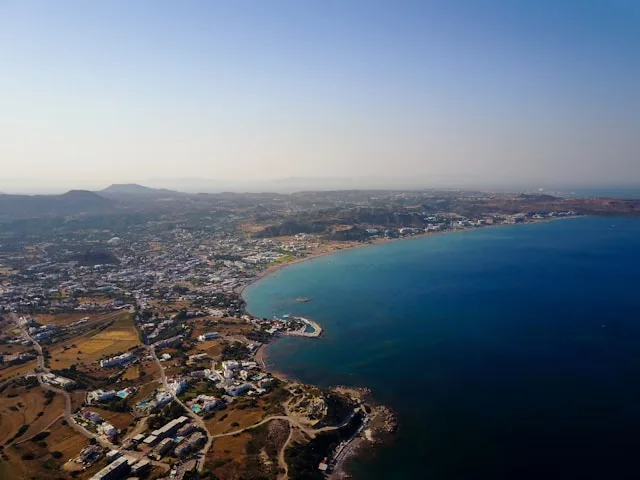
Patras's role as a maritime hub is not a matter of aspiration. It is a matter of geography and designation. Sitting at the western tip of mainland Greece, the port pairs with the Italian Adriatic ports — Ancona, Venice, Trieste and Brindisi all appear on its operators' route maps — and through them with the road network into Central Europe. The port's own European project documentation describes its mission as upgrading the maritime line that connects the TEN-T core ports of Venice and Patras and integrating that link into the core network corridors. The traffic record the port authority publishes shows what that means in practice: in 2024, 73,369 accompanied trucks and 131,392 unaccompanied trailers moved on the international corridor, against 2,661 domestic truck movements, alongside 309,326 international and 175,028 domestic passenger journeys.
The trend inside those numbers matters more than the headline. International passenger traffic has fallen every year since 2022, from 380,566 to 266,688 in 2025. Accompanied trucks are down too, from 108,186 in 2020 to 61,719 in 2025. Unaccompanied trailers have moved the other way, rising from 91,513 in 2020 to 139,456 in 2025 — a 52 per cent increase that shifts work from driving to port-side handling, documentation and yard operations. For an employer in Patras, the port's freight business is not shrinking; it is changing shape, toward precisely the terminal, customs and cold-chain skills that are hardest to hire.
A Corridor Consolidated Into Two Groups
The market structure story that still circulates about Patras — three independent operators, one of them distressed — is out of date, and hiring leaders who plan against it will misread where the talent pool actually sits. ANEK Lines, the Chania-based operator that ran Greece–Italy services for five decades, was absorbed by Attica Holdings, the group behind Superfast Ferries, under the weight of loan obligations reported at around €255 million: the banks wrote off about two-thirds of the debt, Attica took on roughly €80 million of it, and ANEK shareholders received about 11.5 per cent of the merged company. The Hellenic Competition Commission cleared the concentration unanimously in August 2023 (Decision 827/2023), expressly on the failing-firm argument that ANEK would otherwise soon exit the market. The merger took legal effect in mid-2024, and fleet rationalisation followed — the KRITI II was sold for scrap in November 2024.
The Adriatic corridor from Patras is now effectively a two-group market. On one side, Attica operates the ANEK and Superfast brands jointly on Ancona–Igoumenitsa–Patras, with Venice and Bari services alongside. On the other, the Grimaldi Group — which controls Minoan Lines — runs Grimaldi and Minoan services on the same corridor, and since October 2024 its Eco Malta and Eco Mediterranea have called at Patras twice weekly on the Trieste–Patras–Ambarli service linking Greece and Turkey. Smaller operators add capacity at the margins. For employment, the implication is structural: the number of independent institutions in which a senior maritime career can be built in this market has fallen, and the groups that remain recruit from one another. When one operator loses a port captain or an operations director, the realistic shortlist is drawn from the same two groups and the same cluster of local forwarders.
The Rail Gap and a Masterplan Only Now Ready to Build
The disconnect between Patras's strategic designation and its infrastructure is real, but it is not the story of a port that was promised rail and lost the final kilometres of it. The truth is more basic: the Athens–Patras main line itself is still under construction. Regular services today reach Aigio; the government's stated target is for the new double line to reach Psathopyrgos, still short of the city, by the end of 2026, with Rio targeted for 2028 and the port connection after that. A suburban service has run on the Rio–Agios Andreas–Kaminia section since July 2025. The link from the rail network into the port itself — from Rio to the new port — is still at the design-discussion stage, after the previous construction contract collapsed. Until any of that is built, every trailer leaving Patras moves by road for its full hinterland journey, and every logistics role in the market is scoped around trucking capacity, yard planning and motorway access.
What is genuinely new is that the port's masterplan finally cleared its decisive institutional barrier: the Council of State approved it in January 2026, opening the way for a presidential decree and publication in the Government Gazette. The plan repositions Patras from transit gateway into a multi-functional hub: a new cargo pier with a direct rail connection enabling ship–rail–road operations; a phytosanitary inspection gate for agricultural exports; a support base for offshore hydrocarbon operations in western Greece; cruise development through a sub-concession at the old port, with a tender planned for completion in 2026; and a southern-port tourism zone with a green dry-berth for up to 85 leisure boats alongside the Patradise yacht marina. Its environmental programme includes photovoltaics, electric-vehicle charging, smart lighting and six shore-power connections — five for ro-ro and ro-pax berths in the southern port, one for cruise ships in the northern port.
Two caveats belong in any hiring plan built on this. First, the published record does not yet attach a committed budget or construction calendar to these works: the masterplan is a framework, a concession implementation model was selected only in late 2024, and no euro figure for the programme appears in the public approvals this analysis could locate. Second, the port's most recent completed expansion — the new-berth works delivered by the AKTOR consortium under an EU-funded project reported at €52.85 million, roughly €44.5 million of it from European regional funds — shows the scale at which Patras has actually been building: material, but well below the transformation the masterplan describes. The talent needed to manage expanded operations will have to be recruited before the infrastructure exists, in a market that is already short of exactly those specialists.
The Regulatory Cost Wave Arriving on Schedule
Two regulatory forces are compounding costs for every operator using the Adriatic corridor through Patras, and both carry direct workforce implications.
EU Emissions Trading System
The EU ETS applied to maritime transport from 2024: ships of 5,000 gross tonnes and above must monitor and report their emissions and surrender allowances for 40 per cent of 2024 emissions, 70 per cent of 2025 emissions and 100 per cent from 2026 onwards, covering all emissions between EU ports and at berth and half of the emissions on voyages in and out of the EU. Every voyage on the Patras–Italy corridor is intra-EU, so 2026 is the year the full obligation lands. Someone in every operating company must own monitoring, reporting and allowance management, and the engineers who understand both vessel systems and carbon accounting are scarce across the whole of southern Europe, not only in Greece.
Shore Power and the 2030 Deadline
The second force is electrification. Under the Alternative Fuels Infrastructure Regulation, maritime ports in the TEN-T core and comprehensive networks must provide on-shore power from 1 January 2030 for seagoing passenger and container ships above 5,000 gross tonnes. Patras, as a core port, is squarely in scope, and the six shore-power connections in its masterplan are the port's answer. How much shore-power capacity exists at Patras berths today is not established by the public record this analysis could locate; the distance between today's provision and the 2030 requirement is precisely the kind of question a hiring plan should put to the port and its operators directly.
Fleet renewal runs on the same clock. The Grimaldi Group has built a hybrid ro-ro fleet of fourteen GG5G-class ships as of March 2025, and its Eco Malta and Eco Mediterranea already serve Patras. It has also ordered a new generation of methanol-ready ro-pax vessels for delivery from 2028, and trade reporting on the programme names Igoumenitsa–Brindisi among the routes they will serve. Every one of those technologies — high-voltage shore connection, hybrid battery systems, methanol-ready machinery — raises the engineering qualification bar on the corridors Patras depends on. The Greek maritime academies will have to produce officers who can operate them, and the current global officer shortage says they are starting from behind.
Where the Talent Gaps Are Most Acute
The officer shortage is not a Patras anecdote; it is the binding constraint of the whole industry. The BIMCO/ICS Seafarer Workforce Report, published in June 2026, estimates a global shortage of 39,100 STCW-certified officers in 2026 — even after the global officer workforce grew by about 22 per cent since 2021, demand grew faster still — alongside a surplus of 56,890 ratings, and it projects that 113,735 additional officers will be needed by 2030. Greece sits at the sharp end of that market: it operates one of the world's largest merchant fleets and staffs a domestic ferry sector that cannot pay global deep-sea rates for the same licences. No published statistic we could locate isolates a vacancy rate for Patras-specific roles, and this analysis declines to invent one. What the verified record does establish is the mechanism: internationally tradable engineering qualifications leave for deep-sea and offshore employment, domestic ferry operations compete for what remains, and the Adriatic ro-pax fleet's specific requirements — passenger-ship safety systems, ro-ro cargo discipline, and now emissions compliance — sit on top of ordinary licence scarcity.
The scarcity pattern for shore-based roles is different but compounding, and KiTalent's search experience in Greek port markets describes it consistently. Candidates for senior supervisor and operations manager positions are employed, local and known to every employer; the offers that move them are structured against a competing approach from Piraeus- and Athens-based operators or multinationals, and accepted offers do evaporate when a counter-offer arrives inside the decision window. No published statistic we could locate quantifies failed acceptances in this market. The operational consequence stands regardless: in a market where every senior search runs long, a failed acceptance costs a season, not a fortnight.
The candidates driving both patterns are overwhelmingly passive. Senior maritime officers, masters and chief engineers are not on job boards, and senior port logistics leadership is reached the same way. The University of Patras and the region's technical institutes produce business, engineering and logistics graduates every year; what employers in this corridor consistently describe as the constraint is not graduate volume but specificity — ISM audit experience, port community system integration, cold-chain handling for refrigerated ro-ro units, and the regulatory compliance record that never appears on a standard academic transcript. How large the local graduate flow into port-side roles actually is remains an open question no published source settles.
Compensation: Designing Packages Without a Local Benchmark
Here is the part of a Patras hiring plan that most organisations get wrong first: there is no published, Patras-specific salary survey for maritime and logistics roles, and none of the widely quoted figures for this market can be traced to a source. The only defensible way to price a mandate here is to benchmark it individually — against the Athens and Piraeus market for the same title, adjusted for the scope premium of running an Adriatic operation and for the relocation package that makes the move rational for a professional based in Piraeus, Thessaloniki or Limassol.
The competitive frame is structural even where the numbers are unpublished. Athens and Piraeus concentrate Greece's shipping head offices, its classification and agency presence, and its pay scales; mainland rates for equivalent titles are the standing context for counter-offers. Thessaloniki adds a second pull with a different mechanism: its port has been run since 2018 by the South Europe Gateway consortium — Deutsche Invest Equity Partners, Terminal Link and Belterra Investments — which paid €231.9 million for 67 per cent of the port authority with mandatory investments of around €180 million, and its post-privatisation programme competes for the same logistics management talent. Internationally, the personal-tax regimes Cyprus and Malta have long offered shipping professionals remain the standard pull for Greek officers and superintendents who can work anywhere. A hiring leader in Patras is not competing with the local market; they are competing with every port city in Greece and every tax-advantaged maritime hub in the eastern Mediterranean — and the cost of a slow or failed search is measured in missed sailings, not just fees.
Investment Is Authorised. The People to Operate It Are Not Yet Hired.
Assembled as a whole, the verified record describes a port whose investment pipeline and labour pipeline are running on opposite clocks.
Patras is heading toward simultaneous demand for three different categories of specialist. The masterplan's cargo pier, rail connection and shore-power programme require port construction and electrification project leadership. The corridor's fleet renewal requires marine engineers qualified on hybrid battery systems, high-voltage shore connection and, soon, methanol-ready machinery. The port's own environmental and digital systems — photovoltaics, electric-vehicle charging, smart lighting and the reporting obligations of the emissions regime — require systems and compliance specialists. None of these categories overlaps meaningfully with the others. The first depends on civil-works project people who have done live-port construction; the second on engineering officers the global market is already 39,100 short of; the third on systems and compliance profiles that every EU port is currently bidding for.
Capital has committed to Patras's future only at the framework level; the euro figures and construction calendars that would let employers time their hiring to the works are not yet published. The organisations that secure the specialists to operate what is being planned will define the next decade of this corridor. The organisations that wait for those specialists to appear on the open market will find that the candidates they need are invisible through conventional channels. They are employed, stable, and not looking.
What This Means for Hiring Leaders in the Adriatic Maritime Corridor
The market conditions described above create a specific set of requirements for any organisation hiring leadership talent in or around the Port of Patras.
First, the search method must match the candidate reality. With senior maritime officers and port logistics leadership overwhelmingly passive, traditional job advertising and inbound application processes reach a fraction of the viable market. Talent mapping of the passive candidate pool is not a premium service in this context. It is the minimum viable approach.
Second, the offer must be structured to survive a competing approach during the decision window. Counter-offers from Piraeus and Athens are not a cultural quirk of this market; they are its default state, because the same candidate is viable for every employer in two port cities. The offer that moves fastest and communicates the most compelling long-term proposition is the one that holds.
Third, the search must account for the geographic competition. A candidate in Patras is weighing not only the role but the city against Piraeus, Athens, Thessaloniki, Limassol and Valletta. Compensation alone will not close this gap. The role itself, the autonomy, the proximity to a once-in-a-generation port transformation and the career trajectory must be part of the proposition. This is where organisations working with firms experienced in international executive search across maritime markets gain a measurable advantage: the ability to position a role against the candidate's full set of alternatives, not merely match a salary band.
KiTalent's approach to executive hiring across industrial and logistics sectors is built for this candidate profile: passive, employed, stable, and reachable only through direct identification.
For organisations competing for maritime operations, port logistics and fleet management leadership in the Adriatic corridor — where the strongest candidates are not visible on any job board and the cost of a vacant role is measured in regulatory exposure and missed freight schedules — speak with our executive search team about how we approach this market.
Frequently Asked Questions
What does the verified record show about the Port of Patras?
Patras is a TEN-T core port on the Orient/East-Med corridor and the Greek anchor of the Motorway of the Sea link to Italy. In 2024 it handled 207,422 freight units, of which 204,761 moved on the international corridor to and from Italian ports, alongside 309,326 international and 175,028 domestic passenger journeys. Unaccompanied trailers have grown 52 per cent since 2020 while accompanied trucks have declined — the port's freight business is shifting toward exactly the terminal, customs and cold-chain skills that are hardest to hire.
What did the ANEK–Attica consolidation change for maritime employment in Patras?
ANEK Lines was absorbed by Attica Holdings in a merger the Hellenic Competition Commission cleared in August 2023 (Decision 827/2023) on the failing-firm argument, with banks writing off about two-thirds of its roughly €255 million in loans and ANEK shareholders receiving about 11.5 per cent of the merged group. The merger took effect in mid-2024 and fleet rationalisation followed. The corridor is now effectively a two-group market — Attica's ANEK and Superfast brands on one side, Grimaldi with Minoan on the other — which concentrates senior maritime careers into fewer institutions and makes every senior vacancy a negotiation over the same small pool.
Why is EU environmental regulation a hiring issue for Patras operators?
Because every rule in the stack converts into a role. The EU ETS reaches its full surrender obligation — 100 per cent of verified emissions — for 2026 emissions from ships over 5,000 gross tonnes, covering all at-berth and intra-EU voyage emissions on the Patras–Italy corridor. On-shore power becomes mandatory at TEN-T ports for large passenger ships from 1 January 2030, and Patras's masterplan answers with six shore-power connections. Grimaldi's hybrid ro-ro fleet already serves Patras, and methanol-ready ro-pax vessels for the Adriatic are due from 2028. Monitoring, compliance, electrification and new machinery each demand qualifications the officer market is already 39,100 people short of globally.
Why is Patras hard to hire for when it has a large university?
Because the constraint is specificity, not graduate volume. The University of Patras and the region's technical institutes produce business, engineering and logistics graduates annually, but employers in this corridor consistently need ISM audit experience, port community system integration, cold-chain handling for refrigerated ro-ro units and regulatory compliance records that take years to build. No published source quantifies how many local graduates flow into port-side roles; until one does, every senior search should be scoped nationally, not locally.
Are there published salary benchmarks for Patras maritime and logistics roles?
No. No published Patras-specific salary survey for these roles could be located, and figures circulating for this market cannot be traced to a source. Each mandate should be benchmarked individually against Athens and Piraeus rates for the same title, adjusted for scope and relocation — and budget-holders should treat any precise local salary table presented to them without a source as a signal to ask harder questions.
How does KiTalent approach executive search in niche maritime markets?
KiTalent uses direct identification to reach senior maritime professionals who are employed, stable and not actively on the market. In a sector where the global officer shortage is measured in the tens of thousands, direct identification complements advertised recruitment for senior port roles.
Related Links
- Patras
- Greece
- Volos Tourism and Marine Recreation: €42 Million in Infrastructure, Not Enough Leaders to Run It
- Volos Maritime and Logistics Hiring: Define the Mandate Before the Search
- Volos Agrifood Cluster: Why €120 Million in New Capacity Cannot Find the People to Run It
- Quebec City's Insurance Sector Cut Hundreds of Jobs and Still Cannot Hire the People It Needs
Related Market Reads
Articles tied to the same hiring geography or market context.
Volos Tourism and Marine Recreation: €42 Million in Infrastructure, Not Enough Leaders to Run It
Volos funnels 3.5 million ferry passengers a year toward the Sporades islands, anchors 12 yacht charter operations in the Pagasetic Gulf, and serves as the primary service hub...
Volos Maritime and Logistics Hiring: Define the Mandate Before the Search
What the verified public record establishes about Volos - Greece's third-largest cargo port, founded 1893 at the head of the Pagasetic Gulf - and where a mandate needs contacted, assessed and validated candidates.
Volos Agrifood Cluster: Why €120 Million in New Capacity Cannot Find the People to Run It
Volos entered 2026 with more processing capacity under construction than at any point in the past two decades. Myloi Thessalias is commissioning specialty flour lines for...
Nearby Market Signals
Lateral reads from adjacent cities, sectors, or themes.
Quebec City's Insurance Sector Cut Hundreds of Jobs and Still Cannot Hire the People It Needs
Quebec City's two largest insurers eliminated 450 administrative positions over a two year integration cycle. The headlines told a story of contraction. The recruitment data...
Los Angeles Entertainment Hiring: Define the Mandate Before the Search
Which studio-production, games-and-interactive or music-and-recording responsibility actually defines an LA entertainment mandate?
Hangzhou's E-Commerce Talent Market Has Split in Two: Why the Roles That Were Cut Are Not the Roles That Need Filling
Alibaba's "1+6+N" restructuring eliminated or relocated more than 20,000 positions across China between 2023 and 2024. The headlines said Hangzhou's tech sector was contracting...
From the Archive
Evergreen background reading that still sharpens current hiring decisions.
Thessaloniki Technology Hiring: Define the Mandate Before the Search
Which nearshore-delivery, product-engineering or student-pipeline responsibility actually defines a Thessaloniki technology mandate?
Thessaloniki's Agri-Food Sector Has Invested Heavily in Infrastructure. The Workforce to Run It Has Not Followed.
Thessaloniki processed and exported €2.14 billion in agri food products through its port in the twelve months to March 2025. That figure rose 7.3% year on year, driven by olive...
Thessaloniki Maritime Hiring: Define the Mandate Before the Search
Which port-operations, hinterland-corridor or cruise-and-passenger responsibility actually defines a Thessaloniki maritime mandate?