Koper's Agri-Food Gateway: What It Actually Is
This is not a market where posting a vacancy and waiting produces a result. Cold chain roles in Koper combine technical certification, regulatory knowledge and bilingual capability — Slovenian and Italian — in a single individual, and the people who hold that combination are employed. The talent pool is not thin because nobody trained these people. It is thin because the roles sit at the intersection of skills that take years to assemble, and because Europe's refrigeration rules are now demanding more of exactly that intersection at the moment the port is rebuilding the plant those people maintain.
What follows is an analysis of the forces reshaping Koper's agri-food logistics sector, the employers driving that change, and what senior leaders need to understand before they make their next hiring decision in this market. It covers the real structure of the port's agri-food operations, the compensation question as it actually stands, the regulatory pressures accelerating demand for specialists who are scarce at European level, and what a realistic search strategy looks like in a market this tight. Where a figure that matters to a hiring decision is not on the public record, it is treated here as an open question rather than an estimate.
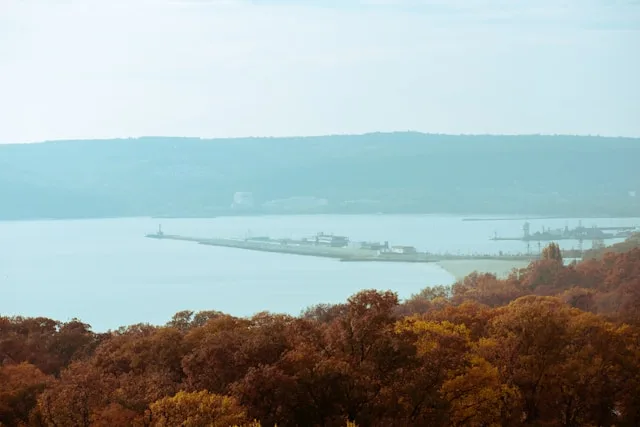
The public narrative around Koper positions the port as an agri-food gateway for Central Europe. The reality is more precise and more constrained than that framing suggests. In 2023 the port's reefer terminal handled a record 15,747 refrigerated containers — up from 10,555 the year before — and ripened a record 26,609 tonnes of bananas in its own ripening facility. Bananas arrive from Ecuador and Colombia; citrus and other fruit from Israel, Egypt, South Africa and South America; and the cargo moves onward to Austria, Hungary, the Czech Republic, Slovakia and Poland. It is transit consolidation for landlocked Central Europe, not Slovenian export infrastructure.
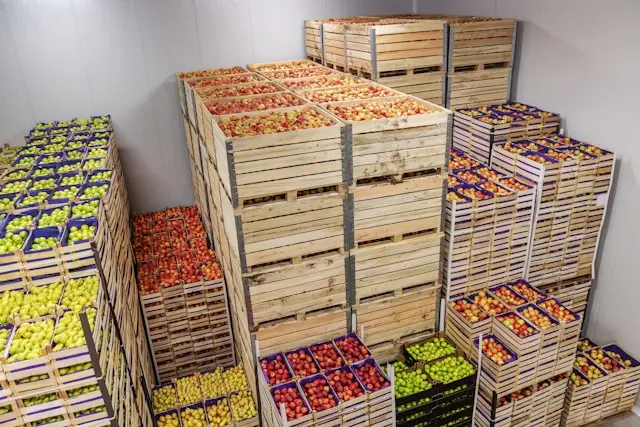
The port's own inventory of the trade: five decades of perishables handling; a 25,800-square-metre temperature-controlled warehouse holding 0 to +20°C; 2,000 square metres of deep-freeze space at -18°C; and banana ripening capacity of 1,800 tonnes a month. Fresh-produce arrivals are strongly seasonal — oranges and potatoes peak in May and June, Egyptian grapes in short, intense seasons — with bananas the year-round constant. Customs clearance, including phytosanitary inspection and sampling, is part of the port's own description of what determines how fast perishables move through it.
This distinction matters for anyone hiring into this market. The skills required are not agricultural processing skills. They are cold chain logistics and customs brokerage skills, overlaid with EU phytosanitary documentation expertise in TRACES NT, food-safety certification such as HACCP and BRCGS, and proficiency in both Slovenian and Italian. A cold chain operations manager who cannot coordinate with Italian transporters and customs agents is functionally incomplete in this market.
What the public record does not do is size this segment. Luka Koper reports throughput in five cargo groups — containers, cars, general cargo, liquid bulk and dry bulk — with no separate agri-food line, and no public statistic measures how many people work in cold chain operations around the port. Establishing that denominator is the first piece of groundwork any serious search in this market should fund.
The Investment Thesis and Its Workforce Contradiction
Luka Koper's Strategic Business Plan for 2024–2028, adopted in November 2023, commits €785 million of investment through 2028. In 2024 alone the company signed a €152.9 million contract for the northern extension of Pier I; in 2025 it allocated €132.9 million to the programme. The cold chain components are specific: a construction tender published in April 2024 for the reconstruction of Warehouse 5's refrigeration equipment, with works specified to run 900 days; the renovation of the reefer terminal's cooling system; and a new phytosanitary inspection facility, doubling sampling capacity, expected to be operational at the beginning of 2027.
No public document states a total budget for the Warehouse 5 refrigeration reconstruction, a pallet-position count, or a completion date. What is public is the direction: the port is renewing and expanding precisely the assets that require certified refrigeration labour to build, commission and run — and it is doing so while every hiring signal for that labour points the other way.
Why the Money Moved Before the People Did
Capital investment timelines and workforce development timelines operate on fundamentally different clocks. A refrigeration plant can be reconstructed on a construction calendar measured in hundreds of days. A certified refrigeration technician is produced by a training and certification pipeline that operates in years, and the EU's F-gas rules are raising the bar for that pipeline at the same time. The coast's transport-and-logistics teaching sits chiefly at the University of Ljubljana's Faculty of Maritime Studies and Transport in Portorož, with the University of Primorska's Koper Faculty of Management feeding the commercial side. No published figure states how many of those graduates enter cold chain operations, or how many stay on the coast. That gap — not a lack of curricula — is what hiring organisations actually face.
Koper's cold chain sector is experiencing a form of capital-labour desynchronisation: the infrastructure programme has arrived on a labour market that is short of exactly the trades it needs. The money has moved. The people have to be found.
The Energy Cost Squeeze on Independent Operators
The cost base beneath the cold chain has also been through a genuine shock. Slovenian industrial electricity prices for medium-size consumers more than doubled between 2021 and the first half of 2023 — Eurostat's series shows around €0.08 per kWh in early 2021 and a peak above €0.20 in early 2023 — before easing back toward €0.16 through 2024 and €0.13 by early 2026. Luka Koper's own 2024 reporting notes that lower consumption and lower prices cut its energy costs that year. An operator running cold storage through that curve without the port's scale absorbs the peak and the repricing in the same margin. Whether that squeeze forced smaller cold-store operators around Koper to consolidate or close is not publicly documented — an open question worth answering before assuming anything about who trains the next generation of technicians in this market.
Who Employs Cold Chain Talent in Koper
The employer base is concentrated, and its largest components are easy to name. The Luka Koper group employed 2,255 people at the end of 2024 — 333 more than a year earlier — and 2,408 by September 2025; its 2024 reporting attributes a 13% rise in labour costs to recruitment, agency employment and inflation adjustment. Intereuropa, the Koper-headquartered logistics group, runs roughly 1,400 employees across its south-east European network, with customs warehousing at the core of its history and cold-store capacity elsewhere in its network. Around these two sit the port community proper: freight forwarders, customs brokers, shipping agents and the specialist service firms that cluster on a port handling 23 million tonnes a year.
What no public register does is isolate the cold-chain-specific workforce inside that community — how many people operate refrigerated storage, run phytosanitary and customs clearance for perishables, or maintain reefer equipment. For senior roles, the structure itself is the constraint. A Director of Logistics and Supply Chain with a cold chain focus, a VP of Terminal Operations covering the reefer trade, a Cold Chain Operations Manager responsible for multi-site temperature compliance: candidates for these roles come out of a single dominant port operator, one large local logistics group, and a bilingual, certification-dependent job specification that generalist logistics careers elsewhere do not produce. The pool is small enough that a search should begin by mapping who is in it — which is precisely what no job board can do.
Compensation: What the Public Record Does and Does Not Show
Compensation is where this market is most often described with false precision. No published survey breaks out pay for cold chain roles in Koper or anywhere in Slovenia. The nearest public anchors are national: Slovenia's average monthly gross earnings were €2,519 in October 2025, with a median of €2,139, and transport and storage appears in the official statistics without a published cold-chain breakdown. Any specific euro band quoted for a Koper cold chain role is an estimate, not a measurement — a hypothesis to be tested candidate by candidate, not a benchmark.
The Trieste Differential
The competitive context is real even where the numbers are not. Trieste, immediately across the Italian border on the same North Adriatic coast, competes for the same bilingual logistics professionals, under a different tax system and at Italian price levels. No verified public survey benchmarks senior logistics pay between Koper and Trieste; what is verifiable is the structure: a move between the two is a net-disposable-income calculation — tax, housing, commuting — rather than a salary comparison. For a hiring leader, that means the counter-offer conversation has to be modelled, not asserted.
The pull from the southeast is documented and material. Croatia's Rijeka Gateway project — a €380 million container terminal investment whose operator expects it to create more than 300 new jobs — recruits from an overlapping bilingual labour pool. And Ljubljana pulls from the other direction: not by poaching stevedores, but by offering technology-adjacent supply chain and analytics careers with remote-work flexibility that a port-side operational career cannot match. A candidate weighing a move from Koper is comparing your proposition against three different value propositions at once. Only a direct conversation can establish which one actually competes for them.
The Regulatory Pressure That Is Creating Roles Faster Than the Market Can Fill Them
Three EU regulatory instruments are converging on Koper's cold chain operators in a way that multiplies demand for already-scarce specialists.
F-Gas Rules and the Retrofit Cliff
The F-gas Regulation (EU) 2024/573 tightened the containment regime around refrigeration in two ways that matter here. First, leak checks: refrigeration equipment must be checked at least every 12 months for typical charges — every 6 months above 50 tonnes of CO2-equivalent, every 3 months above 500 — the same ladder as the previous regulation. What has tightened is the duty's reach: it now covers Annex II gases by mass and — from March 2027 — reefer containers and other mobile refrigeration units, and every check must be carried out by a person certified under the regulation. Second, servicing bans: since 1 January 2025, fluorinated gases with a global warming potential of 2,500 or more may no longer be used to service or maintain any refrigeration equipment, with reclaimed and recycled high-GWP gases tolerated only until 1 January 2030; from 1 January 2032 the threshold drops to GWP 750 for stationary refrigeration. For an installed base of cold rooms and reefer plant, that schedule is a retrofit and conversion programme with a compliance calendar — executed entirely by certified refrigeration technicians.
The Corporate Sustainability Reporting Directive adds a different kind of load: energy monitoring, refrigerant tracking and emissions documentation for in-scope companies — reporting work that traditional cold-store management teams were not staffed to produce and that now has to sit somewhere in the organisation.
EUDR Complexity for Mixed Cargo Handlers
The EU Deforestation Regulation covers cattle, cocoa, coffee, oil palm, rubber, soya and wood. After two postponements, its main obligations now apply to large and medium operators and traders from 30 December 2026, and to natural persons and micro and small enterprises from 30 June 2027. It does not target the fruit trade directly, but a Koper customs broker handling mixed agri-food consignments now needs deforestation due-diligence literacy alongside the phytosanitary documentation the port has always required.
The compounding effect is what matters. Each obligation individually is manageable. Together they create a compliance surface area that smaller operators cannot cover with existing teams, and a calendar — 2026 for EUDR, 2027 for the port's own inspection capacity, 2030 and 2032 for the F-gas thresholds — that converts regulatory readiness into a hiring schedule.
Why Conventional Search Methods Fail in This Market
The European Labour Authority's labour-shortage monitoring ranks air-conditioning and refrigeration mechanics fifth among Europe's fifteen most severe shortage occupations — a class in which at least 60% of vacancies are hard to fill — and Slovenia is one of the eleven countries reporting the shortage. That is the documented backdrop to any refrigeration hire in Koper: the trade is scarce at European level, not merely locally.
Slovenia's own mechanisms corroborate the squeeze in the trades around the cold chain. The Employment Service's fast-track list for hiring third-country nationals — in practice a map of where the domestic pipeline fails — includes heavy-truck drivers and electromechanics, occupations refrigerated logistics depends on. Refrigeration technicians themselves are not on that list; they are scarce one level up, at European scale.
For senior roles, the dynamic is retention rather than attraction. The candidates are employed, certified and close to the work; their employers know what they hold. The specific devices employers use to keep them, and how contested those devices are in Slovene labour courts, are not on the public record in any form a hiring leader should rely on. What is certain is the consequence: reaching this population requires talent mapping before a search begins — who holds which certifications, who has the bilingual capability, who has a reason to consider a move that has nothing to do with money. A posted vacancy reaches none of that.
What Hiring Leaders in This Market Need to Do Differently
The structural reality of Koper's cold chain labour market demands a different approach from the one most organisations default to. Three principles apply.
First, the search must begin before the role opens. In a trade where most vacancies are hard to fill across Europe, waiting until a vacancy exists to begin sourcing guarantees a gap in operational continuity. The organisations that manage technical hiring effectively in this region maintain a standing map of certified, reachable candidates for their most critical roles.
Second, the compensation offer must account for the full competitive set — not against a published band that does not exist, but against the three live alternatives a Koper candidate actually weighs: Trieste's net-income calculation, Rijeka's expanding terminal, and Ljubljana's career flexibility. The proposition must address the specific reason this candidate would stay in Koper, or come to it. That is a question only a direct conversation can answer.
Third, the regulatory calendar is now a hiring calendar. EUDR obligations from 30 December 2026, the port's new phytosanitary inspection facility opening at the beginning of 2027, and the F-gas servicing thresholds of 2030 and 2032 each create a date by which a specific capability must exist in the building. Working backward from those dates — through recruitment cycles that in certified technical trades are measured in months, plus notice periods — puts the hiring window for the first two deadlines in 2026.
To discuss how this applies to your next cold chain or logistics leadership search, speak with our executive search team about the Koper market specifically.
Frequently Asked Questions
What is the average salary for a cold chain operations manager in Koper, Slovenia?
There is no published figure. No survey breaks out cold chain pay for Koper or Slovenia; the closest public anchor is Slovenia's national average monthly gross earnings of €2,519 in October 2025, with a median of €2,139. Any band quoted for a Koper cold chain role is an estimate, not a benchmark. Establishing the real range for a specific mandate is part of the search itself — through direct conversations with employed candidates rather than posted-vacancy data.
Why is it so hard to hire refrigeration technicians in Koper?
Because the scarcity is European, not local. The European Labour Authority's 2023 shortage analysis ranks air-conditioning and refrigeration mechanics fifth among the most severe shortage occupations — a class in which at least 60% of vacancies are hard to fill — and Slovenia is among the eleven countries reporting the shortage. The EU's F-gas Regulation (EU) 2024/573 extends certified leak-checking duties across more refrigeration equipment, including reefer containers from March 2027, and bans servicing with high-GWP gases — from 1 January 2025 for gases with a global warming potential of 2,500 or more, tightening to GWP 750 for stationary refrigeration from 2032 — raising demand for certified technicians precisely as Koper rebuilds the refrigeration plant of Warehouse 5 and the reefer terminal's cooling system.
How does the Port of Koper's cold chain expansion affect hiring demand?
Luka Koper is reconstructing the refrigeration equipment of Warehouse 5 under a tender published in April 2024, renovating the reefer terminal's cooling system, and opening a phytosanitary inspection facility at the beginning of 2027 — inside a €785 million investment cycle running to 2028. Renewed and expanded cold storage raises demand for reefer technicians, operations managers, compliance specialists and logistics coordinators. How large the cold-chain workforce around the port already is — and therefore how much of that demand is incremental — is not publicly measured, which is why sourcing strategy in this market starts with talent mapping.
What are the main competitors for logistics talent near Koper?
Three pull factors. Trieste, the adjacent Italian port, competes for the same bilingual logistics professionals under a different tax and cost regime — a net-income question, not a simple salary comparison. Rijeka, down the Croatian coast, is building the €380 million Rijeka Gateway container terminal, whose operator expects more than 300 new jobs, recruiting from an overlapping labour pool. Ljubljana draws analytics and technology-adjacent supply chain careers with remote-work flexibility that port-side operations cannot offer. Any executive search strategy in this market must account for all three simultaneously.
How can companies find passive cold chain candidates in Slovenia?
The qualified population is employed — concentrated around the port operator and a small number of large logistics employers — and not browsing job boards. KiTalent's continuous market mapping identifies these professionals through certification records, industry networks and cross-border analysis covering the Trieste and Rijeka corridors, and approaches them directly. That is a practical channel that reliably reaches candidates who may not see a posted vacancy.
What EU regulations are affecting cold chain hiring in 2026?
Three instruments. The F-gas Regulation (EU) 2024/573 mandates certified leak checks at 12-, 6- and 3-month intervals and phases out servicing with high-GWP refrigerants — GWP 2,500 or more banned since 2025, reclaimed and recycled gases tolerated until 2030, GWP 750 or more for stationary refrigeration from 2032. The Corporate Sustainability Reporting Directive adds energy, refrigerant and emissions reporting obligations for in-scope companies. The EU Deforestation Regulation applies to large and medium operators and traders from 30 December 2026, and to micro and small enterprises from 30 June 2027, adding due-diligence obligations for mixed agri-food cargo handlers. Together they generate specialist demand faster than the documented labour market fills such roles.
Related Links
- Koper
- Slovenia
- Kranj's Hidria Branch Is Tied to Electric-Drive Laminations: What the Public Record Shows for Hiring Leaders
- Koper Port Logistics Hiring: Define the Mandate Before the Search
- Velenje Manufacturing Hiring: Define the Mandate Before the Search
- Quebec City's Insurance Sector Cut Hundreds of Jobs and Still Cannot Hire the People It Needs
Related Market Reads
Articles tied to the same hiring geography or market context.
Kranj's Hidria Branch Is Tied to Electric-Drive Laminations: What the Public Record Shows for Hiring Leaders
Kranj's Hidria branch is tied to electric-drive laminations, while the group's diesel cold-start unit is based in Tolmin. What the public record supports for senior hiring in Kranj.
Koper Port Logistics Hiring: Define the Mandate Before the Search
What the verified public record establishes about the Port of Koper's dated 2024 traffic, its Central-European transit hinterland and its single-operator structure - and where a logistics mandate needs contacted, assessed and validated candidates.
Velenje Manufacturing Hiring: Define the Mandate Before the Search
What the verified public record establishes about Velenje - Gorenje's headquarters city, the 1875 coal mine that built it - and where an automation mandate needs contacted, assessed and validated candidates.
Nearby Market Signals
Lateral reads from adjacent cities, sectors, or themes.
Quebec City's Insurance Sector Cut Hundreds of Jobs and Still Cannot Hire the People It Needs
Quebec City's two largest insurers eliminated 450 administrative positions over a two year integration cycle. The headlines told a story of contraction. The recruitment data...
Milan Professional Services: Define the Practice and Delivery Mandate
How should a Milan professional-services firm define a mandate across regulated assurance, advisory, legal practice, data delivery and partnership economics?
Los Angeles Entertainment Hiring: Define the Mandate Before the Search
Which studio-production, games-and-interactive or music-and-recording responsibility actually defines an LA entertainment mandate?
From the Archive
Evergreen background reading that still sharpens current hiring decisions.
Velenje's Metalworking Talent Market Has a Paradox at Its Centre: Acute Shortages, Stagnant Wages, and a Cluster That Is Quietly Consolidating
Velenje's metalworking ecosystem sits at a crossroads that defies conventional labour market logic. Across roughly 87 registered SMEs and three industrial anchors, the Šaleška...
Velenje's Energy Transition Has Created a Talent Market That Defies Its Own Unemployment Rate
Velenje registers an unemployment rate more than double Slovenia's national average. It also cannot fill its most critical technical roles for four months at a stretch. These...
Novo Mesto RV Manufacturing Hiring: What the Record Shows
Adria Mobil's Novo Mesto plant anchors a niche European RV base inside France's Trigano Group. The public record establishes the market cycle and cross-border labour-cost context; role-level pay, mobility and specialist availability require live evidence.