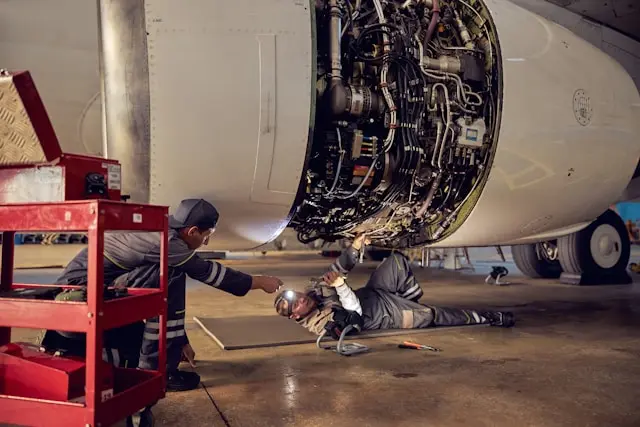
The Expansion and the Ramp It Depends On
This is not a generic shortage story. Little Rock's aerospace talent crisis is structurally different from what Wichita, Dallas, or Savannah face. Those markets are short on people. Little Rock is short on people, short on pipeline, and short on the career infrastructure that keeps skilled professionals in place once they arrive. The national shortage of certified airframe and powerplant mechanics, put at roughly 25,000 technical personnel across North America this year by the training council ATEC and Oliver Wyman, lands hardest in a metro whose own programs are small and whose aerospace employment base is, for practical purposes, a single company. Certificates are being issued at record rates and still fall short of demand. Locally, the arithmetic is narrower still.
What follows is a ground-level analysis of why Little Rock's aerospace hiring challenge is more severe than its investment headlines suggest, where the real bottlenecks sit, and what organizations competing for completion center talent, senior avionics specialists, and operations leadership need to understand before committing to a search in this market.
Dassault Falcon Jet has operated its main North American completion center in Little Rock since the mid-1970s, when it acquired the site from Little Rock Airmotive. Green aircraft arrive from France for custom cabin completion, avionics integration, and paint, and the campus, Dassault's largest facility in the world spanning the completion center and a separate service operation, employed roughly 1,400 people when the current expansion was announced. In December 2023, the company committed to a $100 million expansion, its largest in Little Rock to date, adding new hangars and facilities for two new Falcon lines, including the 10X, with 800 new jobs planned and $18 million in state support attached, $6 million of it in customized training funds.
The expansion is still taking shape on the ground; a new paint and preparation hangar was moving through city review as recently as mid-2025. Demand is not the question. Timing is.
A Record Backlog Meets a Slipping Schedule
Dassault entered 2026 with the strongest order book in its history: a backlog of €46.6 billion at the end of 2025, up from the record €43.2 billion a year earlier. Honeywell's 2025 Global Business Aviation Outlook, published in October 2025, expects 2026 business jet deliveries to run about 5 percent above 2025, with roughly 3 percent annual growth thereafter, and GAMA's shipment data recorded business jet deliveries up 11.8 percent in 2025. The risk to Little Rock hiring is not demand but schedule. Dassault delivered 37 Falcons in 2025 against a target of 40, and in July 2026 it pushed the Falcon 10X's entry into service to 2029, two years later than planned, citing stricter certification standards for all-new designs.
If the ramp holds, the Little Rock facility grows by up to 800 direct jobs on its roughly 1,400 base. If it slips further, the market faces the opposite problem: new hangars awaiting new aircraft, with hiring slowing to match. For a market this concentrated around a single employer, the difference between those two scenarios is the difference between growth and stagnation.
No Diversification Buffer
Unlike Wichita, which balances business aviation against Textron Aviation's airframe industrial base, or Dallas-Fort Worth, which combines business jet operations with airline maintenance at the home airports of American Airlines and Southwest, Little Rock has no meaningful secondary employer to absorb cyclical demand shifts. Beyond Dassault's own service operation and operators such as Central Flying Service, one of the largest fixed-base operators in the country, headquartered at Clinton National Airport with round-the-clock maintenance and AOG dispatch, the metro's aviation employers are small. No second employer operates at a scale that would diversify the employment base.
Aerospace is Arkansas's largest export industry, with more than 11,000 employees statewide, and Dassault's campus is one of the state's largest private employers. In the metro, the sector's fortunes are, for practical purposes, one company's fortunes.
The Pipeline Deficit Behind the Headline
The most important number in Little Rock's aerospace talent market is not a salary figure or a vacancy count. It is the distance between what the region's training pipeline produces and what a single 800-hire expansion absorbs.
The national context is a shortage that record output has not closed. The Aviation Technician Education Council and Oliver Wyman's 2026 Pipeline Report records that the FAA issued 11,103 new mechanic certificates in 2025, 23.2 percent more than in 2024 and the highest annual total since the agency began publishing the data, with school-pathway certificants up 27 percent and technician-school enrollment up 13.5 percent. Even at that pace, the report projects a shortfall of roughly 25,000 technical personnel across North America this year, including about 9,100 certificated mechanics, widening toward a deficit near 20,000 certificated mechanics by 2030.
Arkansas's own pipeline is a set of small programs. The closest to Little Rock is Arkansas State University Mid-South in West Memphis, established in 2011 at the FedEx Aviation Technology Center, which announced a further $1.8 million expansion in September 2024. Southern Arkansas University Tech runs its aviation maintenance program from Camden with an aviation hub in Texarkana, and Arkansas Northeastern College trains mechanics in Blytheville. The four-year engineering layer runs through UA Little Rock's Donaghey College. Set against an 800-hire ramp, programs of this size mean the metro must import most of its mechanics the way every US completion center now does: by recruiting certified talent away from other states and other employers.
That is the context in which Dassault's Little Rock service center has run continuous recruitment for A&P technicians into 2026, with public postings for aircraft maintenance roles advertising typical pay in the mid-$20s to mid-$30s per hour. The postings recur because the positions are hard to close, not because they are hard to see.
The synthesis this data demands is uncomfortable but unavoidable: Dassault's capital investment has outpaced the region's human capital infrastructure by a margin no single employer can correct alone. The company can add new hangars within a few years; the training institutions that feed it cannot add hundreds of qualified technicians on any comparable timescale, and the national shortage means the missing mechanics exist nowhere as a waiting pool. Capital moved faster than the workforce pipeline could follow, and the gap between facility capacity and staffable capacity, not demand, is now the binding constraint on Little Rock's aerospace economy. The 10X's slip to 2029 buys the pipeline time. Whether the region's programs use that time is an open question.
The Retention Paradox: Affordable but Not Sticky
Little Rock's cost-of-living position is real but narrower than assumed. The Council for Community and Economic Research's Cost of Living Index for Q1 2025 puts Little Rock's composite at 94.5 against a national average of 100: below Dallas at 98.6, but above Wichita at 88.7. The advantage concentrates in housing, at 80.1 in Little Rock against 90.0 in Dallas. Executive commute times are shorter. Housing costs are materially lower than Dallas.
If affordability were sufficient to attract and retain aerospace talent, the wage gap would not matter. It does.
Why Technicians Leave
The compensation gap for A&P mechanics is meaningful in absolute terms. In the Bureau of Labor Statistics' May 2025 occupational wage survey, aircraft mechanics and service technicians in the Little Rock metro earned a median of $72,700, against $65,640 in Wichita and $94,920 in Dallas-Fort Worth, with the national median at $79,870. The sharper number for retention is the ceiling: Little Rock's top decile is capped near $78,690, while Dallas-Fort Worth's reaches $123,180. Even after adjusting for Dallas' modestly higher cost of living, the gap does not close. An experienced technician moving from Little Rock to Dallas accepts a higher nominal salary, a higher real salary after adjustment, and something that compensation data alone does not capture: a career trajectory that Little Rock cannot offer.
Wichita provides vertical advancement into experimental certification roles at companies like Textron. Dallas offers broader airline MRO exposure. Both markets employ large enough workforces across multiple employers that a technician's career does not depend on a single company's production schedule. In Little Rock, an A&P mechanic who advances as far as Dassault's internal structure allows has limited options without relocating. The city's talent pipeline feeds one dominant employer, and the career ceiling that creates is a retention risk that no cost-of-living calculator accounts for.
Why Executives Leave
The dynamic is similar at the leadership level but amplified. In KiTalent's search experience, Director of Maintenance and VP of Completions mandates in Little Rock carry base salaries of $145,000 to $240,000 depending on scope, with larger markets paying more for equivalent positions and offering larger leadership teams and broader operational mandates. Senior aerospace operations roles in single-employer markets run long, frequently six months or more, and successful hires are commonly relocated from out of state at premiums over local market rates plus full relocation packages.
For any organization running executive search in aerospace and defense sectors, the Little Rock market presents a clear warning. The candidate pool for senior roles is not just thin. It is exclusively passive. In KiTalent's experience, public job postings for Director of Maintenance or VP of Completions roles at Little Rock facilities serve compliance or branding purposes rather than sourcing channels, and the large majority of hires at this level result from direct search engagement or internal promotion.
What Completion Center Talent Actually Costs in This Market
The compensation structure in Little Rock's aerospace sector reflects a market that is simultaneously underpriced relative to competitors and overpriced relative to its own historical norms. Understanding both dynamics is essential for anyone building a compensation package intended to attract from outside the market or retain from within it.
Senior Technical Specialists
Start with the measured layer: aircraft mechanics and service technicians in the Little Rock metro earned a median of $72,700 in May 2025, with the top decile near $78,690. Above that floor, KiTalent's search experience is that completion-center specializations command premium pay: cabinet fabrication and installation, premium interior leather and veneer work, exterior paint preparation for composite airframes, and avionics integration on Dassault's EASy flight-deck family, built on Honeywell's Primus Epic platform, and the Honeywell-developed NeXus suite arriving with the 10X. Composite repair expertise for carbon fiber structures on next-generation Falcon aircraft is the single hardest skill to recruit locally.
Against Dallas-Fort Worth, the Little Rock median runs roughly 23 percent lower; against Wichita, about 11 percent higher, a reminder that the binding constraint is not wage level alone but ceiling and structure. But "nominally equivalent" obscures a meaningful difference. A completion center mechanic at Dassault's Little Rock facility is performing bespoke, one-of-a-kind interior installations on business jets whose equipped prices start above $50 million; the Falcon 6X listed at an estimated $52.75 million at its 2023 announcement, and prices climb steeply from there. The precision required is closer to luxury craftsmanship than to line maintenance. The compensation benchmarks that apply to this work do not map cleanly onto standard A&P mechanic salary surveys, and organizations that price these roles using generic aviation maintenance data will undershoot the market.
Program Managers and Operations Directors
In KiTalent's search experience, senior project managers with seven or more years of experience in aircraft completions earn $95,000 to $125,000 in base salary, rising to $125,000 to $155,000 for program directors managing multiple concurrent aircraft projects. Director-level roles overseeing 50 or more technicians command $145,000 to $185,000, and VP-level operations leadership with profit-and-loss responsibility reaches $180,000 to $240,000. Bonus and equity participation at that level is an anchor-employer privilege in this market, rare among the smaller operators.
The gap between Dassault's compensation structure and what the metro's smaller aviation employers can offer is itself a talent constraint. Dassault can fund relocation packages at scale; an FBO-linked maintenance operator or a Tier-2 supplier working on aerospace margins generally cannot. The result is a two-tier market where the anchor employer absorbs the majority of available talent and smaller firms compete for what remains, often at a disadvantage that makes senior hiring a fundamentally different exercise than it would be in a more diversified market.
What This Means for Organizations Hiring in This Market
The cumulative picture of Little Rock's aerospace talent market in 2026 is a market where the fundamentals are strong but the execution environment is unforgiving. Dassault's investment validates the location. The pipeline deficit, the retention paradox, and the single-employer concentration define the operating reality.
For any organization hiring technical specialists in this market, the first principle is that job postings will not work at the levels that matter most. The qualified candidates for senior A&P roles are overwhelmingly passive: employed, not applying, and reachable only through direct headhunting approaches that identify them individually rather than waiting for them to self-select. At the executive level, the active pool is thinner still. Posting a VP of Completions role on a job board in this market is not a search strategy. It is a compliance exercise.
The second principle is that compensation alone does not close the deal. A candidate relocating from Wichita or Dallas to Little Rock is not just evaluating a salary. They are evaluating a career ecosystem. The offer must address trajectory, not just total compensation. What does the role lead to in three years? What happens if Dassault's order book softens? Is there a second employer in the market that could absorb a senior professional if the primary relationship ends? These are the questions passive candidates ask. The organizations that answer them credibly are the ones that secure and retain placements in this market.
The third principle is speed. A slow search in this market loses its strongest candidates before a shortlist is assembled. The cost of a prolonged search in a market this concentrated is not measured only in vacancy duration. It is measured in production delays, in completion schedules that slip, and in revenue recognition that pushes into the next quarter.
How Direct Search Changes the Equation in Little Rock
Little Rock's aerospace talent market is precisely the environment where traditional recruitment methods fail most visibly. The active candidate pool at the senior level is vanishingly small. The passive candidate pool is concentrated among a handful of employers in a handful of cities. The candidates who can do the work are not looking for it.
KiTalent's approach to executive search is designed for this kind of market.
For organizations competing for completions leadership, senior avionics talent, and program management in Central Arkansas, where the production schedule cannot wait for the training pipeline to catch up and the cost of a bad executive hire is measured in grounded aircraft and missed delivery windows, speak with our executive search team about how we approach this market.
Frequently Asked Questions
Why is it so hard to hire A&P mechanics in Little Rock, Arkansas?
Arkansas's Part 147 training pipeline is small, running through ASU Mid-South in West Memphis, SAU Tech in Camden and Texarkana, and Arkansas Northeastern College in Blytheville, while ATEC and Oliver Wyman's 2026 Pipeline Report puts the North American shortfall at roughly 25,000 technical personnel this year despite record certificate output. Every US completion center is recruiting from the same constrained pool. Dassault Falcon Jet's dominance as the primary employer means career trajectory options are limited compared to Wichita or Dallas, where multiple large employers offer varied advancement paths. The result is a market where most qualified senior A&P candidates are passive and reachable only through direct search methodology, not job postings.
What do aerospace jobs pay in Little Rock compared to other markets?
Aircraft mechanics and service technicians in the Little Rock metro earned a median of $72,700 in May 2025, against $94,920 in Dallas-Fort Worth, $65,640 in Wichita, and a national median of $79,870, with Little Rock's top decile capped near $78,690 against $123,180 in Dallas-Fort Worth. Completion-center specializations and leadership roles command premiums above the general maintenance median; director-level maintenance and completions roles typically pay $145,000 to $185,000, and VP-level operations leadership more still. Little Rock runs about 4 percent below Dallas on C2ER's Q1 2025 composite cost-of-living index, with housing about 11 percent lower, but ceiling and career structure, not headline cost, drive retention.
How does Dassault Falcon Jet's expansion affect the Little Rock job market?
Dassault's $100 million expansion at Clinton National Airport, announced in December 2023, plans 800 new jobs on a base of roughly 1,400 employees, with new hangars for two new Falcon lines including the 10X. The demand side is secure: Dassault's backlog stood at a record €46.6 billion at the end of 2025, and Honeywell's October 2025 outlook expects 2026 business jet deliveries to run about 5 percent above 2025. The schedule is less certain: the Falcon 10X's entry into service has slipped to 2029. Because Little Rock lacks diversified aerospace employers, the entire regional sector's employment trajectory hinges on Dassault's ramp.
What executive roles are hardest to fill in Little Rock's aerospace sector?
Completions program directors, VP of Completions, and Director of Maintenance roles are the most difficult to fill.
Is Little Rock's aerospace sector too dependent on one employer?
The concern is well grounded. Dassault's Little Rock campus is the company's largest facility in the world and employed roughly 1,400 people before its current expansion, inside a state aerospace sector of just over 11,000, Arkansas's largest export industry. No second employer in the metro operates at comparable scale; the next tier is operators such as Central Flying Service, a large fixed-base operator with a maintenance operation at Clinton National Airport. The sector's fortunes are, for practical purposes, one company's fortunes.
How can companies compete for aerospace talent in a market this small?
Effective hiring in Little Rock requires three elements: direct outreach to passive candidates in competitor markets, compensation packages that address career trajectory concerns rather than salary alone, and search speed that prevents the strongest candidates from accepting other offers. Firms that rely on traditional recruitment methods in this market face long vacancy durations at the technician level and extended searches at the executive level. A search partner with access to the full passive candidate pool across US aerospace centers materially changes that timeline.
Related Links
- Little Rock
- United States
- Aerospace Defense Space
- Tulsa Energy Hiring: Define the Mandate Before the Search
- Los Angeles Entertainment Hiring: Define the Mandate Before the Search
- Dallas Telecom and Digital Infrastructure: Define the Network Mandate
- Quebec City's Insurance Sector Cut Hundreds of Jobs and Still Cannot Hire the People It Needs
Related Market Reads
Articles tied to the same hiring geography or market context.
Tulsa Energy Hiring: Define the Mandate Before the Search
Which midstream operations, methane-compliance or post-merger integration responsibility actually defines a Tulsa energy mandate?
Los Angeles Entertainment Hiring: Define the Mandate Before the Search
Which studio-production, games-and-interactive or music-and-recording responsibility actually defines an LA entertainment mandate?
Dallas Telecom and Digital Infrastructure: Define the Network Mandate
Which network, facility or deployment decisions define the Dallas telecom and digital-infrastructure mandate?
Nearby Market Signals
Lateral reads from adjacent cities, sectors, or themes.
Quebec City's Insurance Sector Cut Hundreds of Jobs and Still Cannot Hire the People It Needs
Quebec City's two largest insurers eliminated 450 administrative positions over a two year integration cycle. The headlines told a story of contraction. The recruitment data...
Burgas Tourism and Aviation Hiring: Define the Mandate Before the Search
What the verified public record establishes about Burgas Airport's seasonal traffic and route shift, the district's labour-market record, and where a tourism or aviation mandate needs contacted, assessed and validated candidates.
Wels Machinery Hiring in 2026: Why the Firms That Built This Sector Cannot Recruit the People to Run It
Upper Austria's machinery and metalworking sector produced more revenue per capita in 2025 than any comparable industrial region in the EU outside Bavaria. The Linz Wels Steyr...
From the Archive
Evergreen background reading that still sharpens current hiring decisions.
Worcester's Insurance Talent Market in 2026: What Happens When One Carrier Controls the Board
Worcester, Massachusetts, employs roughly 14,200 workers across its finance and insurance sectors. On paper, that figure suggests a diversified market with multiple employers...
Wichita Aerospace: Define the Airframe and Industrial Mandate
Which aircraft, work package, production system and programme decisions define the Wichita aerospace mandate?
Washington DC Development Finance Talent: What the Verified Record Shows
The verified public record for Washington DC's development-finance economy - the twin Bretton Woods institutions headquartered blocks apart on H and 19th Streets - and what a development-finance mandate there must actually cover.