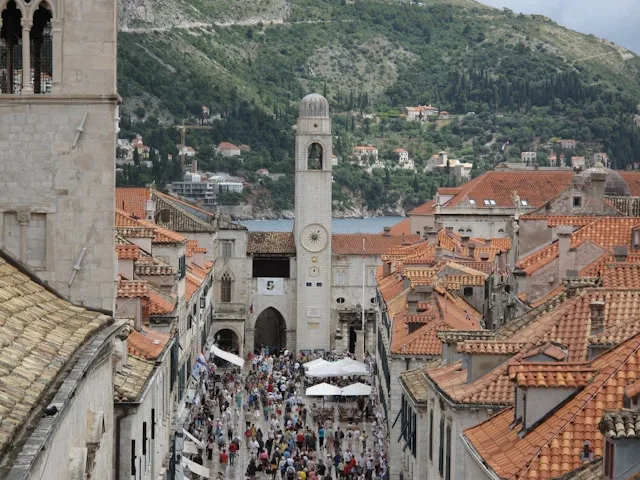
The Regulation Paradox: Barriers That Protect Incumbents Instead of Cooling Demand
The core problem is not regulation, although regulation is tightening. It is not visitor demand, which keeps setting records. The problem is that the people required to run these properties at a professional standard do not exist in sufficient numbers. Maintenance technician vacancies sit at 45%. Revenue management analyst vacancies are at 38%. Property operations manager vacancies reach 31%. And the pressure is compounding: national reforms removed almost 10,000 short-let beds across Croatia in a single year, transferring inventory and operational complexity to fewer, larger operators.
What follows is a ground-level analysis of why Dubrovnik's STR sector is caught between accelerating institutional investment and collapsing operational capacity. The article examines where the talent gaps are sharpest, what forces are driving them, why conventional hiring methods fail in this specific market, and what organisations operating in Dubrovnik's real estate and hospitality sector need to do differently.
Dubrovnik's regulatory trajectory has followed a pattern that many hiring leaders have misread. In October 2023 the city announced it would stop issuing permits for new holiday apartments, using its planning powers together with the national Tourism Act that took effect at the start of 2024; by early 2024 no new tourist apartment registrations were being issued inside the historic core. At national level, tourism, spatial and tax reforms introduced since 2025 — including flat-rate rental taxes now set municipality by municipality and tighter registration rules — removed almost 10,000 tourist beds across Croatia in their first year, and more than 3,600 property owners partially or fully switched from short-term to long-term letting. The city itself now runs a carrying-capacity management plan built with the University of Dubrovnik that caps the number of people allowed inside the walls at any one time, and it is buying buildings in the old town to return housing to residents.
The assumption behind these measures was that constrained supply would cool the market. It has not.
Dubrovnik's 2024 season was the strongest in the country by overnight stays, up 9% on 2023, with overnight volume already ahead of the city's pre-pandemic record even as arrivals sat just below the 2019 peak. The regulations did not deter demand. They re-priced scarcity: existing licensed capacity inside a frozen supply perimeter became more valuable, while compliance costs and tax changes pushed marginal amateur operators towards the exit. The result is a moat around incumbent operators — higher barriers to entry, more valuable existing portfolios, and a shrinking pool of amateur supply to absorb.
Why Consolidation Accelerates the Talent Crisis
This consolidation reshapes the talent picture in a way that is easy to miss. When amateur landlords exit the market and professional management companies absorb their inventory through lease-back agreements or outright purchases, the operational complexity per firm increases sharply. A company that managed 120 units in 2023 may now manage 200. The skills required to run 200 units across multiple platforms, with dynamic pricing, regulatory compliance, and luxury-tier guest services, are categorically different from those required to manage a handful of apartments.
The national reform programme is already forcing that exit: the tourism ministry reported in January 2026 that almost 10,000 beds had left the stock, while private-accommodation occupancy rose for the first time since 2018. The inventory shrinks. The revenue per remaining unit rises. The operational demands on each surviving management company intensify. Every exit by an amateur landlord is an entry ticket for a professional operator who needs skilled staff that the market cannot provide.
The regulation is not cooling the sector. It is professionalising it. And professionalisation without a matching increase in qualified talent creates the acute operational gaps now visible across the market.
Where the Gaps Are Sharpest: A Vacancy Map by Function
The Croatian Employment Service counted just over 2,600 registered unemployed persons in Dubrovnik-Neretva County at the end of September 2024 — the height of the season — against 82,839 nationally. At the macro level, the county reads as close to full employment for much of the year. At the operational level, the numbers tell a different story entirely.
The disconnect reveals what is arguably the most important analytical insight in this market: Dubrovnik does not have a labour shortage in the aggregate sense. It has a skills-seasonality mismatch. Workers exist nationally. They cannot accommodate Dubrovnik's extreme seasonal peaks, do not possess the digital platform management skills that modern STR operations require, or will not relocate for a position that offers no year-round security.
Maintenance Technicians: The 45% Gap
Maintenance technician roles carry the highest vacancy rate in the sector at 45%. Most Dubrovnik-based property management companies fail to fill maintenance technician roles within 90 days, and typical vacancies extend beyond six months.
The consequences are immediate and expensive. Firms unable to hire locally contract with Zagreb-based maintenance companies at 40% cost premiums. A plumbing emergency in a €2.5 million villa cannot wait for a technician to drive five hours from the capital. Yet that is the reality for a material share of Dubrovnik's luxury rental operators.
Germany, Austria, and Ireland draw maintenance technicians out of Croatia's hospitality and construction sectors with salary multiples of three to four times the local rate, plus permanent contracts. Dubrovnik's seasonal economy cannot match permanent employment offers from Northern European markets. The pipeline is not producing replacements fast enough to offset the outflow.
Revenue Management Analysts: The 38% Gap
Revenue managers in the STR context are not traditional hotel pricing analysts. They operate across multiple platforms simultaneously, managing dynamic pricing algorithms on Airbnb, Booking.com, and direct booking channels. The role requires fluency in platform-specific yield optimisation tools, local demand patterns, and competitive rate intelligence. The vacancy rate for this function stands at 38%.
The poaching dynamics in this segment illustrate the pressure. Offers built on year-round contracts and double-digit salary premiums move the same senior people between the same handful of employers, and each move triggers counteroffers across the rest. In a market this small, the talent pool is not just tight. It is a closed loop. The same individuals circulate between the same employers at escalating cost. No net new capacity enters the market through these moves.
Property Operations Managers: The 31% Gap
The 31% vacancy rate for property operations managers reflects a compounding challenge. These roles require coordination of cleaning teams, maintenance scheduling, guest services, and regulatory compliance across distributed inventory. The skill set is broad. The compensation for candidates with this breadth of experience often falls below what competing Mediterranean markets offer.
Barcelona and Lisbon pay 60 to 80% more for senior property management roles. Dubrovnik loses a meaningful share of its bilingual hospitality graduates to these markets every year. The pipeline that should feed local employers leaks at the point of graduation.
Compensation: Competitive Locally, Exposed Internationally
Executive compensation in Dubrovnik's STR management sector reflects a market caught between two pricing systems. Within Croatia, Dubrovnik commands a premium. Relative to its Mediterranean competitors, it falls short by margins that are large enough to drive permanent talent migration.
A Regional Managing Director overseeing a portfolio of 200-plus units earns between €75,000 and €110,000 annually at the executive level, with performance bonuses typically adding 20 to 30% of base salary. A Head of Revenue Management at director level earns €55,000 to €72,000. A Senior Property Operations Manager earns €38,000 to €50,000.
These figures carry 15 to 25% premiums over equivalent roles in Zagreb. They account for Dubrovnik's higher cost of living and seasonal intensity. But they remain 30 to 40% below comparable positions in Barcelona or Lisbon.
The compensation gap is not closing. It is widening at exactly the seniority level where the most critical hires sit. A senior revenue manager in Dubrovnik earning €38,000 can move to Barcelona for €65,000. A property operations head earning €50,000 in Dubrovnik could earn €80,000 in Lisbon. The cost-of-living differential between these cities is not large enough to offset the salary gap. And every year that Dubrovnik's STR sector grows without closing this compensation divide, the pool of candidates willing to stay or relocate shrinks further.
For organisations benchmarking their packages against this market, accurate salary data for the Adriatic hospitality sector is not optional. It is the difference between making a competitive offer and losing a candidate to a city that pays better for the same work.
The Seasonality Trap: Why Year-Round Roles Cannot Attract Year-Round Talent
Dubrovnik's economy concentrates the overwhelming majority of its tourism traffic in the summer months. In 2019, at the previous peak, 9,000 to 9,500 cruise passengers alone were arriving daily in high season; the city now caps total occupancy inside the walls because the summer surge otherwise overwhelms it. This extreme seasonality defines every hiring decision in the STR sector.
Thousands of seasonal workers arrive in Dubrovnik each summer, and the county's hospitality workforces — including the local operations of Croatia's largest hotel group — expand sharply for the season before contracting in the autumn.
This pattern creates an operational paradox. Year-round maintenance and pre-season preparation demand permanent staff. The economics of a seasonal market make permanent employment for many operational roles financially inefficient. The result is systemic understaffing during shoulder seasons and a hiring scramble every spring that repeats the same failures annually.
Senior roles in particular suffer from this dynamic. A Director of Operations or Head of Revenue Management is a year-round position with year-round responsibilities. But the market's seasonal reputation precedes it. Candidates considering Dubrovnik from Zagreb, Split, or abroad perceive the entire market as seasonal, even when the specific role is not. The city's own response to overtourism sharpens that perception: with roughly a thousand residents left inside the walls, the municipality is buying old-town buildings to rent to young families and has reopened a school in a former palace, precisely because a hollowed-out resident base cannot supply the year-round professional core that a professionalised rental sector needs.
The perception of seasonality functions as an invisible filter on every executive search in this market. It removes candidates from consideration before they ever see the role. Addressing this perception requires more than a job posting. It requires a direct approach to passive candidates who would not apply on their own but might be persuaded by a proposition they had not considered.
The Passive Candidate Problem in a Market This Small
KiTalent's market mapping estimates that 85 to 90% of qualified revenue managers in Dubrovnik are employed and not actively seeking new roles. Bilingual guest experience managers with five-plus years of luxury hospitality experience show active job-seeking rates below 5% on public platforms. Executive housekeepers with STR inventory turnover expertise are 78% passive.
In a market of roughly 48,000 licensed beds and fewer than 50 professional management firms, the entire senior talent pool for critical functions numbers in the low hundreds. When 85% of those individuals are passive, the effective accessible pool through job boards and inbound applications drops to a fraction that is too small to produce a viable shortlist.
This is the structural reality that conventional recruitment methods cannot solve. Posting a role on MojPosao or LinkedIn reaches the 10 to 15% of the talent pool that happens to be looking. The other 85 to 90% must be identified through systematic talent mapping, approached directly, and presented with a proposition specific enough to overcome the inertia of their current employment.
The Greek islands add further competitive pressure. Santorini and Mykonos offer similar seasonal contracts with established expatriate worker infrastructure and often superior tipping cultures. Split, Croatia's second-largest city, offers a similar coastal lifestyle with 20 to 30% lower cost of living and a larger year-round economy. Zagreb offers full-year stability. Every competing geography has at least one advantage Dubrovnik cannot match through compensation alone.
In this environment, the only way to access the candidates who could fill these roles is to find them before they start looking. That requires headhunting methodology designed for markets where the visible candidate pool is a fraction of the actual one.
What This Means for Hiring Leaders in Dubrovnik's STR Sector
The investment thesis for Dubrovnik's short-term rental market remains strong. Regulatory barriers are concentrating value among professional operators. Rates and occupancy are rising. Institutional capital continues to flow in. Euro adoption removed currency risk for EU investors back in 2023. And in 2024 the city delivered 4.56 million overnight stays — the most of any destination in Croatia, with overnight volume already ahead of its pre-pandemic record.
None of this matters if the operational capacity to run the properties does not exist.
The organisations that will win in this market over the next 12 to 24 months are not the ones with the most capital or the best locations. They are the ones that solve the staffing problem first. A portfolio of 300 luxury units with a 45% maintenance technician vacancy rate and no permanent Director of Operations is an asset underperforming its potential by a margin that dwarfs any regulatory cost.
The talent strategy for this market requires three elements that most Dubrovnik operators currently lack. First, compensation packages benchmarked not against Zagreb or Croatian averages but against Barcelona and Lisbon, because those are the markets taking your candidates. Second, year-round contract structures for roles that require year-round commitment, even when the revenue peak is seasonal. The cost of a year-round salary for a revenue manager is a fraction of the revenue lost to suboptimal pricing during shoulder months. Third, a search methodology that reaches passive candidates who are not on any job board and will not respond to any job posting.
The cost of getting a senior hire wrong in this market is compounded by the time required to restart a search. The wider candidate pool requires market mapping and direct, confidential outreach.
For organisations competing for operations directors, revenue managers, and senior property management leaders in Dubrovnik's intensifying STR market, where the candidates who can run a 200-unit luxury portfolio are not visible on any platform, speak with our executive search team about how we identify and deliver the talent this market requires.
Frequently Asked Questions
What is the current size of Dubrovnik's short-term rental market?
Dubrovnik runs roughly 48,000 tourist beds in a city of about 41,000 residents, and inside the historic walls some 4,000 licensed beds serve fewer than 1,500 remaining residents. In 2024 the city recorded 1.4 million arrivals and 4.56 million overnight stays — the highest overnight volume of any destination in Croatia, up 9% on 2023. National reforms have since removed almost 10,000 short-let beds across Croatia, and more than 3,600 owners switched properties towards long-term letting, concentrating the remaining market further among professional operators.
Why is it so difficult to hire property management executives in Dubrovnik?
Three forces converge. First, 85 to 90% of qualified candidates in senior roles are passive and not visible on job boards. Second, Dubrovnik's seasonal reputation deters candidates who perceive even year-round roles as unstable. Third, competing Mediterranean cities pay 30 to 40% more for equivalent positions, creating a permanent talent drain. The result is vacancy rates of 31% for property operations managers, 38% for revenue management analysts, and 45% for maintenance technicians. These are not cyclical gaps. They are embedded in the market's structure and require direct executive search approaches rather than conventional job advertising.
What do senior property management roles pay in Dubrovnik?
A Regional Managing Director overseeing 200-plus units earns €75,000 to €110,000 annually with 20 to 30% performance bonuses. A Head of Revenue Management at director level earns €55,000 to €72,000. A Senior Property Operations Manager earns €38,000 to €50,000. These figures carry 15 to 25% premiums over Zagreb equivalents but sit 30 to 40% below Barcelona and Lisbon, which directly contributes to candidate migration to those markets.
How has regulation affected Dubrovnik's STR investment market?
Counter to expectations, regulatory tightening has strengthened the licensed core. Dubrovnik stopped issuing new tourist-apartment registrations inside the historic core from early 2024, which made existing licensed capacity more valuable. Nationally, reforms introduced since 2025 removed almost 10,000 tourist beds in their first year and pushed thousands of owners towards long-term letting, so inventory consolidates among professional operators as amateur landlords exit. Regulations have functioned as barriers to entry that protect incumbent operators. The city has also capped how many people may be inside the walls at once under its carrying-capacity plan with the University of Dubrovnik.
How can KiTalent help with hospitality executive hiring in Dubrovnik?
What are the biggest risks to Dubrovnik's short-term rental sector in 2026?
The primary risks are operational, not financial. The resident base that should staff the year-round economy keeps thinning — fewer than 1,500 people now live inside the walls, and the city is buying old-town buildings to rehouse families. Overtourism management keeps tightening, from cruise-ship caps to a hard ceiling on how many people may be inside the walls at once. National policy is deliberately shrinking the short-let stock. And the most immediate risk for operators is that staffing gaps degrade service quality in a market where luxury positioning depends on consistent guest experience.
Related Links
- Dubrovnik
- Croatia
- Zagreb Software Hiring: Define the Mandate Before the Search
- Osijek's Agri-Food Sector Produces Enough Graduates to Fill Every Vacancy. The Problem Is What Happens Next
- Zagreb Financial Services Talent: What the Verified Record Shows
- Milan Professional Services: Define the Practice and Delivery Mandate
Related Market Reads
Articles tied to the same hiring geography or market context.
Zagreb Software Hiring: Define the Mandate Before the Search
What the verified public record establishes about Zagreb's software economy - the Google-Photomath acquisition record and the 1669-founded university - and where a mandate needs contacted, assessed and validated candidates.
Osijek's Agri-Food Sector Produces Enough Graduates to Fill Every Vacancy. The Problem Is What Happens Next
Osijek's Faculty of Agrobiotechnical Sciences graduated 240 students in 2020/21 alone, yet Osijek-Baranja County has Croatia's highest unemployment rate. The problem is...
Zagreb Financial Services Talent: What the Verified Record Shows
The verified public record for Zagreb - Croatia's capital on the Sava whose economy hosts the national companies' headquarters, the only Croatian stock exchange and the highest per-capita output in the country - and what a financial-services mandate there must actually cover.
Nearby Market Signals
Lateral reads from adjacent cities, sectors, or themes.
Milan Professional Services: Define the Practice and Delivery Mandate
How should a Milan professional-services firm define a mandate across regulated assurance, advisory, legal practice, data delivery and partnership economics?
Hangzhou's E-Commerce Talent Market Has Split in Two: Why the Roles That Were Cut Are Not the Roles That Need Filling
Alibaba's "1+6+N" restructuring eliminated or relocated more than 20,000 positions across China between 2023 and 2024. The headlines said Hangzhou's tech sector was contracting...
Wiltz Renewable Energy Talent: What the Verified Record Shows
The verified public record for Wiltz - a 764-documented Ardennes town of 6,145 on the river of the same name, battle-scarred and castle-crowned - and what a renewable-energy mandate in Luxembourg's north must actually cover.
From the Archive
Evergreen background reading that still sharpens current hiring decisions.
Zagreb Electrical Engineering Hiring: Define the Mandate Before the Search
What the verified public record establishes about Zagreb's electrical-machines industry, the 1919-founded Končar anchor and its transformer record, and where a mandate needs contacted, assessed and validated candidates.
Zadar's Tourism Infrastructure Has Doubled Its Capacity. Its Workforce Has Not Kept Up.
Zadar Airport now handles two million passengers a year. The terminal expansion completed in late 2024 added fourteen winter routes where there had been nine. Cruise traffic...
Zadar's Seafood Boom Is Outgrowing Its Workforce: The Talent Crisis Behind the Export Numbers
Zadar County's seafood and agri food exports reached €78.4 million in 2024, an 8.3% increase year on year. Tuna farms off the islands of Ugljan and Dugi Otok shipped record...