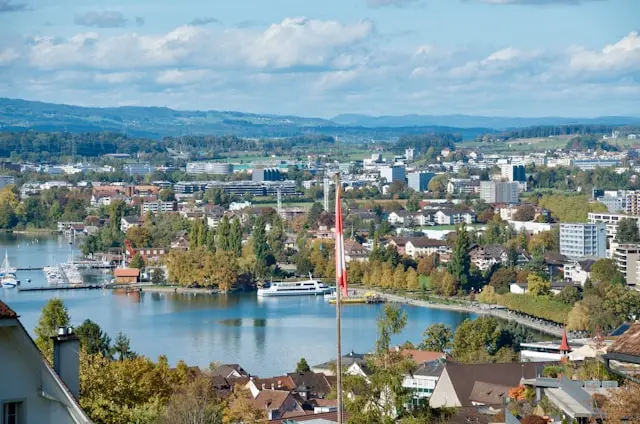
Ettelbruck is a commune of around 10,200 residents in the canton of Diekirch, at the confluence of the Sûre, the Alzette and the Wark. With Diekirch it forms the Nordstad, the intercommunal pole that the region's own planning body describes as the country's third engine after the capital region and the Minett, with Diekirch and Ettelbruck as its two major centres. The commune sits where the north's rail and road axes meet: the CFL line from Luxembourg runs through Ettelbruck toward Troisvierges and Gouvy, the four-kilometre branch to Diekirch leaves the junction here, and the A7, the North motorway, reaches the town from the capital with junctions at Schieren and Ettelbruck itself before the road continues toward the Belgian border.
What follows is an analysis of what that verified physical base means for hiring: who operates around the junction, where the people who run the northern economy actually live, which constraints are documented in the public record and which are not, and what a senior hiring decision in this market depends on. The picture that emerges is of a regional node with real infrastructure and a dated, costed development programme, staffed from a labour shed that crosses two borders, in a country whose pay system revalues automatically - and for which almost none of the granular hiring statistics that circulate about it are published anywhere.
The Junction and the Corridor: Ettelbruck's Verified Rail and Road Base
Ettelbruck's rail role is specific and documented. It is the junction of CFL Line 10, the Luxembourg - Ettelbruck - Troisvierges - Gouvy axis that carries the country's northern rail traffic toward the Belgian border, and of the 4.1-kilometre Line 1a branch to Diekirch, an electrified single-track line recorded as such in the national network statement. The junction's passenger offer was extended at the December 2025 timetable change so that the weekend and holiday service now runs all year, with four trains an hour between Luxembourg and Ettelbruck and two an hour onward to Troisvierges. On 15 October 2025 the first double-unit Coradia entered service between Luxembourg and Diekirch, offering 668 seats in a 164-metre formation.
The road base matches it. The A7, the North motorway, runs from Luxembourg City to the Schieren interchange, where the corridor continues as the B7 expressway past the Ettelbruck junction toward Erpeldange and Diekirch, while the N7 trunk road runs through Ettelbruck itself and continues north toward the Belgian border; Ettelbruck ONE, the office redevelopment a ten-minute walk from the station, advertises direct motorway access as one of its location arguments. The junction is therefore both a rail node and a road node, which is precisely why the surrounding economy mixes haulage, distribution and production employers.
The freight reality is more modest than the junction's passenger prominence, and the record is precise about it. The CFL group's conventional freight arm, the CFL cargo group, carried 11,863 kilotonnes in 2025 - down from 12,855 in 2024 and 13,329 in 2023 - on turnover that rose 5.4 percent to 235.5 million euros and a record net result of 13.3 million euros, and the group's freight activities employ more than 1,200 people. The network's freight concentration point - the classification yard and the intermodal terminal - sits at Bettembourg-Dudelange in the south of the country. No published figure breaks rail freight tonnage down by station, so any specific tonnage attributed to Ettelbruck itself is not a published number.
The Station Rebuild: A Documented, Costed Programme
The largest verified fact about Ettelbruck's logistics environment is the station rebuild now under way. A multimodal interchange is being created at the station by the CFL, the roads administration and the public buildings administration, a project under construction since 2018. The total cost of the overhaul, excluding a youth hostel integrated into the scheme, is projected at 196.6 million euros; the railway fund portion alone is 98 million euros plus VAT and the road fund portion 38 million euros plus VAT.
What it delivers, on the official project record: the station grows from two platforms with three tracks to three platforms with five tracks, with twelve bus platforms alongside; a 300-metre tunnel takes the N7 under the station from the Patton Bridge to the Rue du Canal, due to open by the end of 2028; a park-and-ride of roughly 430 spaces is being built; and a new passenger building of 3,791 square metres, housing a police station and retail, is scheduled for construction from 2029 with completion by early 2031. The railway group's own annual report adds the operational layer: four electrified storage sidings and two service platforms for cleaning passenger trains, and five further tracks with a loading quay for a new infrastructure-maintenance base - skilled rail employment consolidating at the junction. One limit is stated explicitly in the official record: the Ettelbruck-Diekirch section remains single track.
Disruption is scheduled and public. No trains ran between Ettelbruck and Gouvy, or between Kautenbach and Wiltz, from 24 August to 14 September 2026, for the renewal of 3.7 kilometres of track, station maintenance and rockfall protection on the northern line, with replacement buses moving around 200 drivers on nearly 1,000 journeys a day. The programme is therefore the opposite of an abstract promise: it is a dated, costed, published sequence of works. What it does not contain is any published projection of freight-capacity percentages during or after construction; figures of that kind quoted for this market are not in the record.
Land and the Nordstad: What the Public Record Shows, and What It Does Not
The north's land story is not a vacancy percentage; it is a development programme with named projects. The Nordstad syndicat is developing the Fridhaff regional activity zone on roughly 28.5 hectares between Erpeldange-sur-Sûre and Diekirch, on the axis that links the region's two centres, intended for production businesses including firms that have run out of room in the valley zones; several parcels are already allocated or reserved even where not yet built, and the first committed investor was the tobacco group Landewyck. Ettelbruck's own land-use plan reserves its economic-activity zones for light industry, crafts, wholesale and logistics. A ten-minute walk from the station, the Ettelbruck ONE redevelopment is converting a former tobacco manufacture into 19,000 square metres of offices and commercial space for up to 600 people, ready for occupancy from the end of 2026, with about 300 underground parking spaces.
Beyond that, the granular property claims that circulate about the northern market - a national industrial vacancy rate for a given quarter, hectares of available land in the Ettelbruck catchment, land prices per square metre for the north, a cross-border land-price comparison with Lorraine - are not published in any retrievable public series. Luxembourg's brokerage research is not public-indexed at that granularity, and no official body measures industrial land availability by commune. The only citable European-level statement is that average logistics vacancy across Europe rose to 4.4 percent by the third quarter of 2024. Whether a specific rail-adjacent site can be secured in the Nordstad is a live market question that has to be answered with current searches and conversations with the zone's developers, not with a published percentage.
The Workforce: Cross-Border by Construction
Ettelbruck cannot staff itself, and neither can the Nordstad. The commune has around 10,200 residents; the labour comes across the borders, and the national picture is unambiguous. In the first quarter of 2026, 232,919 of Luxembourg's 495,775 employees were cross-border workers. The statistical portrait published in March 2026 counted 225,840 cross-border employees in 2023, of whom 54.2 percent lived in France, 23 percent in Germany and 22.7 percent in Belgium - the two borders that frame the north.
No public dataset breaks that workforce down by commune or by sector, so any precise claim about the resident share of Ettelbruck's logistics workforce, or the share of the region's logistics professionals commuting south each day, is a figure someone invented. What the record does establish is the pay structure around the borders: cross-border workers averaged 65,487 euros a year, against 78,747 euros for foreign residents and more than 92,000 euros for Luxembourg nationals, and by country of residence Belgian cross-border workers averaged 70,676 euros and German cross-border workers 69,726 euros - both above the French average of 58,276 euros - with the gaps explained by sectoral composition rather than nationality itself. A nearby anchor of industrial employment is verifiable too: Goodyear's Colmar-Berg plant, on the A7 immediately south of Ettelbruck, employs around 3,400 people and ranks among the country's largest industrial employers.
For housing, the public series inverts the claim usually made. The national rent survey published in June 2026 puts the northern zone - the cantons of Clervaux, Diekirch, Redange, Vianden and Wiltz - at the bottom of the country's rent hierarchy, with a median of 15.56 euros per square metre against 25.56 euros in Luxembourg City and a national median of 20.54 euros; northern and eastern cantons generally sit below 16 euros per square metre. The commuting-cost argument that matters in this market is therefore not that housing is more expensive in the north than across the border; it is that net pay, not gross pay, is what moves candidates whose lives span two or three jurisdictions, and that no published series quantifies that trade-off for them.
Skills, Pay and the Limits of the Public Data
The verified skills picture for Luxembourg logistics is qualitative but consistent: the sector's national cluster body lists truck drivers, warehouse operators, supply chain planners, customs specialists, data analysts, sustainability experts and IT professionals among the roles affected by shortages, with digitalisation and the sustainability transition changing the skill requirements faster than the labour market retrains. Around Ettelbruck, that list meets a junction that is itself becoming a skills story - the new storage sidings and the five-track infrastructure-maintenance base being built at the station consolidate rail-maintenance capability, and the employers moving into the Fridhaff zone and Ettelbruck ONE arrive into a labour shed that is cross-border by construction.
What is verifiable about pay in this market is the mechanism, not the bands. Luxembourg revalues all salaries automatically through indexation: no tranche at all was triggered in 2024, a mandatory 2.5 percent tranche applied from 1 May 2025, and a further mandatory 2.5 percent tranche applied from 1 June 2026, moving the indexation scale to 992.24 points. Every senior offer built for this market is a moving baseline, and every retention conversation competes with an increase the employee receives automatically.
What no public source provides is the layer a compensation strategy actually needs: role-level salary bands for the Nordstad, driver premiums by certification, time-to-fill, turnover, or the share of senior candidates who are passively employed. The survey instruments sometimes cited for this market either do not exist in retrievable form or sell their results to participants only. The honest calibration evidence for an Ettelbruck mandate is the mandate market itself - comparable searches actually run at northern hauliers, the rail group's freight and maintenance arms and the region's production employers - combined with the verified structural facts: automatic indexation, two-jurisdiction net-pay arithmetic and a cross-border labour shed.
The national labour-market numbers frame the demand side. At the end of August 2026 the employment agency counted 20,136 available resident jobseekers, 11.5 percent more than a year earlier, against an unemployment rate of 6.5 percent - while employers declared 2,768 vacancies in the month and the month-end stock of open posts stood at 6,715, up 2.7 percent on the year. A market with rising resident jobseekers and rising declared vacancies is a market with a matching problem, not simply a volume problem.
That is why direct search, not advertising, is the effective channel at the senior and specialist tier here. The passive senior professional in this market is not a statistical claim; they are a person working for the rail group's freight and maintenance arms, a northern haulier, the tyre plant down the motorway or one of the Nordstad's developing employers, whose skills are visible to their current employer and to nobody's job board.
Regulation: What Actually Applies
One European rule is real, dated and commonly misdescribed. Regulation (EC) No 1072/2009 governs cabotage: after an international delivery into a member state, a non-resident haulier may carry out up to three national road-haulage operations with the same vehicle within seven days. That is a constraint on foreign operators running domestic Luxembourg legs - a competition matter - not a restriction on employing drivers who live across a border, which the regulation does not address. Driver employment across the border is governed instead by the standard European posting and driving-and-rest-time framework.
The low-emission-zone claim sometimes made for this year does not survive checking: no Luxembourg municipality operates a low-emission zone, and none has one enacted and scheduled. What actually applies to heavy goods vehicles in Luxembourg today is the Eurovignette toll for vehicles of twelve tonnes and above, plus the customary night and public-holiday driving bans. Fleet-renewal pressure on northern hauliers is real - it comes from the European decarbonisation direction and from customer requirements - but no published figure quantifies a non-compliant share of the northern fleet or a per-vehicle compliance bill for it.
For executive search in industrial and logistics sectors, the layer that matters here is the one with dates: indexation rounds that reprice every offer automatically, a rail programme that changes the junction's physical layout on a published schedule, and a zone-development programme that is allocating the north's remaining industrial land now. The organisations that map who is actually building capability in that sequence - inside the rail group, the incoming zone employers and the hauliers serving them - will reach the small pool first.
What This Means for Hiring Leaders
Ettelbruck's logistics market rewards organisations that read it structurally. The verified record gives you a junction on the country's northern rail axis with a published, costed rebuild; a motorway link to the capital; a regional development pole with a 28.5-hectare zone allocating parcels now; a 3,400-person industrial employer next door at Colmar-Berg; a workforce that is cross-border by construction, with German and Belgian workers each holding roughly a fifth to a quarter of the national cross-border total; a pay system that revalues automatically; and rents at the bottom of the national hierarchy rather than the top.
The same record tells you what you cannot know from a desk: no published vacancy rate for northern logistics, no role-level salary series, no time-to-fill data, no passive-candidate percentage, no industrial-land price series for the north. In a market like that, the difference between organisations is not who has the better data subscription. It is who has mapped the actual pool - the rail freight and maintenance specialists, the certified drivers, the operations and supply-chain people working in and around the Nordstad on both sides of the border - before the vacancy opens.
KiTalent works with logistics and industrial organisations across Europe facing this profile: compressed candidate pools, passive senior talent, and structural change that narrows the field further.
For organisations competing for logistics and supply chain leadership in northern Luxembourg, where the candidates are passive, the infrastructure is being rebuilt around them, and the constraint is the ability to reach professionals who are not looking, speak with our executive search team about how we source and deliver in markets like this.
Frequently Asked Questions
What is the current state of logistics hiring in Ettelbruck, Luxembourg?
The verified base is a rail junction on the Luxembourg - Ettelbruck - Troisvierges - Gouvy line with a 4.1-kilometre single-track branch to Diekirch, a station rebuild projected at 196.6 million euros that will deliver three platforms with five tracks and a new passenger building by the early 2030s, a motorway link to the capital, and the 28.5-hectare Fridhaff activity zone under allocation between Erpeldange-sur-Sûre and Diekirch. Nationally, the employment agency counted 20,136 available resident jobseekers at the end of August 2026 against rising declared vacancies - a matching problem rather than a simple labour shortage. No public series measures vacancies, salaries or time-to-fill for Ettelbruck itself.
How much do logistics executives earn in Luxembourg's north?
No public role-level salary series exists for this market, and figures sometimes quoted for it are not published anywhere. What is verifiable: all Luxembourg salaries revalue automatically through indexation - no tranche in 2024, a mandatory 2.5 percent increase from 1 May 2025 and a further 2.5 percent from 1 June 2026 - and the national statistics show cross-border workers averaging 65,487 euros a year against 78,747 euros for foreign residents and more than 92,000 euros for Luxembourg nationals. Calibrating a senior offer in the Nordstad requires gross-to-net modelling across borders plus live mandate benchmarks, not a published table. KiTalent provides that calibration from mandates actually run.
Why is cross-border recruitment important for northern Luxembourg logistics employers?
Because the north cannot staff itself from its own communes. In the first quarter of 2026, 232,919 of Luxembourg's 495,775 employees were cross-border workers, and the 2023 portrait counted 23 percent of them living in Germany and 22.7 percent in Belgium - the two borders that frame the Nordstad. No public dataset breaks the workforce down by commune or sector, so the resident share of Ettelbruck's logistics workforce is not a published figure. Any hiring plan for this market is by definition a cross-border plan, and any retention plan competes with employers on both sides of the border.
How does Ettelbruck compare to southern Luxembourg as a logistics location?
The structural comparison is verifiable; the salary comparison is not. The south hosts the country's rail-freight concentration - the classification yard and the Bettembourg-Dudelange intermodal terminal - while Ettelbruck is the northern junction, with a passenger-led rebuild, a single-track branch to Diekirch and a development programme, the Fridhaff zone, aimed at production businesses rather than large-format distribution. No published series compares role-level compensation between the two. The north's verified cost position is housing: median rents of 15.56 euros per square metre against the national median of 20.54 euros and the capital's 25.56 euros.
What rail and road changes are affecting Ettelbruck through 2026 and beyond?
The station is being rebuilt into a multimodal interchange, under way since 2018 and projected at 196.6 million euros excluding the youth hostel: three platforms with five tracks, twelve bus platforms, a 300-metre N7 tunnel under the station due by the end of 2028, a roughly 430-space park-and-ride, and a new passenger building scheduled for 2029 to early 2031. The railway group's annual report also records new passenger-train storage sidings and a five-track infrastructure-maintenance base at the junction. Track renewals closed the Ettelbruck-Gouvy line from 24 August to 14 September 2026. No published projection exists for freight-capacity percentages during or after the works.
Can executive search firms help with logistics hiring in a small market like Ettelbruck?
Small, specialised markets are precisely where executive search delivers the most value. In a market with no published salary series, no time-to-fill data and a largely cross-border, passively employed candidate pool, traditional advertising reaches a fraction of the people a mandate needs.
What the Public Record Does Not Show
Claims beyond the verified record are not repeated on this page. No public series exists for a northern-Luxembourg logistics vacancy rate, specialised-role time-to-fill, hectares of available industrial land in the Ettelbruck catchment, land prices per square metre for the north, cross-border land-price comparisons, the resident share of the local logistics workforce, the share of northern professionals commuting south, role-level salary bands, certification premiums, signing bonuses, turnover, the share of senior candidates who are passive, a non-compliant share of the northern heavy-goods fleet, or freight-capacity effects of the rail works. The verified record - the junction and its rebuild, the zone programme, the employers' published results, the national labour-market counts, the rent hierarchy, the indexation rounds and the cabotage rule as written - supports the structural argument; the hiring arithmetic must be argued from structure and from mandates actually run, not quoted.
Sources
- CFL Group - Annual Report 2025 (Ettelbruck interchange, Line 10 service, freight results)
- Transports.lu - Ettelbruck station redevelopment project
- RTL Today - Ettelbruck railway station project makes visible progress after delays
- CFL blog - the new interchange platform at Ettelbruck takes shape
- Chronicle.lu - CFL announces summer rail works on five lines (2026 closures)
- Administration des chemins de fer - Network Statement (DRR) 2026
- Administration des ponts et chaussées - A7 motorway page (travaux.public.lu)
- Administration des ponts et chaussées - A7/B7 communiqué, Colmar-Berg to Erpeldange interchanges
- Wikipedia - A7 motorway (Luxembourg)
- RTL Today - N7 modernisation between the Fridhaff roundabout and the Belgian border
- Wikipedia - Ligne 1a (CFL), Ettelbruck-Diekirch
- Nordstad - the Fridhaff regional activity zone
- Nordstad - development
- Le Quotidien - Landewyck first to invest in the future Fridhaff zone
- Ettelbruck ONE - the office and business centre near Ettelbruck station
- Commune of Ettelbruck - land-use plan (PAG 2025)
- CityPopulation - Ettelbruck commune population
- STATEC - Regards 01/2026, portrait of cross-border workers
- RTL Today - wage gaps persist among cross-border workers
- Observatoire de l'Habitat / Ministry of Housing - Rapport d'analyse n°24, rent regulation (June 2026)
- STATEC - wage indexation of 1 May 2025
- STATEC - wage indexation of 1 June 2026
- Gouvernement.lu - unemployment evolution, August 2026 (ADEM)
- RTL Today - Goodyear celebrates anniversary at Colmar-Berg
- Cluster for Logistics Luxembourg - Labour Market Trends
- EUR-Lex - Regulation (EC) No 1072/2009, Chapter III (cabotage)
- CBRE - European Real Estate Market Outlook 2025, Logistics
Related Links
- Ettelbruck
- Luxembourg
- Wiltz Renewable Energy Talent: What the Verified Record Shows
- Dudelange Logistics Hiring: What the Verified Record Shows
- Wiltz Tourism Hiring: Define the Mandate Before the Search
- Quebec City's Insurance Sector Cut Hundreds of Jobs and Still Cannot Hire the People It Needs
Related Market Reads
Articles tied to the same hiring geography or market context.
Wiltz Renewable Energy Talent: What the Verified Record Shows
The verified public record for Wiltz - a 764-documented Ardennes town of 6,145 on the river of the same name, battle-scarred and castle-crowned - and what a renewable-energy mandate in Luxembourg's north must actually cover.
Dudelange Logistics Hiring: What the Verified Record Shows
The verified public record for Dudelange's logistics market - the Bettembourg-Dudelange intermodal terminal and the Eurohub Sud park that anchor Luxembourg's southern...
Wiltz Tourism Hiring: Define the Mandate Before the Search
What the verified public record establishes about Wiltz - its 1727 castle, 6,145-strong town population and Battle of the Bulge heritage - and where a tourism mandate needs contacted, assessed and validated candidates.
Nearby Market Signals
Lateral reads from adjacent cities, sectors, or themes.
Quebec City's Insurance Sector Cut Hundreds of Jobs and Still Cannot Hire the People It Needs
Quebec City's two largest insurers eliminated 450 administrative positions over a two year integration cycle. The headlines told a story of contraction. The recruitment data...
Los Angeles Entertainment Hiring: Define the Mandate Before the Search
Which studio-production, games-and-interactive or music-and-recording responsibility actually defines an LA entertainment mandate?
Dallas Telecom and Digital Infrastructure: Define the Network Mandate
Which network, facility or deployment decisions define the Dallas telecom and digital-infrastructure mandate?
From the Archive
Evergreen background reading that still sharpens current hiring decisions.
Wiltz Light Manufacturing: Why 112-Day Vacancies Are Rewriting the Rules for Luxembourg's Northern SMEs
Wiltz is a commune of 7,600 people in Luxembourg's rural Éislek region. It maintains 35 hectares of zoned industrial land, two active industrial zones with occupancy above 94%,...
Luxembourg Fund Servicing Talent: What the Verified Record Shows
The verified public record for Luxembourg's fund industry - the world's second-largest investment fund centre under CSSF supervision - and what a fund-servicing leadership mandate there must actually cover.
Luxembourg Legal and Fund Governance Hiring: Define the Mandate Before the Search
What the verified public record establishes about Luxembourg's fund-centre standing, its EU-institutional seat, and where a legal or governance mandate needs contacted, assessed and validated candidates.