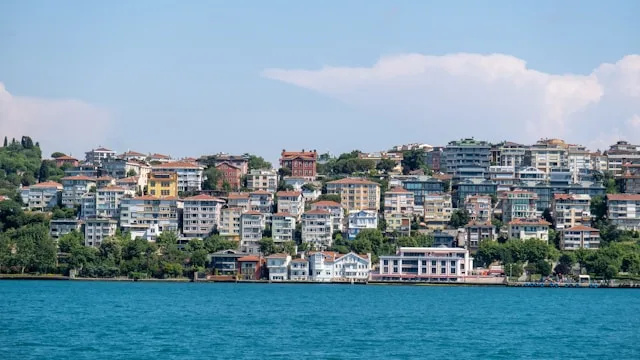
Ettelbruck is a commune of about 10,150 people in the canton of Diekirch, and together with Diekirch, Schieren and Erpeldange-sur-Sûre it forms the Nordstad, the northern urban pole of a country of some 672,000. It is not the canton's administrative seat; that is Diekirch. It is the region's service centre: a Cactus marché on Place Marie-Adelaïde and a Proxy Delhaize on the Grand-Rue, branches of Spuerkeess, BIL and BGL BNP Paribas, family-run hotels that include the four-generation Hôtel Lanners opposite the station, and a Friday morning market of about fifteen stalls in the pedestrian zone. The Nordstad's hypermarket-scale retail - the Cactus commercial centre and an Aldi at Ingeldorf, in the neighbouring commune of Erpeldange-sur-Sûre, and the new-generation Lidl at Diekirch - sits up the B7.
This page sets out what the verified public record shows about hiring in that market, and what it does not. The numbers that circulate for markets of this size - vacancy durations for supervisory roles, passive-candidate percentages, salary bands by role and by town - are not published for Ettelbruck by anyone, and the sections below do not repeat them. What the record does contain is enough to structure a serious search: the retail base as the national Retail Report counts it, the town's unemployment and salary data as the statistics office publishes them, the language profile of the candidate pool, the wage system that sets pay in every Luxembourg shop, the housing arithmetic as the housing observatory measures it, and the rules that actually govern shop opening and commercial development in 2026.
The Retail Base as the Record Counts It
The canton of Diekirch carries 51,443 square metres of retail sales area for 35,764 residents - 1.44 square metres per person against a national average of 1.66. On the only measure published, the canton is less retail-dense than the country as a whole, not more. Ettelbruck's role inside it is convenience and service retail; the big-box end of the market sits at Ingeldorf in the neighbouring commune of Erpeldange-sur-Sûre, and the nearest Colruyt is down the motorway in Mersch.
The national retail picture is one of double-digit vacancy and a slow shift of floor space out of town centres. The Retail Report 2025, published by the economy ministry with the Chamber of Commerce, puts national commercial vacancy at 11.9 percent in 2024, down from 12.3 percent in 2023 - 14.3 percent in city centres, 9.6 percent in village centres and 7.8 percent in shopping centres. No commune-level vacancy rate is published, so the claim that Ettelbruck's storefronts are nearly all occupied cannot be tested against any series; the national baseline is roughly one empty commercial unit in eight.
The structural trend is documented, and Ettelbruck has lived it. City-centre shops fell 9.6 percent in 2024 to 1,095 units nationally, while shopping-centre units rose 4 percent to 590; retail's share of city-centre occupancy has come down from 37.5 percent to 33.6 percent since 2019, and pop-up and showroom formats have grown 72.5 percent over the same period. The town's own Cactus - 950 square metres on the main street, opened in 2000 - closed in mid-2015 when its lease expired and the rent demanded was, in the chain's words, exorbitant; the twenty-seven staff were redeployed. Food retail is the one clearly expanding segment, its national sales surface up 13.3 percent since 2019, with hard-discount sales areas up 35 percent; the Nordstad's own case is the 1,656-square-metre Lidl that opened at Diekirch in February 2026, more than a thousand square metres larger than the Ingeldorf store it replaced.
Employment-wise, retail is a heavyweight being staffed with difficulty: 55,800 employees, 11.6 percent of all employment in the country and 8.6 percent of gross value added, plus a further 23,800 in hotels, restaurants and cafés, up 9.2 percent since 2020. The Chamber of Commerce names the shortage of staff as the sector's main challenge for 2025, with regulatory constraints ranked last among the concerns it surveys. That is the verified frame any hiring plan in this market starts from.
The Labour Market as It Is Counted
Nationally, the employment agency closed 2024 with 19,532 resident jobseekers, 1,334 more than a year earlier, against 5,935 open declared vacancies, with the unemployment rate around 5.9 percent seasonally adjusted and 6.2 percent raw. A year later the jobseeker count had risen to 21,090, an increase of 8.0 percent, with the rate at 6.2 percent. Vacancies and jobseekers rising together is the signature of a market that cannot match supply to demand, not one that has run out of people.
Ettelbruck itself is one of the higher-unemployment communes in the country: 7.42 percent in 2024 and 7.40 percent in 2025, with 328 unemployed residents counted in 2024 - while the canton of Diekirch as a whole stood at 5.72 percent, slightly below the national rate of 5.89 percent. The town concentrates the region's labour-market strain inside a canton that otherwise matches the country. For an employer this is the useful paradox: people looking for work and posts looking for people exist in the same Nordstad market, and the published statistics do not explain the gap between them.
The official view on where shortages lie is the employment agency's annual list of severely short occupations. Its 2025 edition, covering the reference year 2024, lists twenty-two occupations dominated by finance, information technology, engineering and health, with new entries in industrial mechanical maintenance, aircraft maintenance, body repair, management consultancy and rail traffic. No retail or hospitality management occupation appears on it. The official record therefore does not classify retail management as a bottleneck occupation, even as the sector's own association calls staffing its main problem. Both statements are true, and a hiring plan here has to hold both.
Two honest limits follow. No commune- or canton-level vacancy count by occupation is published, and no measure exists of how long a supervisory retail vacancy in the Nordstad takes to fill. Figures such as ninety-five-day fill times or a standing count of open sales vacancies appear in no release; they can only come from searches actually run in the market. And the labour market is by construction cross-border: 231,290 frontier workers made up 44.3 percent of all employees in the country in 2024, so any Nordstad roster is already a cross-border roster.
The Language Profile of the Candidate Pool
The employment agency's own description of languages at work in Luxembourg is the best available map of the pool a retail employer here draws on. French is the communication language of the economy, used especially in commerce and in hotels, restaurants and cafés. Luxembourgish is the common language of about three quarters of the population and of 94 percent of young people. German is used most in the crafts; English dominates business and finance; Portuguese is widespread; close to half of residents are foreign nationals. Most Luxembourgers speak several languages.
For customer-facing management roles this multilingual reality functions as a filter before any interview takes place. A store or branch manager in Ettelbruck who briefs warehouse staff in one language in the morning, deals with German-speaking suppliers at midday and serves a French-speaking clientele in the afternoon is operating in at least three, and the pool that combines them with supervisory experience in a market this size is small by arithmetic alone. What no source publishes is a price for it: no survey quantifies a premium for moving a multilingual store manager between competitors, and any percentage quoted for that in this market is an estimate, not a statistic.
How Pay Is Actually Set in This Market
The single most important thing to understand about pay in Ettelbruck's shops is that it is not set the way a textbook assumes. Luxembourg operates an automatic sliding wage scale, under article 3 of the amended law of 25 March 2015: whenever the half-yearly average of the cost-of-living index crosses a threshold, every salary and pension in the country rises by 2.5 percent. The last tranche before 2024 took effect on 1 September 2023; none occurred during 2024; the next came on 1 May 2025 and a further one on 1 June 2026.
Two consequences follow for anyone benchmarking pay here. First, nominal pay in every Luxembourg shop moves with prices by law, for every employee, regardless of local labour-market conditions - so a pay competition for a store manager is fought on the margins around an indexed base, not on the base itself. Second, year-on-year pay comparisons are dominated by the tranche calendar rather than by local scarcity.
The published pay structure, not invented bands, is what a benchmark should be built on. In the statistics office's salary-structure study, with data for 2022, the all-economy average gross annual salary is 75,919 euros and the median 58,126 euros; financial and insurance activities average 113,018 euros; construction 49,587 euros; hotels and catering 40,461 euros, the lowest-paid sector in the country. No survey publishes a role-by-role band for Ettelbruck; any euro range quoted for an Ettelbruck store manager is a modelling assumption.
What the statistics office does publish by commune is the median gross monthly salary of residents: 3,895 euros for Ettelbruck in 2024 against 6,050 euros for Luxembourg City, a gap of about a third at the median. This is a residence measure - where people live, full-time and part-time combined - not a statement about what the same role pays in each place. Used honestly, it says the capital's resident workforce is paid on a different scale from Ettelbruck's, and a management candidate already established there starts with expectations formed in a different market.
The Housing Arithmetic
The housing observatory's commune-level series gives Ettelbruck a recorded sale price of 6,703 euros per square metre for existing apartments across the year to March 2026, on seventy-two transactions, with advertised prices at 6,551 euros and advertised rents at 22.18 euros per square metre per month - about 1,775 euros for eighty square metres. The canton sits near the same level, some northern communes below 5,000 euros, against a national average around 7,800 euros for existing apartments.
The hiring arithmetic that follows is straightforward: advertised rent of about 22 euros per square metre against a residents' median salary of about 3,900 euros a month means a mid-level manager housing a family in Ettelbruck commits a large, fixed share of gross pay to housing, and the same person can live across a border and commute - as 44.3 percent of the country's employees already do. For frontline staff that trade works. For a manager weighing a Nordstad role against a capital role, the decision is an arithmetic of rent, commute and indexed pay - which is precisely where an employer can still compete on something other than base salary.
The Competition for Talent, Verified
Luxembourg City, about thirty-five kilometres south by road and linked by direct rail up the A7 corridor, is the primary pull: its residents earn a median about 55 percent above Ettelbruck's, and the national and regional headquarters functions sit there. That gap is a residence measure, not a like-for-like pay comparison - but it shapes candidate expectations.
What the road network actually does is often stated backwards. The A7, the North motorway, runs from the capital to the Nordstad and becomes the B7 with junctions at Schieren, Ettelbrück and Ingeldorf in that order; Ettelbruck is the closer junction, and the Schieren-Ettelbruck section is planned to be widened to two lanes each way from 2026. Motorway access is not the town's disadvantage; it ties the Nordstad retail labour market to the capital more tightly than to anything else in the north.
The cross-border retail competition is real but smaller and further away than usually described. The hypermarket that long served cross-border shoppers stood at Messancy, south of Arlon, some forty-odd road-kilometres away, and it closed in January 2026, reopening as a Delhaize-anchored gallery; Trier's shopping centres are about seventy road-kilometres east. No published study quantifies how much of any catchment's spending crosses a border; the leakage percentages quoted for northern Luxembourg are estimates, not measurements.
Diekirch, finally, is not a rival axis but the other half of the same market. The Nordstad's big-box retail sits at Ingeldorf inside the commune of Erpeldange-sur-Sûre, between Ettelbruck and Diekirch; Diekirch's own centre is a pedestrian zone of small shops. An employer who maps candidates by commune boundaries will carve one labour market into several; an employer who maps it as the Nordstad that the regional structures actually plan around will not.
The Rules That Govern Opening and Development in 2026
Opening hours changed. The law of 19 December 2025, in force since 19 June 2026, lets shops open Monday to Friday from 5:00 to 21:00 and Saturdays, Sundays and public holidays from 5:00 to 19:00, with 1 January, 1 May and 25 December closed except for butchers, bakers, pâtisseries, caterers and consumption salons; each shop may open around the clock twice a year, and anything beyond standard hours requires a collective agreement. Sunday working time rose from four to eight hours. Staffing and roster plans for the coming year are being written under a materially more flexible rulebook than the one most commentary still describes.
Development is not capped the way it is often described either. Ettelbruck's land-use plan, in its coordinated version of November 2025, allows sales areas of up to 10,000 square metres per building in the urban mixed zone, caps the village zone at Warken at 1,000 square metres, and admits enterprise-linked retail of up to 2,000 square metres of gross built surface in the economic-activity zone. There is no 400-square-metre ceiling on town-centre commercial units in the plan.
Transport and development in the Nordstad are coordinated structures, not aspirations: a six-commune intercommunal syndicate, a dedicated development agency, and the transport ministry's Mobility Concept Nordstad 2035 for bus corridors, park-and-ride and multimodal links across the Ettelbruck-Diekirch corridor, with the commune's own plan reserving a multimodal hub zone around the station in which commerce and services are expressly admitted.
Online, the verified trend is about shopkeepers rather than shoppers: 44.4 percent of Luxembourg retailers now operate their own online shop, up from 33.5 percent five years earlier. No official series publishes an e-commerce share of retail spending; projections quoted for online penetration are private estimates, not statistics.
What a Retail Hiring Mandate Here Actually Faces
Putting the verified record together: a small, multilingual, cross-border labour market in a canton that is less retail-dense than the national average; a town carrying above-national unemployment inside a canton at the national rate; pay set substantially by statute through the indexation scale; an official shortage list that does not classify retail management as a bottleneck even as the sector names staffing its main problem; and no published series for fill times, passive-candidate shares or role-level pay bands. Organisations that approach this market with a capital-city playbook, or with statistics that do not exist, will misprice both the search and the offer.
For retail and hospitality organisations operating in the Nordstad, three adjustments follow.
First, build the map directly. Because nothing published describes the supervisory candidate pool for this market at useful granularity, a search that starts from published statistics starts from nothing. Talent mapping that identifies the qualified profiles across the Nordstad's communes and the border catchment - including those currently employed by competitors - is the baseline, not a luxury.
Second, benchmark against the published structure and the housing arithmetic, not against invented bands. The verified anchors are the national median of 58,126 euros and the all-economy average of 75,919 euros, the 40,461-euro average in hotels and catering, the indexation calendar, advertised rents around 22 euros per square metre and recorded prices around 6,700 euros per square metre in Ettelbruck. A package that acknowledges rent-versus-pay explicitly, and says so to the candidate, is competing on the one margin an indexed pay system leaves open.
Third, date the plan against the calendar. Indexation tranches land on fixed dates, the new opening-hours regime applies from 19 June 2026, and the B7 widening begins in 2026. A search scoped and offered with those dates in mind will not be surprised by them.
For organisations competing for retail and hospitality leadership across the Nordstad - a market the published statistics do not describe at the level a mandate needs - start a conversation with our executive search team about how we map it directly.
Frequently Asked Questions
What is the average salary for a retail store manager in Ettelbruck, Luxembourg?
No published survey gives a role-level salary band for Ettelbruck, and any euro range quoted for the town is a modelling assumption rather than a statistic. The verified anchors are national and communal: an all-economy median gross annual salary of 58,126 euros and an average of 75,919 euros (statistics office, 2022 data); an average of 40,461 euros in hotels and catering, the lowest-paid sector; and a median gross monthly salary of 3,895 euros for Ettelbruck's residents in 2024, against 6,050 euros for Luxembourg City's. Every salary in the country also moves with the indexed wage scale, which rose 2.5 percent on 1 May 2025 and again on 1 June 2026.
Why is it hard to hire retail managers in northern Luxembourg?
Four verified forces converge. The candidate pool is structurally multilingual - French dominates commerce and hospitality, Luxembourgish is the common language of three quarters of the population, German and English are widespread - so supervisory roles draw on a small pool by arithmetic alone. The market itself is small: the Nordstad spans a handful of communes, and its big-box retail sits at Ingeldorf just across the commune boundary in Erpeldange-sur-Sûre. The capital pulls talent with a resident median salary about 55 percent higher and headquarters careers. And 44.3 percent of the country's employees are cross-border workers, so competitors for the same staff include employers across two borders. The official shortage list does not classify retail management as a bottleneck occupation, but the sector's own association names staffing as its main 2025 challenge.
How does Ettelbruck compete with Luxembourg City for retail talent?
Not on median pay, where the capital's residents stand about 55 percent higher, and not on headquarters proximity. Its verified proposition is operational autonomy and breadth of scope in a standalone operation; housing costs below the capital's, with recorded prices around 6,700 euros per square metre in Ettelbruck against a national average near 7,800; and motorway and rail access up the A7 and B7, which give Ettelbruck its own junction before the corridor continues toward Diekirch. Employers who add housing or commute support compete on the margin an indexed pay system leaves open.
What sectors drive employment in Ettelbruck?
Convenience retail and services: a Cactus marché on Place Marie-Adelaïde and a Proxy Delhaize on the Grand-Rue in town, the hypermarket-scale Cactus and the Aldi at Ingeldorf in neighbouring Erpeldange-sur-Sûre, and the new 1,656-square-metre Lidl at Diekirch, plus branches of Spuerkeess, BIL and BGL BNP Paribas, family-run hotels including the Hôtel Lanners opposite the station, and a Friday morning market of about fifteen stalls. The canton of Diekirch counts 51,443 square metres of retail sales area for 35,764 residents. Nationally, retail employs 55,800 people, 11.6 percent of all employment, and hotels, restaurants and cafés a further 23,800. KiTalent partners with organisations across retail, hospitality, and consumer-facing industries to fill senior roles in structurally constrained markets like this one.
How long does it take to fill a management role in Ettelbruck's retail sector?
This is not published, and any figure quoted for the Nordstad is an estimate from individual searches rather than a statistic. The employment agency releases national counts only: 5,935 open declared vacancies at the end of 2024 against 19,532 resident jobseekers, and 21,090 jobseekers a year later. Nothing published measures time-to-fill by occupation or by region, so practical benchmarking here has to come from mandates actually run in the market.
What is the biggest risk for retailers hiring in northern Luxembourg in 2026?
Two verified trends frame it. City-centre retail is contracting - city-centre shops down 9.6 percent in 2024 and retail's share of city-centre occupancy down from 37.5 to 33.6 percent since 2019 - while food retail and discount formats keep growing. And the sector's own association names the shortage of staff as its main challenge for 2025. For a hiring organisation, the compound risk is planning on statistics that do not exist: a search scoped around unpublished fill-time or passive-share figures is scoped around nothing. The mitigations that survive verification are direct market mapping, pay and roster planning against the indexation calendar and the new opening-hours law, and packages that address the town's rent-to-pay arithmetic explicitly.
Related Links
- Ettelbruck
- Luxembourg
- Food Beverage Fmcg
- Wiltz Renewable Energy Talent: What the Verified Record Shows
- Dudelange Logistics Hiring: Why Zero Warehouse Space and a Shrinking Talent Pool Are Forcing a New Operating Model
- Wiltz Tourism Hiring: Define the Mandate Before the Search
- Quebec City's Insurance Sector Cut Hundreds of Jobs and Still Cannot Hire the People It Needs

Published March 2026, updated 2026-04-12. Based on primary market sources and KiTalent's market-intelligence process.
Related Market Reads
Articles tied to the same hiring geography or market context.
Wiltz Renewable Energy Talent: What the Verified Record Shows
The verified public record for Wiltz - a 764-documented Ardennes town of 6,145 on the river of the same name, battle-scarred and castle-crowned - and what a renewable-energy mandate in Luxembourg's north must actually cover.
Dudelange Logistics Hiring: Why Zero Warehouse Space and a Shrinking Talent Pool Are Forcing a New Operating Model
Dudelange's Zone Industrielle is running at 98% warehouse utilisation with no Class A logistics space available. Average rents for modern logistics facilities climbed 12% year...
Wiltz Tourism Hiring: Define the Mandate Before the Search
What the verified public record establishes about Wiltz - its 1727 castle, 6,145-strong town population and Battle of the Bulge heritage - and where a tourism mandate needs contacted, assessed and validated candidates.
Nearby Market Signals
Lateral reads from adjacent cities, sectors, or themes.
Quebec City's Insurance Sector Cut Hundreds of Jobs and Still Cannot Hire the People It Needs
Quebec City's two largest insurers eliminated 450 administrative positions over a two year integration cycle. The headlines told a story of contraction. The recruitment data...
Milan Financial Services: Define the Regulated Business Mandate
Which regulated entity, product, control function and decision rights define a Milan financial-services mandate?
Los Angeles Entertainment Hiring: Define the Mandate Before the Search
Which studio-production, games-and-interactive or music-and-recording responsibility actually defines an LA entertainment mandate?
From the Archive
Evergreen background reading that still sharpens current hiring decisions.
Wiltz Light Manufacturing: Why 112-Day Vacancies Are Rewriting the Rules for Luxembourg's Northern SMEs
Wiltz is a commune of 7,600 people in Luxembourg's rural Éislek region. It maintains 35 hectares of zoned industrial land, two active industrial zones with occupancy above 94%,...
Luxembourg Fund Servicing Talent: What the Verified Record Shows
The verified public record for Luxembourg's fund industry - the world's second-largest investment fund centre under CSSF supervision - and what a fund-servicing leadership mandate there must actually cover.
Luxembourg Legal and Fund Governance Hiring: Define the Mandate Before the Search
What the verified public record establishes about Luxembourg's fund-centre standing, its EU-institutional seat, and where a legal or governance mandate needs contacted, assessed and validated candidates.