The buyer question
We need to hire senior technology or engineering leadership for an ICT operation anchored on Klagenfurt's Lakeside technology park - a corporate technology unit, an IT services or infrastructure firm, or a research-linked spinout. What does the verified record say about this market, and how should a mandate here be structured?
What the public record shows
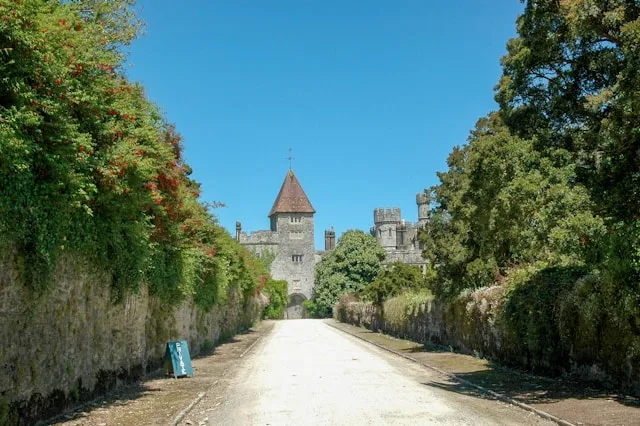
Lakeside Science & Technology Park sits beside the campus of the University of Klagenfurt on the edge of Klagenfurt am Wörthersee; the operator's 2025 sustainability report puts the site at about 15 hectares, and with the university it forms the Lakeside District. Construction began in 2003, and the first six buildings - 14,000 square metres hosting 14 companies - were in place from April 2005. The operator, Lakeside Science & Technology Park GmbH, is owned two-thirds by the Carinthian location agency BABEG and one-third by the City of Klagenfurt, and the park's start-up financing came from the aerospace group EADS, now Airbus. The first ten buildings (B01 to B10) carry 26,000 square metres of usable space with close to 1,000 people working in them; the Park 2.0 expansion under way since 2014 adds around 32,000 square metres in six stages, the first of which, building B11, opened in October 2015. The operator's stated horizon for 2030 is 54,000 square metres and 2,800 people on site.
The park's own directory names the employer base. Infineon Technologies IT-Services, OpenText, SKIDATA, KNAPP, CANCOM Austria, Kapsch TrafficCom, CISC Semiconductor, Dynatrace Austria, Beckhoff Automation, Siemens, KELAG and Austrian Power Grid work there alongside research organisations - AIT Austrian Institute of Technology, Fraunhofer Austria, Joanneum Research, the Know Center and Lakeside Labs - and departments of the University of Klagenfurt itself, with the build! Gründerzentrum incubator on site since the first phase. This is an employer base of corporate IT and engineering subsidiaries, technology units of Carinthian industrial firms and applied research institutes rather than a dense field of venture-backed product startups.
The university spinout that defines the cluster's public profile is Bitmovin, founded in 2012 out of University of Klagenfurt research on MPEG-DASH streaming by the team of Christian Timmerer and Hermann Hellwagner. Its own record lists headquarters in San Francisco and offices in Klagenfurt at Schleppeplatz 7, Vienna, London, Berlin and Denver, a last announced funding round of a $25 million Series C in 2021, and a €3.3 million research project on green streaming run with the University of Klagenfurt in 2022. The park's directory does not list Bitmovin among its current tenants, and no public record gives a Klagenfurt headcount for the company.
The university itself enrolled 13,323 students, completed around 1,000 programmes of study in the most recent year on record and employs 1,743 staff. Lakeside Labs, founded in 2008 as a non-profit research organisation and today a GmbH owned by BABEG and the University of Klagenfurt, researches self-organizing networked systems from the park. In the ICT field specifically, Statistics Austria data published in the WKO IKT-Statusreport 2024 show the University of Klagenfurt with 846 enrolled ICT programmes in the winter semester 2023/24 and 493 completed ICT programmes across the six study years 2017/18 to 2022/23 - about 82 a year, of which 457 were Bachelor or Master awards and 36 doctorates. The FH Kärnten university of applied sciences added 130 ICT completions over the same six years. Of Carinthia's ICT students, 55.7% study at the University of Klagenfurt, 30.8% in Styria and 11.2% in Vienna; the 2022 edition of the same report put the university's Informatik bachelor dropout rate at 38.3% for 2020/21.
The regional employment base is on the record. Carinthia's ICT sector employed 9,993 people in dependent employment in 2023 - 7.8% of Austria's ICT employment - having grown 67.8% from 5,956 in 2008, against 73.2% for Austria as a whole; 46.1% of all Austrian ICT employees work in Vienna. A 2026 model calculation by the WKO's UBIT trade group, using the Economica/VÖSI method, puts about 22,600 Carinthian jobs directly, indirectly or induced on ICT, and €2.84 billion of IT-related gross value added - 7% of the Austrian ICT sector's - ranking Carinthia second only to Vienna in relative ICT specialisation.
Two dated structural facts frame any Klagenfurt search. Since 14 December 2025 the Koralmbahn has been in service, putting Graz 41 minutes away from Klagenfurt on the fastest Railjet-Xpress connections, where the journey previously took around two hours. And Statistics Austria's 2025 labour-force projection, recalculated on 12 November 2025, has Carinthia's labour force falling from 281,334 in 2024 to 268,516 in 2030 in its constant scenario - about 4.5%, against 1.8% for Austria - with the trend scenario at about 2.9%. On immigration mechanics, Red-White-Red Card decisions are due within eight weeks by statute, and the AMS labour-market check averaged about 25 days in 2024, with a pre-check introduced later that year to halve that timeline.
What the verified record does not contain is any vacancy-duration, time-to-fill, salary-band, passive-candidate or staff-turnover series for Klagenfurt's ICT employers, no park-level occupancy or headcount statistic, and no published regional breakdown of where the university's ICT graduates work after graduating. The structure - a corporate-anchored technology park beside the university, a documented regional ICT employment base and a small annual graduate yield - is verifiable; the hiring arithmetic must be argued from structure, not quoted.
What changes in this market
A Klagenfurt technology mandate is a mandate against a corporate-anchored park, not a startup ecosystem. The buyers competing for senior people are the park's own corporate tenants and the Carinthian industrial and infrastructure firms behind them, plus - since December 2025 - Graz employers 41 minutes away by rail. The Koralm corridor has largely removed the distance that used to separate Carinthia's labour market from Styria's: a Graz offer no longer requires a Klagenfurt engineer to relocate, and mandates here should assume that competing approaches arrive from Graz at capital-city expectations.
Vienna's 46.1% concentration of Austrian ICT employment defines the pull for executive and specialist careers that only a capital's scale of employers provides, and Carinthia's projected labour-force decline of about 4.5% to 2030 in the constant scenario tightens every local search regardless of sector sentiment. Against that stands a thin, measurable supply side: roughly 82 university ICT completions and about 22 at the FH Kärnten a year, Carinthia-wide ICT employment just under 10,000, and a verified living-cost advantage - Statistics Austria's housing-cost record puts an average Carinthian dwelling at about €540 a month including operating costs, among Austria's cheapest. No public record says how many of those completions stay in Carinthia, and no public salary series publishes Klagenfurt senior-role bands, so compensation calibration lives in comparable mandates actually run, not in a survey that covers this market.
KiTalent's mandate analysis
- Screen on verified work against the documented employer base: Infineon IT-Services, OpenText, SKIDATA, KNAPP, CANCOM, Kapsch TrafficCom, CISC Semiconductor, Dynatrace, Beckhoff, Siemens, KELAG and the park's research institutes are the environments where Klagenfurt's senior ICT experience is actually built - ask candidates to evidence shipped systems inside structures like these rather than recite titles.
- Treat the park as part of a campus system: the university's 846 enrolled ICT programmes, Lakeside Labs, AIT, Fraunhofer Austria and Joanneum Research sit within walking distance of the tenants, and research-adjacent reach is a verifiable advantage of hiring here - use it in sourcing and in the role's credibility case.
- Size the local senior pool from the pipeline arithmetic: about 82 university and 22 FH ICT completions a year, a regional ICT employment base under 10,000, and Graz 41 minutes away by rail. A senior search designed around direct mapping of the named employers will outperform one that assumes a deep local bench.
- Benchmark compensation from comparable mandates, not from a local survey: no public Klagenfurt salary-band series exists, and the verified cost fact a candidate weighs is housing at roughly €540 a month for an average dwelling - build the offer case around the whole verified picture, not an invented regional discount.
- Start immigration mechanics at search launch where relevant: the Red-White-Red Card decision is due within eight weeks by statute and the AMS check averaged about 25 days in 2024 - workable timelines, but only if the process begins when the shortlist forms, not at offer stage.
Where the public record stops
Claims beyond the dated public record are not repeated on this page. The verified record above - the park's 2003 construction start and April 2005 opening, the 26,000 square metres and near-1,000 workers of the first ten buildings at their recorded vintage, the tenant directory current at retrieval, Bitmovin's own founding, office and funding record, the 9,993 Carinthian ICT employees of 2023, the university's 846 enrolled ICT programmes in winter semester 2023/24 and its 493 ICT completions across 2017/18 to 2022/23, the 22,600 jobs of the 2026 model calculation, the 41-minute Graz connection in service since 14 December 2025, and the 2025 labour-force projection - supports the structural argument without invented employment, growth, salary, vacancy or turnover statistics. Where the university's ICT graduates actually work, and how long senior Klagenfurt roles take to fill, remain open questions this page records rather than answers.
Sources
- Lakeside Science & Technology Park - operator site (tenant directory; 2030 size figures; site area)
- Wikipedia - Lakeside Science & Technology Park (construction history, phases, ownership)
- Land Kärnten - Lakeside Park retrospective (April 2005 opening)
- Bitmovin - About (founding 2012 from University of Klagenfurt research; offices; funding milestones)
- Kapsch TrafficCom - worldwide locations (Klagenfurt, Lakeside B10b)
- WKO - IKT-Statusreport 2024 (Carinthia ICT employment; university ICT enrolment and completions)
- WKO UBIT Kärnten - Kärnten ist Österreichs heimlicher IT-Champion (2026 model calculation)
- Statistics Austria - labour-force projection by Bundesland (2025 recalculation)
- University of Klagenfurt - Facts and figures
- ÖBB - Die neue Koralmbahn (41-minute Graz-Klagenfurt connections)
- oesterreich.gv.at - Rot-Weiß-Rot - Karte (eight-week decision rule)
- Lakeside Labs - About (founded 2008; ownership; research focus)
- ORF Kärnten - Carinthian housing costs (Statistik Austria record)
Related KiTalent research
- The Market Map Is Not the Shortlist: helps a buyer decide whether a Klagenfurt ICT mandate is really a platform, infrastructure or industrial-IT leadership search, and how to test it against the documented employer structure
- How to Assess a Leader Beyond Competencies: shows how to gather decisional evidence for this mandate - the research method behind documentary screening of engineering leadership work
Related Links
- Klagenfurt
- Austria
- Wels Machinery Hiring in 2026: Why the Firms That Built This Sector Cannot Recruit the People to Run It
- Klagenfurt's Commerce Sector Is Splitting in Two: What the Logistics Surge Means for Hiring Leaders
- Wörthersee Hospitality Hiring: Define the Mandate Before the Search
- Quebec City's Insurance Sector Cut Hundreds of Jobs and Still Cannot Hire the People It Needs
Related Market Reads
Articles tied to the same hiring geography or market context.
Wels Machinery Hiring in 2026: Why the Firms That Built This Sector Cannot Recruit the People to Run It
Upper Austria's machinery and metalworking sector produced more revenue per capita in 2025 than any comparable industrial region in the EU outside Bavaria. The Linz Wels Steyr...
Klagenfurt's Commerce Sector Is Splitting in Two: What the Logistics Surge Means for Hiring Leaders
Klagenfurt am Wörthersee has spent decades functioning as Carinthia's retail gravity centre. City Arkaden draws 4.2 million visitors annually. Slovenian cross border shoppers...
Wörthersee Hospitality Hiring: Define the Mandate Before the Search
What the verified public record establishes about the Wörthersee - Carinthia's largest lake, from Klagenfurt to Velden - its documented tourism competition and niche repositioning, and where a mandate needs contacted, assessed and validated candidates.
Nearby Market Signals
Lateral reads from adjacent cities, sectors, or themes.
Quebec City's Insurance Sector Cut Hundreds of Jobs and Still Cannot Hire the People It Needs
Quebec City's two largest insurers eliminated 450 administrative positions over a two year integration cycle. The headlines told a story of contraction. The recruitment data...
Milan Financial Services: Define the Regulated Business Mandate
Which regulated entity, product, control function and decision rights define a Milan financial-services mandate?
Los Angeles Entertainment Hiring: Define the Mandate Before the Search
Which studio-production, games-and-interactive or music-and-recording responsibility actually defines an LA entertainment mandate?
From the Archive
Evergreen background reading that still sharpens current hiring decisions.
Wels Trade Fair Talent: What the Verified Record Shows
The verified public record for Wels - Austria's eighth-largest city on the Traun near Linz, famous for a fair held every spring and autumn on Roman Ovilava's site - and what an exhibition-economy mandate there must actually cover.
Wels Logistics: €400 Million in Infrastructure, and Not Enough People to Run It
Upper Austria's logistics hub is building faster than it can hire. Wels, the inland freight node sitting at the junction of the A1 and A8 motorways, processed roughly 2.5...
Villach Semiconductor Hiring: Define the Mandate Before the Search
Which fab-operations, process-engineering or equipment responsibility actually defines a Villach semiconductor mandate?