A Family-Owned Plant at Hannevika
Hennig-Olsen Is AS is a family-owned ice cream manufacturer with its factory at Hannevika, just outside Kristiansand. The company's history pages say the factory was built in 1960 on the shore at Hannevika, and that its products have been distributed nationally through NorgesGruppen since 1993.
The company's homepage gives annual output of around 30 to 32 million litres of ice cream and frozen desserts, and the Bouvet case page gives around 34 million litres, all made in Kristiansand; the year is not stated for the Bouvet figure. The Bouvet page also describes the company as Norway's market leader with about 45% share, with no year given. Store norske leksikon gives about 350 employees and revenue of about NOK 1.3 billion for 2025. The Bouvet page gave a 2022 forecast of about 280 full-time equivalents. Headcount figures differ by source and year, so a hiring plan should start from the employer's current figure.
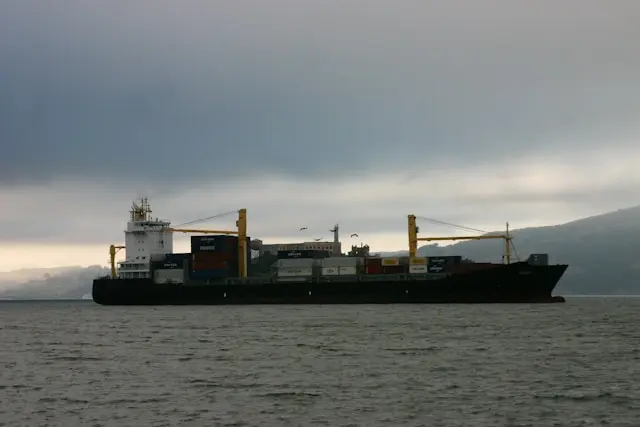
The Port of Kristiansand's container terminal handled just under 42,000 TEU in 2023, down from 49,500 TEU in 2022, according to the port company's 2023 annual report. The port figures used here do not break out refrigerated seafood, so seafood-specific container volumes remain an open question.
Aquaculture supply in the county includes Mowi's smolt hatchery at Flekkefjord in Vest-Agder, which opened in autumn 2019 in a new hall of 1,750 square metres, according to the trade publication iLaks.
What Hennig-Olsen Has Said About Automation
The company's automation plans are described in terms of future spending. In an interview with Dagens Næringsliv, chief executive Paal Hennig-Olsen said the company needs to automate more, is working on robotics and on an expansion that will be expensive, and has to build a financial buffer to pay for it. The interview describes planned investment, not completed projects.
Financial press coverage of the company's 2025 accounts reports a larger production expansion. Public coverage of those accounts does not give a capital figure, a completion date or the change in capacity.
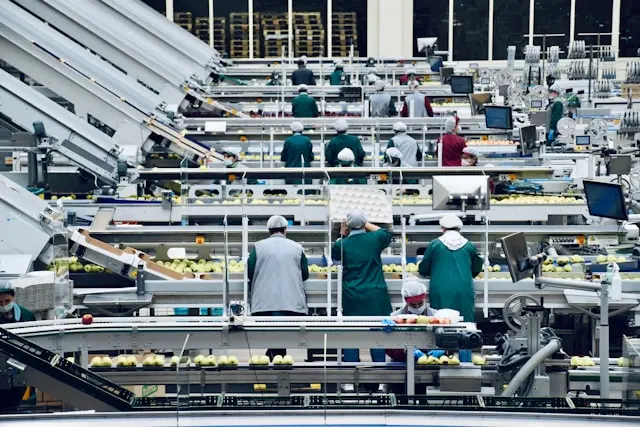
Consultancy Bouvet has built a real-time production monitoring system for the company's ice cream lines. It combines order data from the company's IT systems with line sensors that count and weigh each item, giving operators and managers a live view of progress against orders. Bouvet's case page lists the goals as less waste, more consistent quality and higher earnings, and says the displays reduce unnecessary visits to the factory floor. It does not report measured results.
The sources reviewed for this article do not yet give the capital cost, timing or capacity effect of the plant's most recent expansion. Those three facts are the first things a hiring plan for this site needs.
What the Public Record Does Not Yet Show About Hiring
The plant is investing in automation and production monitoring. Whether that investment has made hiring harder is a separate question, and the public data reviewed for this article does not answer it.
The measures that would test the question are job-posting counts, vacancy fill rates, the share of hires by recruitment channel, and the size of the candidate pool for maintenance, automation and cold-chain roles, each measured for the Agder food sector across 2023 to 2025. Until those series are published, the hiring effect of automation in Agder remains an open question.
Which roles the search actually needs decides which candidate pool to map: control-systems maintenance, cold-chain and food-safety compliance, or senior supply-chain leadership. A search should begin with a count of qualified people for that role within a practical commuting or relocation radius, built from the role's own requirements.
Agder's 2026 Traffic-Light Colour
The 2026 colouring of Norway's traffic-light system for aquaculture, published by the Ministry of Trade, Industry and Fisheries on 19 June 2026, places the production area from the Swedish border to Jæren (PO1) in green. That area covers the Agder coast. Green areas are offered capacity growth of up to 6%, and the decision could add about 8,300 tonnes of maximum allowed biomass across the green areas.
A green colour is an offer of growth, not a forecast of hiring demand. Whether operators take up that capacity in Agder, and how many staff it would need, are open questions.
EU Sustainability Reporting Rules and Their Reach
The revised Corporate Sustainability Reporting Directive, Directive (EU) 2026/470, applies to undertakings that exceed both a net turnover of €450 million and an average of 1,000 employees during the financial year. A food processor below either threshold is outside that rule's direct scope. Whether the same thresholds apply in Norway depends on EEA incorporation, which this article has not confirmed.
Questions to Settle Before a Senior Search
A senior search in this sector turns on questions the employer can answer from its own records. Which control systems will the new hire own, and who maintains them now? Which food-safety, HACCP and export requirements does the role carry? Which skills transfer from oil-services or offshore roles, and which do not? Which regions will the candidates come from, and what do they earn in the same role?
The sources reviewed for this article give no verified salary benchmark for these roles in Kristiansand. Current salary statistics for the specific role should be obtained before a budget is set.
If you are planning a senior search in Southern Norway's food processing and aquaculture sector, speak with our executive search team about the role profile before the search opens.
Open Questions for the Region
- The capital cost, timing and capacity effect of the plant's recent production expansions.
- The current headcount at the Hannevika factory.
- Job postings, vacancy fill rates and hiring channels for the Agder food sector, 2023 to 2025.
- Refrigerated seafood container volumes through the Port of Kristiansand.
- Verified salary benchmarks for food-processing and aquaculture leadership roles in Kristiansand.
Frequently Asked Questions
Is there a verified hiring-shortage figure for Kristiansand's food processing sector?
Not in the public sources reviewed for this article. The hiring questions above remain open, and no shortage rate is stated.
What is the 2026 traffic-light position for Agder?
Production area PO1, from the Swedish border to Jæren, is green in the 2026 colouring. Green areas are offered growth of up to 6%.
Does the EU sustainability reporting directive cover a mid-sized food processor?
Not directly. Under Directive (EU) 2026/470 an undertaking must exceed both €450 million net turnover and an average of 1,000 employees, so a processor below either threshold is outside its direct scope.
Related Links
- Kristiansand
- Norway
- Industrial Manufacturing
- Ålesund Seafood Hiring: Define the Mandate Before the Search
- Alesund Maritime Engineering: Define the Mandate Before Mapping
- Alesund Cruise Tourism: Define the Mandate Before Mapping
- Quebec City's Insurance Sector Cut Hundreds of Jobs and Still Cannot Hire the People It Needs

Published March 2026, updated 2026-10-10. Based on primary sources cited in the text and KiTalent's market-intelligence process.
Related Market Reads
Articles tied to the same hiring geography or market context.
Ålesund Seafood Hiring: Define the Mandate Before the Search
What the verified public record establishes about Ålesund's seafood market - its fishing-port rank, its Ålesund-headquartered producer and its university campus - and where a hiring mandate needs contacted, assessed and validated candidates.
Alesund Maritime Engineering: Define the Mandate Before Mapping
For an Alesund Maritime Engineering mandate, begin with the asset, cargo flow and service-level ownership.
Alesund Cruise Tourism: Define the Mandate Before Mapping
For an Alesund Cruise Tourism mandate, which hospitality and visitor operations decisions, operating boundaries and results must the successful candidate own?
Nearby Market Signals
Lateral reads from adjacent cities, sectors, or themes.
Quebec City's Insurance Sector Cut Hundreds of Jobs and Still Cannot Hire the People It Needs
Milan Financial Services: Define the Regulated Business Mandate
Which regulated entity, product, control function and decision rights define a Milan financial-services mandate?
Los Angeles Entertainment Hiring: Define the Mandate Before the Search
Which studio-production, games-and-interactive or music-and-recording responsibility actually defines an LA entertainment mandate?
From the Archive
Evergreen background reading that still sharpens current hiring decisions.
Trondheim Ocean Technology Hiring: Define the Mandate Before the Search
Which ocean-research, offshore-technology or marine-operations responsibility actually defines a Trondheim ocean mandate?
Trondheim Marine Robotics Hiring: Define the Mandate Before the Search
Which research-and-technology, ocean-robotics product or offshore-autonomy responsibility actually defines a Trondheim marine-robotics mandate?
Trondheim's ICT Paradox: 1,400 Graduates a Year and No One to Fill the Roles That Matter
Trondheim produces more ICT and cybernetics graduates per capita than any other Norwegian region. NTNU alone sends roughly 1,400 new engineers into the market each year, and...